Service information with practical detail
Organise service types and supplied coverage information so buyers can assess relevance. Avoid promising routes, capacity or delivery outcomes that the business has not verified.

Website and digital workflow development for logistics, trade and B2B service businesses. We make service information, coverage and enquiry requirements easier for buyers to understand, then connect the request to the team that can respond.
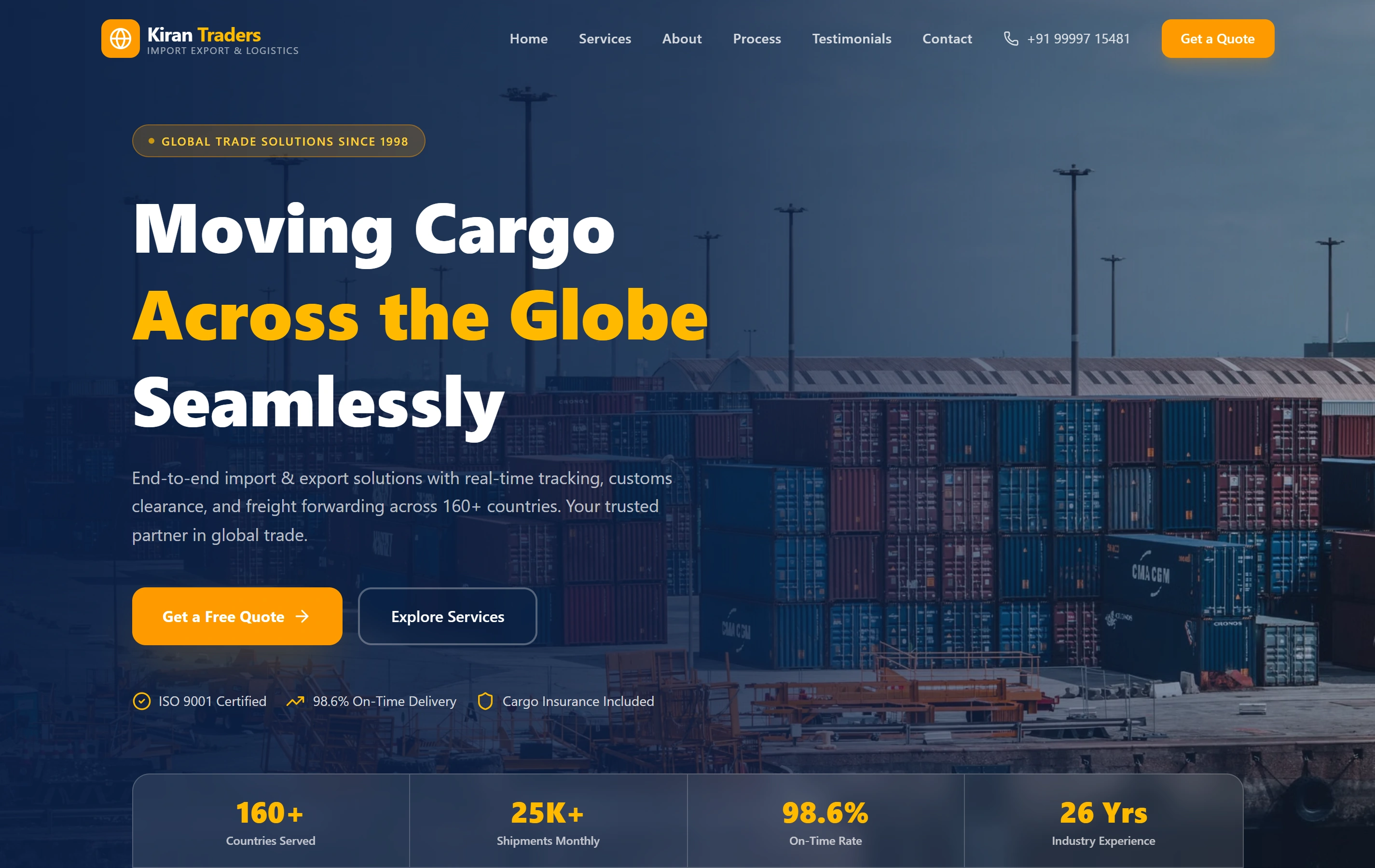
A logistics enquiry is more useful when it carries the route, service and shipment context the team needs. The public website should distinguish the services clearly before asking the visitor to request a quotation.
Organise service types and supplied coverage information so buyers can assess relevance. Avoid promising routes, capacity or delivery outcomes that the business has not verified.
Connect quotation requests to the agreed inbox, CRM or operational system. Tracking and customer self-service are separate capabilities that depend on reliable backend information.
Clear service pages explain the available scope.
The enquiry collects the agreed shipment context.
The responsible team receives a useful brief.
An example website journey. The steps and team responsibilities are agreed around your business.
Select the work that supports the actual visitor journey and the people operating the business.
Separate the business’s transport, trade or support offers into understandable pages.
Present supplied destinations or service areas consistently.
Capture the fields required to assess a request.
Show genuine company information, documents and relevant work where approved.
Scope CRM or system integration around approved methods.
Assess customer access or tracking as a defined later module where needed.
Explore the public website experience from a related Softglimmer project. The presentation focuses on actual work rather than projected business results.
The scope and milestones are agreed around the project. Each stage has something concrete to review.
Understand the audience, objective, content and current systems.
A shared brief.Review the information, interface and important journeys.
A concrete design to assess.Implement the agreed scope and check the complete journeys.
A release with acceptance evidence.Plan the switch, handover and ongoing responsibilities.
Ownership after launch.Discuss the content, integrations and responsibilities around your industry.
A tracking interface requires a reliable approved data source. We first review the existing operational system and available integration.
Yes. The fields can reflect the actual services and information the team needs to assess an enquiry.
No. It is a genuine public website example. Portals, tracking and automation are proposed capabilities that need their own scope and implementation.
Yes, supported integrations can be included with field mapping, access rules and failure handling.
Let’s turn it into something your customers can actually use — and your business can grow with.