
Skip to content
Business website design for Abu Dhabi

Give every service a clear place to be understood.

Softglimmer provides website design and development for Abu Dhabi businesses that want their offer to be easy to assess. The work can include content structure, custom responsive design, page development, CMS editing and an enquiry journey. We deliver remotely from Ranchi, agreeing the actual pages, content responsibilities and acceptance conditions with your team.

View website work
A clear offer, useful evidence and a practical enquiry.
  1. 01

    Find the right offer

    Organise services around useful distinctions.

  2. 02

    Read with confidence

    Use a consistent visual and content structure.

  3. 03

    Ask a useful question

    Connect the page to an appropriate enquiry.

An example journey, shaped around your requirements.

A business website needs a consistent identity and distinct explanations.

Visitors should recognise the same business as they move from an introduction to a detailed service page. That consistency comes from more than a repeated logo. Navigation, language, imagery and the explanation of an engagement should support the same offer. Each service can still have the space needed to answer its own customer questions.

We plan that structure before extending the design across the site. The project may start with a new business identity, a defined service range or an existing website that has become hard to navigate. We review the available information and propose the pages, reusable sections and contact journeys needed for the agreed audience. Visual design and development then follow a concrete content plan.

The commission can include a business website with content editing and approved enquiry connections. A transactional store, appointment system or private portal needs additional discovery and an explicit scope. The public site should describe only the service arrangements your business is prepared to approve.

Give the reader a clear route through the information.

01

Separate genuinely different offers

Use separate pages when the audience, service scope or questions materially differ. Shared introductory information can remain common. The page map should help a person choose a relevant explanation without navigating several near-identical pages.

02

Establish a readable page hierarchy

Show the main service explanation before optional detail. Use descriptive headings, shorter sections and supporting links where they help. Important requirements should remain visible rather than being hidden behind a decorative label or an image.

03

Keep the business context close

A person arriving directly on a service or project page still needs to recognise the business and understand the next step. Keep relevant company context, genuine proof and contact actions available without forcing a return to the homepage.

A website scope your team can evaluate.

01

Positioning and page architecture

Agree the audience, service groupings and purpose of the important pages. Identify the approved business facts, evidence and content owner before the design is treated as complete.

02

Custom responsive layouts

Create a consistent visual system for navigation, typography, content sections and enquiry actions. Review representative long and short content on phone and desktop layouts.

03

Service and company pages

Develop the agreed templates with enough flexibility for real service differences. About, process, project and contact information should connect to the decisions a customer needs to make.

04

Practical CMS editing

Expose agreed copy, media, links and page sections through a maintainable editing structure. Define preview, approval and recovery expectations along with protected technical settings.

05

Enquiry and response journey

Agree the fields, required context, receiving destination and confirmation message. Include an error or interrupted submission in the review and confirm who owns the first response.

06

SEO and release essentials

Prepare the agreed titles, descriptions, canonical URLs, internal links and sitemap entries. For a rebuild, document useful routes and approved redirects alongside the launch checklist.

A design should work with the content the business can approve.

Use actual service descriptions and the longest likely headings during review. Placeholder copy can conceal an awkward page structure. We identify which facts repeat, which belong to one service and which documents are supporting material rather than the only explanation of an offer.

If more than one language is required, agree that scope from the intended audience and your ability to supply approved content. Decide who prepares and maintains each version before extending layouts or estimating the work. The core editing handover should show an ordinary correction and where its effects appear. Business policies and specialist local requirements remain matters for your authorised approvers.

Move from a shared brief to a reviewed website.

Our studio is in Ranchi. Remote reviews with Abu Dhabi teams can use dated invitations in Asia/Dubai and Asia/Kolkata, named approvers and consolidated written feedback.

  1. 01

    Agree content and scope

    Bring the current site, brand files, approved service information and real imagery. Identify which pages and contact journeys belong in the first release.

  2. 02

    Design a representative set

    Review the homepage direction and a detailed service page together. Confirm that the same identity accommodates different amounts of useful content before extending it.

  3. 03

    Implement and inspect

    Build the agreed templates and controls. Check navigation, important content, responsive behaviour, enquiry handling and the editing tasks included in the brief.

  4. 04

    Prepare the handover

    Confirm launch conditions, ownership of accounts and remaining dependencies. Document content updating, technical support and the responsibilities that continue after the release.

A detailed service page should not feel like a different company.

Consider an optional example: a business has a polished homepage but its service pages use unrelated headings, different contact instructions and old brand assets. The redesign can establish a shared page system while preserving the specific information each service needs. Review one simple service and one more detailed offer before applying the template elsewhere. This illustration is not an Abu Dhabi client case or a statement about local businesses.

Documented service-information websites to inspect.

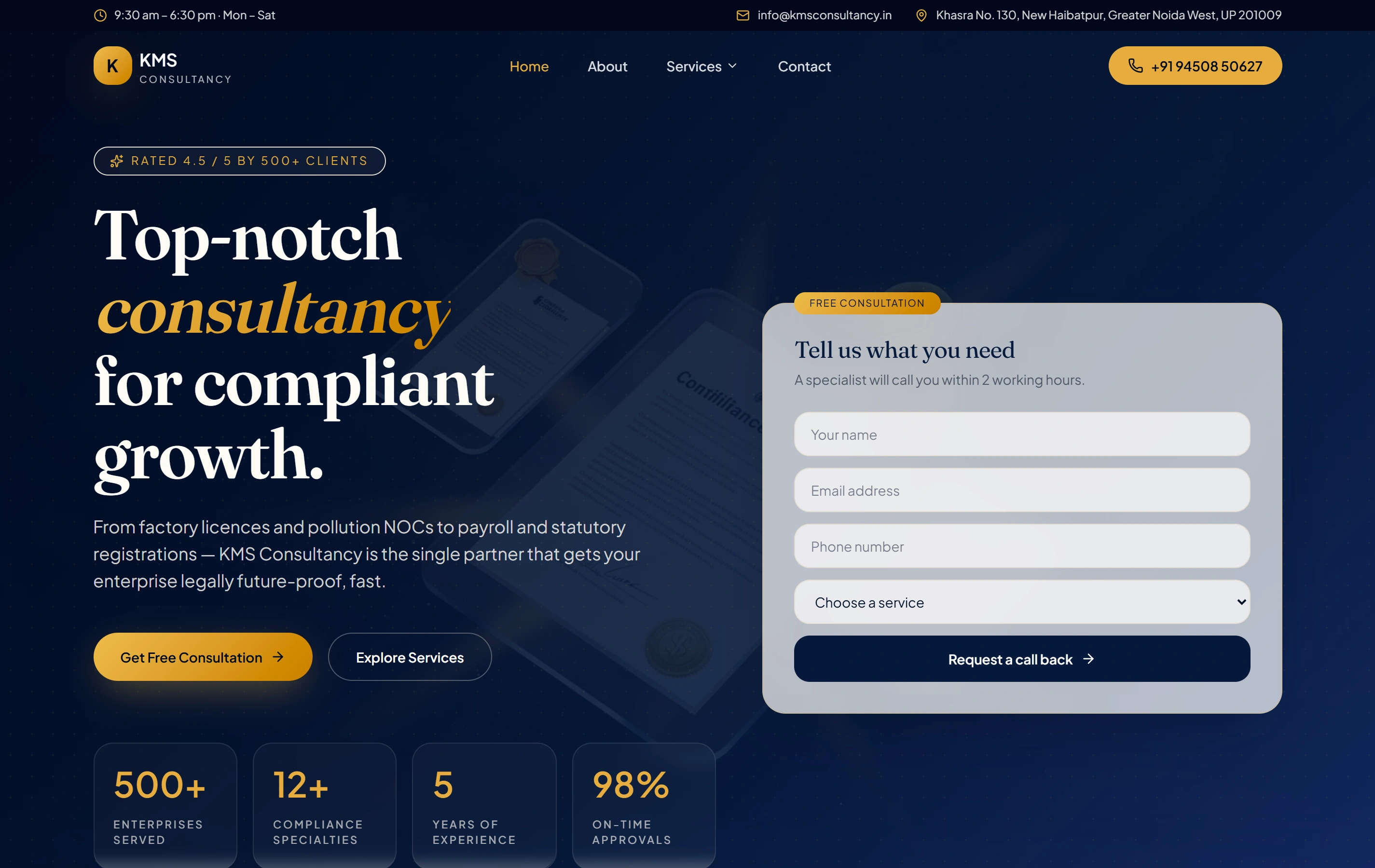
KMS Consultancy organises a consultancy service catalogue into pages and an enquiry journey. Kiran Traders presents B2B import-export services with a route for procurement enquiries. These real website references support discussion of information structure. They do not establish Abu Dhabi clients, specialist local qualifications or any guaranteed commercial result.

Questions before beginning the website.

Do you have a team based in Abu Dhabi?

Softglimmer’s studio is in Ranchi, India. We can discuss remote delivery with your Abu Dhabi contacts through an agreed review and approval process. This service-area guide does not claim a local office.

Can we start with a focused service website?

Yes. A useful first release needs sufficient approved information, clear service distinctions and a working contact route. Additional pages or functionality can follow when they have defined content, owners and acceptance criteria.

Can our team update the content?

We can include CMS controls suited to the information your team maintains. Agree the fields and permissions before build, then review an ordinary edit and preview. Structural and integration changes require their own technical ownership.

How do you estimate design and development?

We review page types, content readiness, required CMS controls and connections. Share the site, approved materials and important customer journeys. The written proposal can then define the actual work, dependencies and handover without assuming one package suits every business.