Skip to content
Practical AI Solutions · Ahmedabad

Practical AI solutions for Ahmedabad.

Softglimmer helps Ahmedabad teams assess and implement bounded AI features for approved information and business workflows. We compare conventional rules, search and an AI-assisted approach, then define what a person must review. Our Ranchi studio delivers remotely, with a usable pilot, evaluation examples and explicit data, provider, cost and operating responsibilities.

Explore Ahmedabad
A reviewable service scope
  1. 01

    Check whether AI fits

    Start with the task, available sources and an acceptable fallback.

  2. 02

    Build a bounded pilot

    Implement the agreed assistance and human review boundary.

  3. 03

    Evaluate and operate

    Review observed results, costs, access and continuing ownership.

An example journey, shaped around your requirements.

Choose assistance around a real working need.

An approved-information assistant, a review aid and a system handover have different requirements. We can scope the useful feature while keeping authorised decisions and unsupported answers visible. Document triage remains an optional example later in this guide; it is not the only use case or evidence of an already delivered Ahmedabad AI system.

01

Use rules or search when they are sufficient

Review whether a defined rule, better content structure or straightforward search can answer the task without generated output. The comparison considers the available data, maintenance responsibility and what happens when information is incomplete. A model is not a default requirement for every workflow.

02

Add an approved-information assistant

Scope a useful knowledge or conversation task around sources the business can approve and govern. Agree source access, the result the user can inspect and how an unanswered question reaches a person. Public information and private material need their own access decisions before either is used.

03

Connect bounded assistance to a workflow

Define the suggestion, draft or reviewable handover and the action a person must approve. Inspect any required system interface before committing to integration. A generated answer or proposed classification does not establish authority to change a record, send a message or make a business decision.

Receive a pilot that can be evaluated honestly.

The proposal names the assisted task, sources, interface, checks and operational dependencies. Feasibility is reviewed before broad deployment claims or an automatic decision are introduced.

01

Use-case and source assessment

A reviewed task boundary, suitable input sources, permitted users and comparison with simpler approaches. Unavailable or unsuitable material is recorded as a dependency rather than replaced by invented example evidence.

02

Implemented bounded pilot

The agreed assistant or workflow interface and required supported connection, with useful pending, unsuccessful and handover states. The pilot makes the reviewed assistance available for a defined task; it is not a claim that every question or document can be handled correctly.

03

Representative evaluation set

Agreed examples covering useful results, missing evidence, incorrect suggestions and restricted access. Reviewers record observed behaviour and the human correction route. A prepared demonstration is kept separate from evaluation across the defined cases.

04

Human and system boundaries

The permissions, actions and review responsibilities included in scope, plus the destination for unanswered or uncertain cases. Existing business rules and consequential approvals remain with authorised people. Any external sending or account activation is separately approved.

05

Operating and cost handover

Source approval/update responsibilities, account and provider ownership, usage costs, monitoring and the response to observed failures. The plan identifies who can pause or change the feature and what ongoing support is agreed.

Use evidence to decide whether to extend the pilot.

An Ahmedabad process or content owner reviews the working cases with our Ranchi team in agreed IST windows. The first release follows the approved task and data boundaries, not a promise of universal accuracy.

  1. 01

    Prepare feasibility and estimating inputs

    Bring the recurring task, approved source samples, users, current tools and acceptable fallback. Identify data restrictions, review responsibilities, interface dependencies and an operating budget. Unknown source quality or provider requirements may need a bounded investigation before an implementation estimate.

  2. 02

    Implement the agreed assistance

    Build the selected interface and supported connections around the reviewed source and action limits. Distinguish local fixtures from approved provider-backed checks. Model/provider choice and account arrangements are confirmed as project decisions; none is activated merely by this planning page.

  3. 03

    Evaluate before extending access

    Use representative ordinary, missing and difficult cases with the responsible reviewer. Inspect incorrect or unsupported results and the route to correction or human help. Wider users, source sets or automated actions are separately reviewed scope changes.

  4. 04

    Hand over ongoing control

    Record source, provider, technical and business owners, expected usage costs and support responsibilities. Agree how updates and observed failures are reviewed and when the feature should be paused. No system accuracy, compliance outcome, business saving or local client result is promised without its own evidence.

An optional example for discovery.

The following retained introduction and working example address one particular task. They do not prescribe the only service you can commission or establish a delivered local project. Your actual requirements determine the agreed scope.

Practical AI Planning for Ahmedabad Document Triage

Make the suggested category easy to inspect before a person accepts it.

A recurring document task can benefit from assistance while needing a person to decide what the information means. A useful AI scope identifies the task, its reviewer and the point at which an accepted suggestion may lead to a business action. Softglimmer plans practical AI work for Ahmedabad teams around bounded inputs, inspectable suggestions and representative acceptance cases. Our office is in Ranchi and delivery is remote through agreed reviews. We inspect the current process, compare simpler alternatives and define what the system may propose, what it must leave unresolved and who approves the final decision.

Explore Ahmedabad
A bounded document-triage suggestion that remains separate from an authorised business classification or action.
  1. 01

    Define the document task

    Choose the approved input and categories in scope.

  2. 02

    Inspect the suggestion

    Show the evidence needed to assess the result.

  3. 03

    Accept or correct

    Keep the authorised decision with its owner.

An example journey, shaped around your requirements.

A hypothetical working example

A document mentions two subjects, while the suggestion selects only one.

Consider a hypothetical Ahmedabad operations team sorting incoming supplier documents into a small set of working categories. One document contains both product information and a change to a contact detail. An AI suggestion chooses a category but cannot establish which action the business intends. This is a planning example, not a delivery result. The scope should explain how staff inspect the suggestion and handle a mixed or unclear document before any record is changed.

Keep the suggestion distinct from the decision

Display the proposed category and the document context the reviewer needs. The interface should make correction straightforward and should not present the proposal as an approved business instruction. If a person accepts it, record that decision according to the agreed process rather than assuming the model’s first response provides authority.

Give unclear inputs a useful route

Some documents may be incomplete, unfamiliar or outside the category set. Define an unresolved result and a responsible reviewer. The system should not force every input into the nearest known category just to avoid an empty answer. A bounded task can remain useful while making its limits visible to the team.

Suggestion and human decision
  1. 01

    Define the document task

    Choose the approved input and categories in scope.

  2. 02

    Inspect the suggestion

    Show the evidence needed to assess the result.

  3. 03

    Accept or correct

    Keep the authorised decision with its owner.

Hypothetical planning sequence.

Agree the task and human review before choosing the model.

01

Compare the existing process and simpler rules

Review which document features staff use today and how often the task needs interpretation. A consistent field or naming rule may solve part of the need without an AI response. Choose the scope from the working evidence, keeping the source document and business categories explicit rather than adding a model merely because the task repeats.

02

Define responsibility for acceptance

NIST’s AI Risk Management Framework discusses differentiated human roles and oversight responsibilities. Apply that principle to the proposed task by naming the reviewer and the decision they may approve. The business should know who can correct a suggestion and what happens when no one is confident enough to accept it.

03

Build a representative review set

Choose anonymised examples covering ordinary documents, mixed subjects, missing information and an input outside scope. Agree the expected behaviour with the process owner. Report the observed results for that set rather than inventing an accuracy percentage or treating one successful demonstration as proof that every future document will be classified correctly.

04

Separate provider access from task validation

The first review can use bounded fixtures and a documented interface proposal. A live model or document connection requires its own approved account, data boundary and usage arrangements. Record those dependencies before implementation, and do not imply that a saved configuration establishes provider execution or permission to process every available business document.

A small AI scope the process owner can assess.

01

Task and category brief

The input types, intended categories and business decision supported, including examples that must remain unresolved or require another reviewer.

02

Suggestion and correction design

An interface that distinguishes a model proposal from the person’s accepted decision and keeps useful source context available during review.

03

Observed review evidence

Results for the agreed representative set, with failures and limits recorded alongside successful cases and no unsupported accuracy claims.

04

Operating dependency handover

The people, document sources and provider arrangements needed for the commissioned implementation, with unresolved activation or data questions stated explicitly.

Choose a narrow document decision that the team understands.

Prepare the current categories and anonymised examples of documents staff can explain. Include mixed subjects and material the team would not confidently classify. The process owner should describe the purpose of the categorisation and what happens afterward. A proposal to sort documents is a different scope from automatically updating an account or triggering an external action.

Decide what context the reviewer needs to inspect a suggestion. The original document may be more useful than a confident-sounding summary. Record the information boundary before discussing a provider: who may access the material, which sources are approved and which documents remain outside the task. Discovery should expose unresolved permissions rather than assume an entire shared folder can be used.

For remote review, the Ahmedabad owner validates categories and acceptance decisions while our Ranchi team presents concrete task cases. Use the same examples when the implementation changes and inspect the failures as carefully as the ordinary results. The handover should explain who maintains the category set and who investigates an unfamiliar input. A practical AI project earns its place by supporting that bounded work, with limits and responsibility the team can understand.

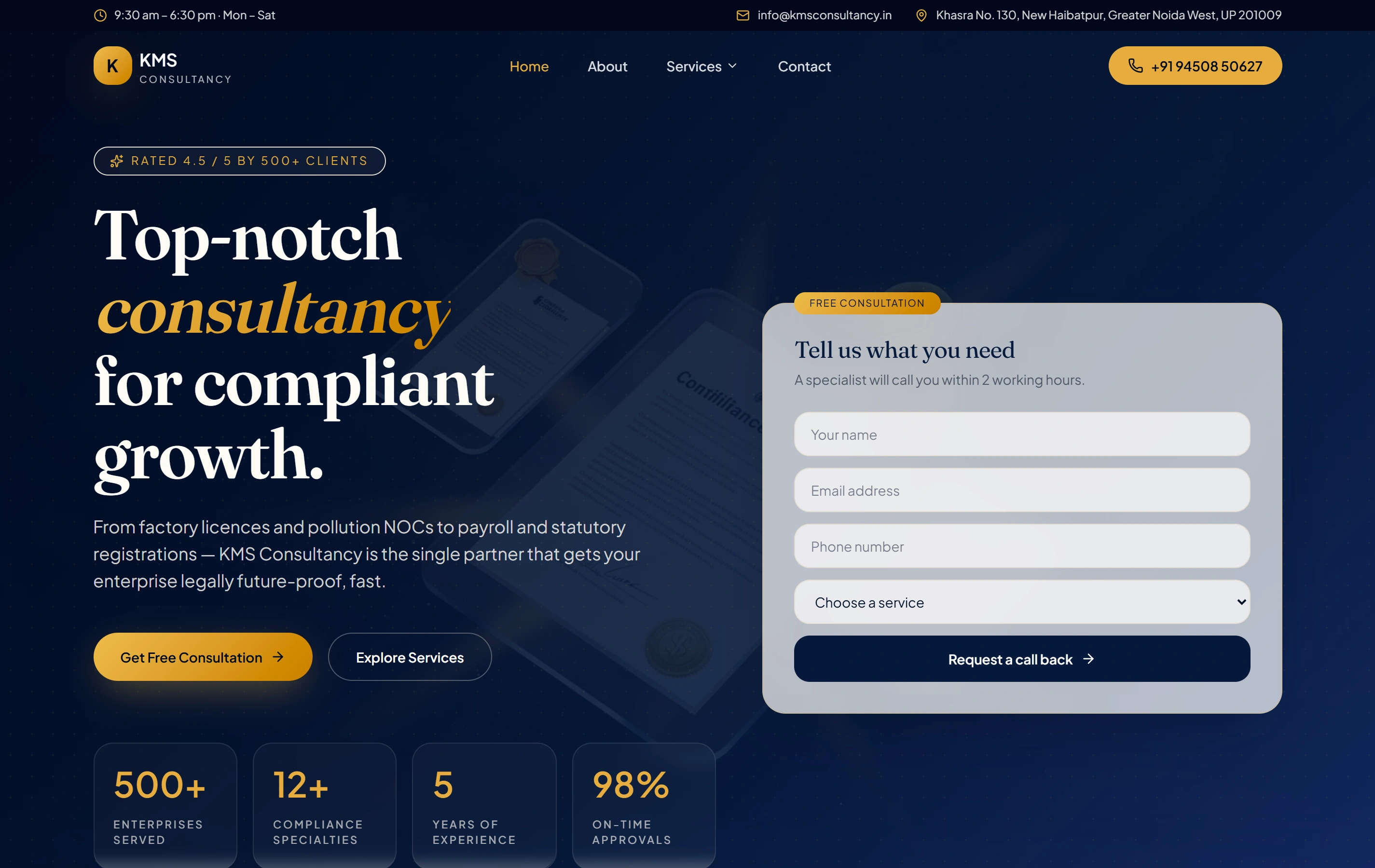
Real website evidence for organising complex information.

KMS Consultancy is a documented Softglimmer website that structures a complex compliance service catalogue into clear pages and an enquiry journey. It is an information-organisation example. The portfolio does not prove AI document classification, model accuracy, provider activation or a deployed document workflow for an Ahmedabad business.

ContentCompliance
StructureService pages
ActionEnquire
KMS Consultancy websiteKMS Consultancy

Project questions.

Can the first scope classify every business document?

That is usually too broad to assess from a short demonstration. We define an input set, category purpose and unresolved cases with the owner. The review uses representative examples and records observed limits. Documents outside that task should not silently become approved inputs just because the interface can accept a file.

Who is responsible when a suggestion is wrong?

The operating plan needs a named reviewer and a correction route. The system’s proposal and the person’s accepted business decision should remain distinguishable. The team also needs an owner for category changes and recurring failure cases, so correction becomes part of the process rather than an informal workaround.

What does the Ahmedabad team review remotely?

The team confirms the task, categories, source boundary and what acceptance means. Our Ranchi team prepares the proposed workflow and observed checks. Provider configuration and actual processing are separate steps with explicit access and usage decisions; fixture review alone does not establish live execution.