Skip to content
Corporate Website Development for Ahmedabad Business Groups

Help a visitor find the right business within the group.

A corporate website may need to speak to prospective customers, partners, job applicants and other stakeholders. Each arrives with a different reason to explore the organisation. When several divisions share one site, the relationship between the group and its businesses needs to be understandable before the visitor chooses a contact route. Softglimmer plans corporate websites for Ahmedabad teams around that information problem. Our Ranchi office delivers discovery, design and development remotely through agreed reviews. We inspect the existing company material and website structure, preserve approved facts and define a publishing arrangement that makes responsibility visible across the group.

Explore Ahmedabad
Corporate group structure, division identity and practical routes for different stakeholder questions.
  1. 01

    Understand the group

    Explain the approved relationship between businesses.

  2. 02

    Find a capability

    Give each division its relevant service context.

  3. 03

    Reach the right owner

    Route the enquiry according to its purpose.

An example journey, shaped around your requirements.

A hypothetical working example

A group enquiry reaches a division that cannot answer it.

Consider a hypothetical Ahmedabad business group with several operating companies and one generic website contact address. A buyer reads a capability page but cannot tell which division provides the service. Their message reaches a central colleague who has to reconstruct the intended destination. This is an illustrative planning case. The website can clarify the group structure and guide the question toward an accountable recipient without inventing capabilities for any division.

Explain relationships in plain language

Use the approved names and descriptions for the group and each business. Visitors should be able to distinguish a shared group story from a division-specific capability. A visual family of logos can support that explanation, but should not replace it. Preserve required legal or brand wording when the client supplies it as an authoritative part of the brief.

Route by the purpose of the visit

A sales enquiry, partnership question and careers request may need different information and recipients. Map those journeys before designing a single form for everyone. The website should tell the visitor what the selected contact path covers and what happens next, while giving the receiving team enough context to respond without asking the same preliminary questions again.

  1. 01

    Understand the group

    Explain the approved relationship between businesses.

  2. 02

    Find a capability

    Give each division its relevant service context.

  3. 03

    Reach the right owner

    Route the enquiry according to its purpose.

Hypothetical planning sequence.

Define the shared story and the division-specific facts.

01

Verify public company claims

Gather approved descriptions, leadership information and capability material from the responsible owners. Record sources for statements about operations, locations, certifications or achievements. A website rewrite should not turn broad aspirations into established facts. Claims that lack an approved basis can remain outside the public page until the client supplies and reviews the evidence.

02

Agree the information hierarchy

Decide which subjects belong at group level and which belong to an operating business. A capability may connect more than one division, but its presentation should still identify who owns the offering. The navigation and page plan should help stakeholders answer that question without opening several pages that repeat the same corporate introduction.

03

Assign publishing responsibility

Identify who approves shared group information and who maintains division content. Some updates need both reviewers. The editorial plan should show that distinction and include a route for resolving inconsistent wording between pages. CMS editing is useful when it reflects these real responsibilities, rather than giving every editor an identical, unrestricted publishing role by default.

04

Check the page organisation

Use descriptive headings to separate the group introduction, division capabilities and stakeholder actions. W3C’s heading guidance explains their role in communicating organisation and enabling navigation. The content review should verify the actual reading structure, including pages opened directly, rather than relying on the homepage graphic to explain every relationship.

A coherent structure the group can maintain.

01

Group and division page map

An approved hierarchy showing shared company information, division-specific capabilities and the relationship between their public pages.

02

Claim and asset inventory

A source record for factual company statements, supplied brand assets and publishing approvals needed before the website becomes public.

03

Stakeholder contact journeys

Relevant enquiry paths with clear purposes, receiving owners and acknowledgement wording for the different audiences in scope.

04

Editorial and migration handover

A record of retained addresses, changed routes and the tasks group and division editors can carry out after the agreed implementation.

Resolve ownership before consolidating the site.

Bring the current group website, any division sites and the approved company documents used in sales or stakeholder communication. List the authoritative names, brand assets and contact destinations. If two sources disagree, the client needs to choose the approved wording before the website team can present a consistent story. Discovery should make those gaps visible, rather than smoothing them into a claim no one has verified.

Select representative journeys for review. A buyer looking for a specific service should reach the responsible division. A partner should understand the relevant relationship. Someone opening a leadership or company-information page directly should still know which organisation it describes. These examples help choose the scope without trying to solve every possible stakeholder workflow in the first release.

Review future updates as part of the project: a division name change, a new leadership profile or a corrected capability statement may affect several places. Document which information is shared and which pages an editor must inspect after a change. The handover should also preserve useful existing URLs and supplied assets. A connected corporate presentation depends on that maintenance discipline as well as on the visual design approved at launch.

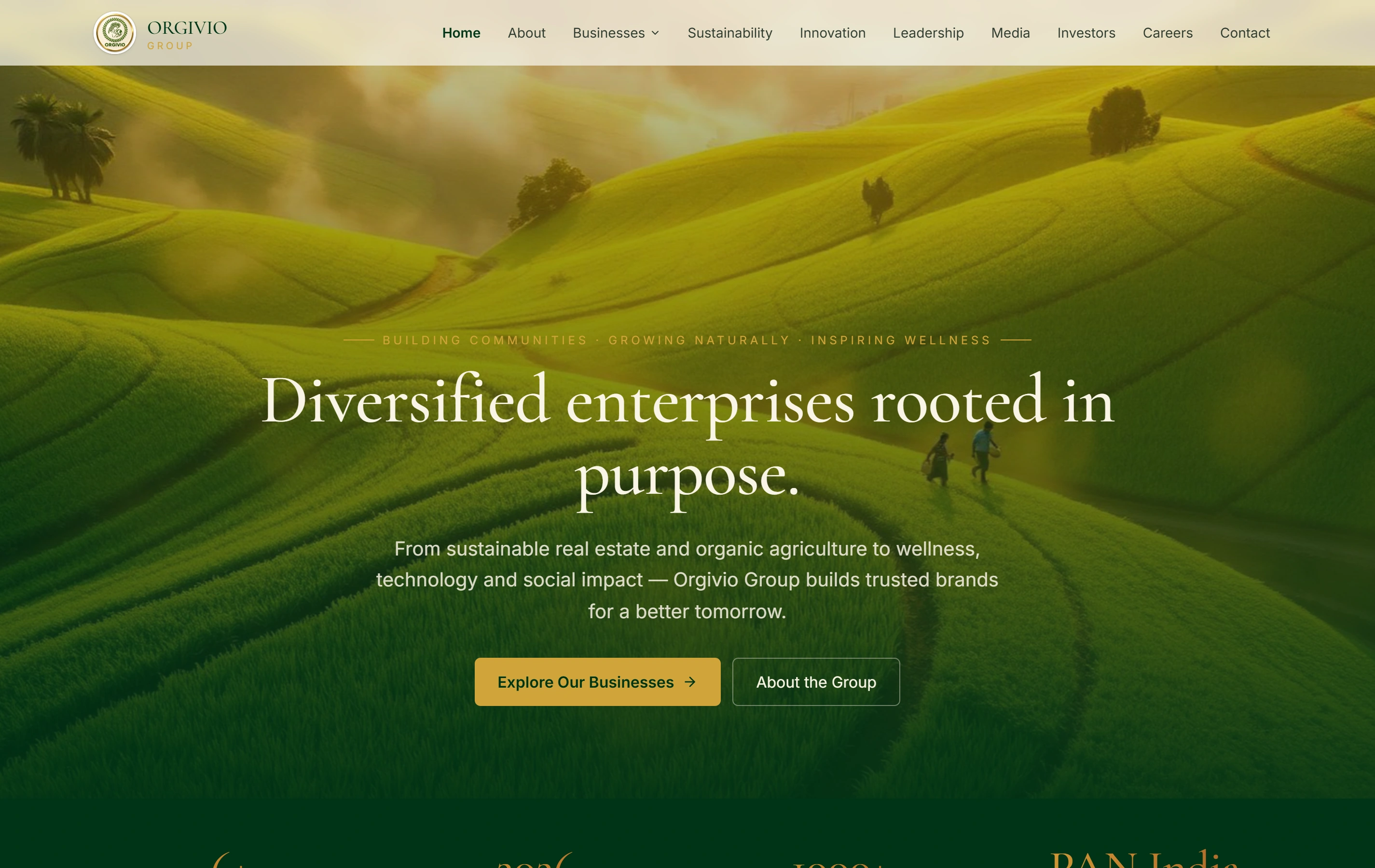
A genuine corporate information website.

Orgivio Group is a documented Softglimmer corporate website presenting its businesses, sustainability, leadership and stakeholder information. Its public information structure is relevant to a group website discussion. The portfolio does not establish results for an Ahmedabad client or prove the division approval and enquiry-routing rules proposed in this hypothetical brief.

Group presentationOne recognisable company story
Business divisionsSpecific routes from the overview
Stakeholder informationSeveral audience needs
Orgivio Group websiteOrgivio Group

Questions before commissioning the work.

Does a group website have to replace every division website?

No. We inspect the existing sites and their purposes before deciding what should be shared, linked or consolidated. A group page can explain relationships while an operating business retains a useful separate presence. A replacement needs its own migration and content ownership decisions rather than being assumed from a common logo family.

Can different divisions maintain their own information?

The CMS scope can reflect agreed editorial responsibilities, subject to the chosen implementation. We define what each owner may change and which updates need group review. That arrangement must be tested with representative publishing tasks; a permissions diagram alone does not show that the real editing journey works.

How does an Ahmedabad group coordinate remote approval?

Nominate one coordinating owner and the reviewers needed for division-specific decisions. Our Ranchi team prepares the page map and review material, then records approved changes. This gives shared information a clear route to acceptance while keeping specialist capability claims with the people authorised to validate them.