
Skip to content
Birmingham · Technical SEO & Website Performance

Understand the problem. Make a useful technical improvement.

Softglimmer offers technical SEO and website performance work for Birmingham businesses, from a focused assessment to agreed repairs and follow-up. We examine the pages and customer journeys behind the reported problem, explain the findings and implement the selected changes. Measurement, content preservation and release checks stay connected throughout the work. Our Ranchi studio delivers remotely with your website, content and hosting owners.

Explore the scope
From a reported problem to a justified repair and clear follow-up
  1. 01

    Investigate the website

    Connect the concern to real pages, journeys and available reports.

  2. 02

    Repair the priority issue

    Agree the change and the content and functions it must preserve.

  3. 03

    Explain the result

    Record the release checks and the observations still to follow.

An example journey, shaped around your requirements.

Choose an assessment, implementation or continuing technical review.

Tell us what prompted the enquiry: a difficult mobile journey, a slow page, unexpected search reporting or a change that appears to have affected the website. We collect the relevant URLs, dates and recent releases, then identify the available access and evidence. That opening discussion helps separate the reported symptom from an assumed cause and gives the investigation a useful boundary.

The assessment can examine responses and redirects, internal discovery routes, crawl and index controls, preferred URLs, titles, descriptions, relevant structured information and rendered content. Performance work can investigate loading, layout and interactions on the selected pages. We record which examples and conditions were inspected. Search Console and real-user reports add context where the account owner can provide access.

You can commission a prioritised findings report, the implementation of agreed repairs or a continuing review arrangement. The proposal names the changes included, the responsible owners and the route from recommendation to released result. Existing copy, images, forms, consent behaviour and useful connections are part of the preservation brief. A technical improvement should leave the business with a working website and an understandable account of what changed.
Use evidence that answers the question being asked.

A useful report identifies its page, source, period and limits before recommending work.

01

Which task is difficult?

Describe the page and action a visitor is trying to complete. Include how the problem appears and when it was noticed. A loading concern, an unresponsive control and an indexing question may require different investigations within the technical review.

02

What does the measurement describe?

Keep a controlled page test, an individual URL observation and a wider website aggregate clearly labelled. They can provide complementary information. A reassuring summary should not replace investigation of a particular journey that still has a reproducible problem.

03

Which repair is justified?

Connect the observed issue to a proposed template, asset, content-delivery or configuration change. Identify dependencies and the people able to authorise them. A rebuild or supplier move needs its own reason and scope rather than becoming the default conclusion.

04

How will improvement be followed?

Agree comparable checks after release and the later reports worth observing. Record unavailable information as unavailable. Name the person following outstanding questions so everyone can see which page-level questions remain open.

Receive a plan your technical and content teams can use.

The written agreement distinguishes the audit, implementation and any continuing work.

01

Website and access brief

The reported concern, important journeys, relevant URLs and platform owners form the starting record. Available reporting and questions requiring further access are identified.

02

Technical findings with examples

Responses, rendered content and measured behaviour are attached to the inspected pages and conditions. Confirmed issues are distinguished from possible causes still needing investigation.

03

Prioritised repair scope

The proposed work explains its practical effect, dependencies, preservation requirements and acceptance owner. Your team can choose the improvements worth implementing first.

04

Agreed implementation

The selected code, template, asset or configuration work is completed through the authorised release arrangement. Recovery preparation and ownership of supplier-controlled parts are included in the plan.

05

Released-page comparison

The affected pages and important actions are checked against the starting position. Recorded measurements retain their setup and limits, alongside any remaining technical findings.

06

Reporting and maintenance handover

Receive an explanation of the changes, their location and the continuing observations agreed. Support, additional optimisation, content work and advertising have clear commercial boundaries.

Move from the concern to a checked release.

The website owner helps choose the priorities while the relevant specialists approve their parts.

  1. 01

    Frame the investigation

    Review the reported problem, selected journeys and available data. Agree access, page coverage and what must remain working.

  2. 02

    Discuss the findings

    Explain the observed issues, uncertainty and repair options. Set the first implementation scope with its technical and content owners.

  3. 03

    Implement and compare

    Prepare recovery, make the authorised changes and repeat the agreed checks. Inspect the actual released pages and customer actions.

  4. 04

    Hand over the follow-up

    Record what changed and who maintains it. Explain which later field or search observations can add context and which information is still missing.

A hypothetical working example

The wider report looks encouraging, but one page still feels difficult.

Hypothetical example: a business owner opens an encouraging site-wide performance summary. On a particular enquiry page, a visitor action still produces a noticeable delay. The project needs to investigate that action rather than dismiss it because the broader result looks healthy. We record which report describes the wider origin, whether the individual URL has its own field data and what can be reproduced under the chosen test conditions. The owner can then understand which evidence supports a repair and what has not been measured. The absence of page-level field data is recorded plainly. After a justified change, we repeat the relevant page and interaction checks and preserve the enquiry journey. Later real-user observations are reviewed when available. The report connects the specific action, proposed repair and follow-up with the wider technical SEO and performance review.

Keep the particular page, the wider aggregate and the controlled test distinct
  1. 01

    Identify the observation

    Record its URL or origin, period and measurement source.

  2. 02

    Investigate the journey

    Reproduce the reported page action under stated conditions.

  3. 03

    Compare and follow up

    Check the selected repair and retain any missing-evidence boundary.

Hypothetical evidence-interpretation example. The report labels the measurement source, page or origin, and observation period.

Bring the URL and the report, with their dates and settings.

Share a few examples of the difficulty, the intended customer action, recent website changes and any existing audit or reporting access. Identify the people responsible for templates, content, hosting and externally supplied features. Screenshots can help explain the initial concern, while the investigation needs enough detail to find the same page and understand the conditions. Access should follow the agreed scope.

Google describes PageSpeed Insights as combining controlled lab diagnostics with real-user data. Its real-user reporting covers a previous 28-day period and may use origin-level data when the page has insufficient samples. We keep that scope visible in the findings. A wider aggregate and a new controlled check answer different questions; neither is presented as a fresh field measurement for an unmeasured page.

Birmingham and Ranchi reviews use agreed times and a shared written priority list. Before handover, the receiving team locates the changed code or settings, follows an affected customer journey and understands the remaining work. Continuing measurement has a stated scope and reporting owner. This makes the assessment useful after the immediate repair, without requiring every future website change to start from an unexplained score.

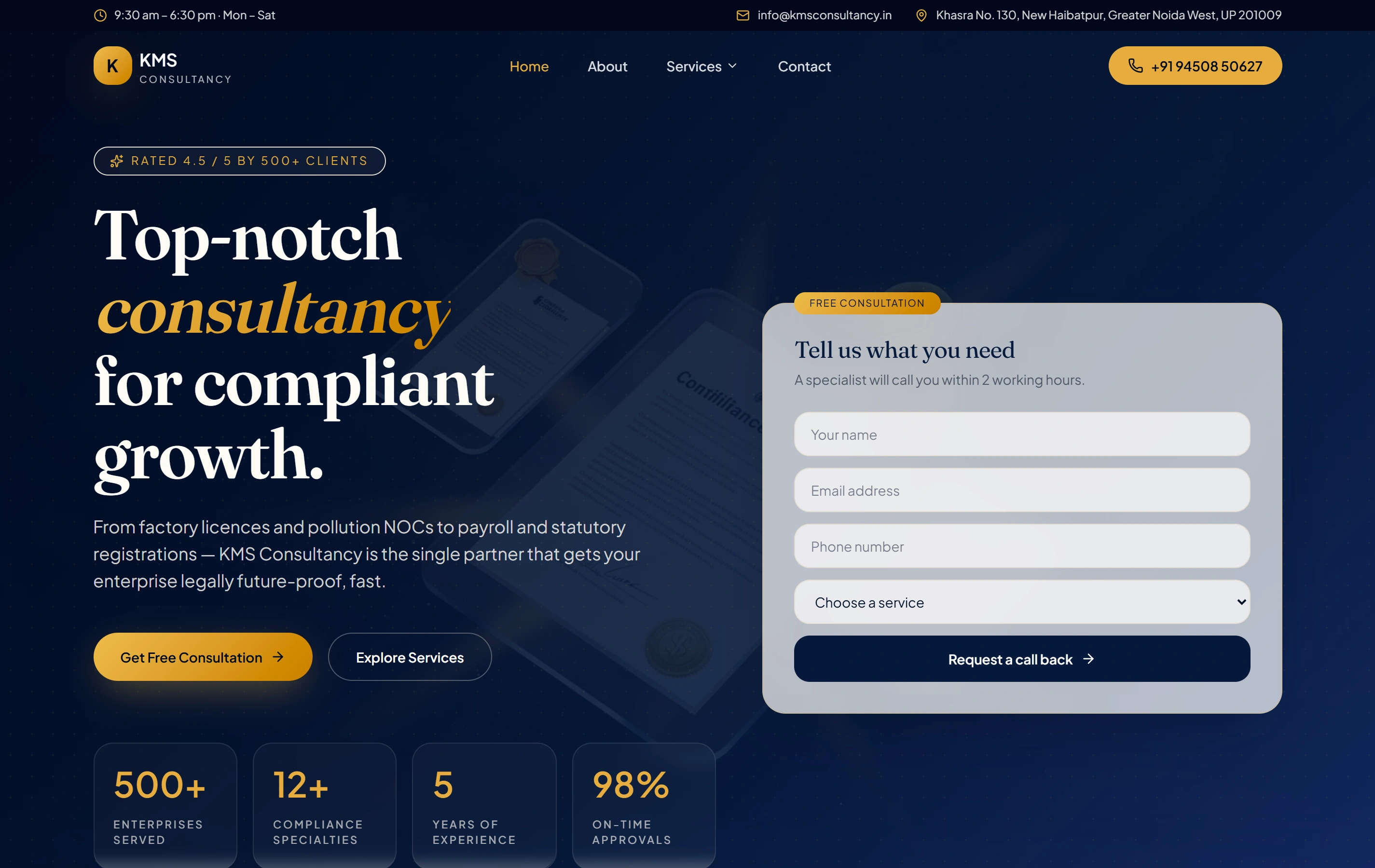
See a real service-information website.

KMS Consultancy is a documented Softglimmer website organising a complex service catalogue and an enquiry journey. It is a public reference for discussing readable business information. The performance assessment, measurements and repairs for your site would have their own scope and evidence.

ContentCompliance
StructureService pages
ActionEnquire
KMS Consultancy websiteKMS Consultancy

Questions before we begin.

Use these answers to prepare the first conversation.

Can we start with an assessment before agreeing repairs?

Yes. A focused assessment can establish observed issues, priorities and access dependencies first. The report should give your team enough detail to choose implementation work, including what was inspected and what still needs investigation. Repairs and continuing review can then be agreed separately.

What if the page has no real-user performance data?

We state that limitation and identify whether a wider origin report is available. Controlled tests and a reproducible customer journey can still help investigate a problem. They should keep their own labels and conditions, rather than being described as real-user evidence for that individual page.

Will a repair keep our existing content and forms?

Preservation is part of the brief. We identify important copy, media, contact journeys, consent behaviour and connected tools before selecting changes. The release review follows the affected pages and actions, with recovery and responsible owners agreed for the implementation.

Will technical work guarantee better Google rankings?

No. The project can investigate and repair agreed technical issues and explain the released result. Search engines determine crawling, indexing and ranking. We distinguish those later observations from implementation, and scope wider content strategy or advertising separately when you need them.