
Skip to content

Build the public website. Make its publishing work clear.

Softglimmer offers WordPress and CMS website development for Birmingham businesses, delivered remotely from Ranchi. We plan the content, responsive templates, implementation and ordinary editor tasks together. The resulting scope can create a new website, improve an existing arrangement or migrate useful material. Publication also needs to consider the journey between entries: a polished service page is incomplete if its essential linked guide is still private.

Explore the scope
Content structure, usable editing and an inspectable public journey
  1. 01

    Model the information

    Define page types and meaningful relationships.

  2. 02

    Build the website

    Connect public templates with appropriate editor controls.

  3. 03

    Practise publication

    Follow the whole visitor route before handover.

An example journey, shaped around your requirements.

Start with the pages visitors need and the changes editors repeat.

A useful CMS brief identifies the information your team publishes: services, projects, articles, people or resources, with their important relationships. Bring representative entries and ordinary update tasks. We use them to choose the content model, templates and balance between reusable patterns and page-specific editing. A large set of controls is not automatically a better publishing system.

The engagement can include content and page planning, responsive design, WordPress or another selected CMS implementation, agreed forms or connections, initial content work and launch preparation. For an existing installation, we inspect the current theme, extensions and working functions before proposing changes. A migration also needs retained content, media, useful addresses and a reviewed transition.

The agreement names who supplies information, approves facts, prepares changes and makes them public. A small team may combine those responsibilities. The implementation should fit its actual routine instead of adding unnecessary approval machinery. Accounts, licences, technical maintenance and recovery remain explicit operating responsibilities after the editor receives the site.
The service page is ready. Its required guide is not public yet.

Hypothetical publishing example: a team approves a new service page containing a link to preparation instructions maintained as a separate CMS entry. The instructions are still a private draft. An editor reviewing both while signed in can follow the link, but that does not establish the route an ordinary visitor will receive.

Review the linked public journey, not only the composed page
  1. 01

    Identify the relationship

    Explain why the service needs the separate guide.

  2. 02

    Choose the public treatment

    Approve both entries or a truthful interim route.

  3. 03

    Inspect as a visitor

    Follow the actual public link without editor access.

Illustrative CMS publishing exercise; no default WordPress dependency check or automatic paired release is assumed.

Give linked-content readiness an owner.

The right control may be a clear field, a preview warning or a practical review checklist. Choose it from the actual publishing requirement.

DecisionPublishing contextSelected CMS responsibilityAcceptance example
Meaning of the linkThe companion explains a necessary part of the service.Confirm the purpose, relevant version and person approving its contents.The editor knows why the relationship matters to a visitor.
Publication stateThe linked entry may be reviewed privately without being public.Make the actual state understandable in the selected editing arrangement.A signed-in preview is not treated as evidence of anonymous public access.
Interim releaseThe companion may need more work before it can appear.Ask the owner whether to hold the service page or approve another accurate treatment.The public page does not promise instructions the visitor cannot reach.
Later updateEither entry can change independently after launch.Include the relevant linked journey in the ordinary update routine.An editor understands which public pages to review when a relationship changes.

Commission the website and its maintainable publishing model.

The proposal identifies the selected page set, functionality, content work and migration responsibilities.

01

Website and content plan

Define audiences, page purposes, reusable content and the important relationships, with supplied and missing material identified.

02

Responsive template design

Use approved branding and representative information to review the main page types on agreed layouts.

03

WordPress or CMS build

Implement the selected templates, content fields, editing controls and scoped functions, with dependencies reviewed for the actual setup.

04

Publishing and relationship routine

Demonstrate draft review, publication and an ordinary later change, including how editors handle the linked entries in scope.

05

Migration and public checks

Where included, transfer approved content and inspect retained or changed addresses, media and important contact routes.

06

Editor and technical handover

Practise normal updates with the receiving editor and document access, licences, backups, care and the route for further development.

Review the intended public pair without relying on an editor session.

For the hypothetical service and guide, the owner first approves what should be available together. Follow the actual visitor route in an appropriate public review arrangement. If the guide remains private, preserve that state and choose an accurate interim treatment or hold the service page. Making an unfinished document public merely to remove a broken step would bypass the content decision.

This is a content-model and publishing task within a website build. It differs from diagnosing a scheduled process that failed to publish an already approved article, and from migrating two existing resource editions into a new site. The handover should let the editor repeat the chosen readiness check without having to infer which linked entry is available to whom.

Build and rehearse the website before handing over its controls.

Use dated Europe/London and Asia/Kolkata reviews with the content owner, intended editor and authorised technical contact.

  1. 01

    Inspect and define

    Review current URLs, sample content and update tasks. Agree the page, CMS and migration scope.

  2. 02

    Design with real material

    Assess templates and editing choices together, including useful relationships and incomplete entries.

  3. 03

    Implement and rehearse

    Build the selected site and let the editor prepare and publish a representative change.

  4. 04

    Release and equip

    Check public journeys, provide the agreed guidance and explain continuing technical responsibilities.

A documented website to review.

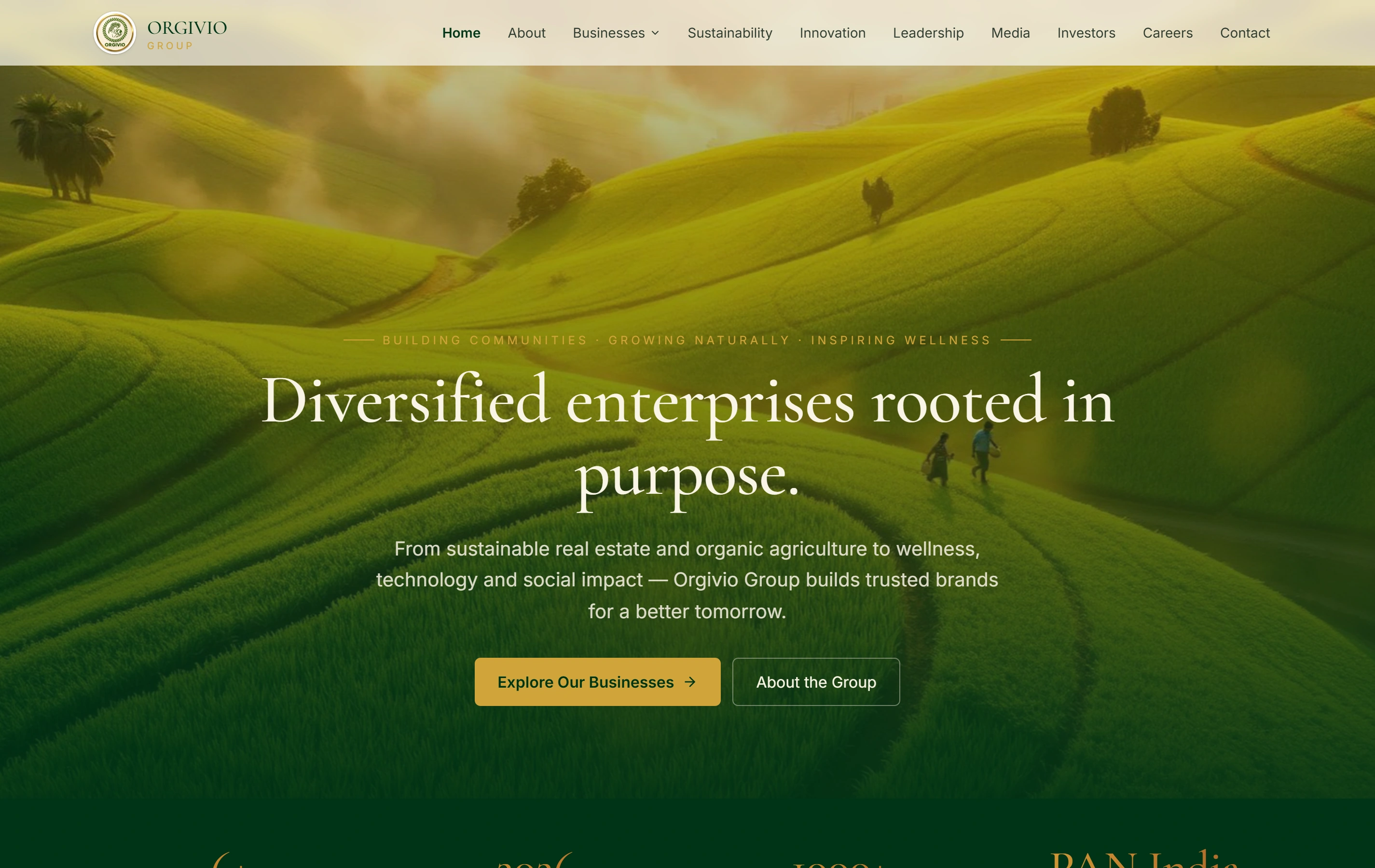
Orgivio Group: A corporate group website presenting its businesses, sustainability, leadership and stakeholder information. Use it as a public website reference. It does not establish the hypothetical behaviour, a local client, a particular CMS, native app or backend delivery, or a measured result.

Group presentationOne recognisable company story
Business divisionsSpecific routes from the overview
Stakeholder informationSeveral audience needs
Orgivio Group websiteOrgivio Group

Questions before commissioning CMS development.

Must every content relationship have a custom publishing gate?

No. The team and risk determine whether a field, a simple checklist or an implemented control is useful. We agree the requirement and test the chosen arrangement rather than assuming a plugin supplies it.

Can we improve an existing WordPress website?

An authorised review can establish whether focused template or editor changes are appropriate. A new build or migration should address an actual limitation, with useful existing material considered deliberately.

Does a preview prove that a visitor can reach the linked content?

Not by itself. The review needs the intended public state and access context. A logged-in editor may be able to open a draft that an ordinary visitor cannot.

What happens after launch?

The handover covers selected editor tasks and the accounts and support responsibilities needed to maintain the site. Technical updates, new functions and continuing content work follow their agreed scope.