Create a new identity
Establish a creative brief and review the proposed logo direction and visual system against the intended audience. Select the first applications that will put the identity into use.

Softglimmer provides brand identity design for Calgary businesses preparing a launch, refreshing their presentation or making existing assets easier to use. We develop the agreed logo direction, visual rules and selected applications around the audience and current recognition. From Ranchi, our team works remotely with your reviewers, documenting creative decisions, file requirements and licence responsibilities for a usable handover.
Connect the audience and business positioning to the creative brief.
Review the mark, typography, colour and actual applications together.
Receive the specified assets and guidance for everyday materials.
An example journey, shaped around your requirements.
Your project can start with a new identity, a refresh of an established presentation or a selected set of applications using approved assets. We discuss the audience, business positioning and recognition worth keeping before proposing the visual direction. A new logo is one possible output, rather than the automatic answer to every inconsistency. The commission can bring together logo or wordmark direction, colour values, typography, layout and image conventions, guidelines and the website, proposal, social or presentation files you need. Naming, messaging and verbal identity can be included as an explicitly agreed part of the brief. Supplied names and corporate relationships still need their authorised business approval; design does not establish legal clearance. The division-transition example below is one application of this work. A Calgary business can commission its own identity or launch materials without having an old and new name to reconcile.
Establish a creative brief and review the proposed logo direction and visual system against the intended audience. Select the first applications that will put the identity into use.
Inspect the existing mark and customer-facing material, then agree what to retain. A typography, colour or layout correction can make the system clearer without discarding recognition that still matters.
Prepare specified launch files or reusable templates from an identity the business has already approved. The asset list, editable formats and intended recipients define the work.
The proposal selects the outputs and review stages. We check how the files will be used before treating a collection of exports as a complete handover.
Record the positioning, current assets and creative decisions your reviewers will use to assess the concepts. Identify any naming or factual statement still awaiting its owner.
Develop or refine the agreed logo direction, with the lockups, sizes and exported versions specified for the commission. Keep approval of a changed mark visible.
Provide usable colour values and typography rules for the chosen materials, identifying font licences and who obtains them.
Show how layout, imagery and icons relate to the identity in the touchpoints included in the brief. Use representative content to check small and larger formats.
Prepare the agreed website, social, proposal or presentation starter assets. Print-specific files or additional formats are included only where named in the scope.
Organise the commissioned master files, exports and guidelines so colleagues can choose the right asset and understand its permitted use. Record ownership and third-party licence requirements.
To prepare an estimate, share your current identity, intended audience, required touchpoints and the changes the business wants to make. List the people approving concepts and the tools your team uses to produce materials. Our Ranchi team arranges remote reviews with your Calgary owners; the chosen output list, feedback stages and file requirements shape the proposal.
Review recognition, positioning and supplied assets. Agree the commission, its review stages and a written estimate before developing the direction.
Assess the proposed direction against the brief and consolidate feedback with the nominated reviewers. Record approval before it becomes the basis of further applications.
Apply the chosen system to the specified materials and check legibility, sizing and file suitability. Resolve ownership or licence questions before handing over dependent assets.
Walk through the agreed editable files, exports and usage rules. Name who maintains the identity and approves later changes; additional production or a new launch channel needs a defined follow-on scope.
The following retained introduction and working example address one particular task. They do not prescribe the only service you can commission or establish a delivered local project. Your actual requirements determine the agreed scope.
A business may introduce a new division or visual identity while customers still recognise an earlier name and existing materials. The useful brand question is how those elements relate during the transition. Softglimmer plans identity and launch materials for Calgary teams around approved naming, supplied assets and the places people encounter them. Our office is in Ranchi and the work is delivered remotely through agreed reviews. Discovery begins with the current identity and website rather than replacing familiar material without a plan. The scope should preserve genuine information and make the approved relationship between old and new presentation understandable.
Identify names and assets people already recognise.
Explain what changes and what remains in use.
Apply the approved identity across the chosen touchpoints.
An example journey, shaped around your requirements.
Imagine a hypothetical Calgary service business introducing a division identity on its website while staff continue to share older proposal and capability documents. A prospective customer cannot tell whether the materials describe the same offering. This is a working example, not a branding client story. The scope needs an approved relationship between the names and a practical transition plan before the team simply places a new mark on whichever document it edits next.
Record how the division and existing business should be described together. The wording should follow the owner’s decision, not an inference made from matching colours or a logo layout. A visitor opening an older resource should have enough context to understand the current presentation without the website inventing a new corporate relationship.
Identify the website pages and shared documents included in the transition. A useful first scope may cover a limited set the team actively uses. Record which older items remain valid, which need replacement and who approves that decision, so a new visual direction does not leave staff guessing which material they may send.
Identify names and assets people already recognise.
Explain what changes and what remains in use.
Apply the approved identity across the chosen touchpoints.
Hypothetical planning sequence.
Collect the current approved identity and the materials that use it. Identify the owner of naming decisions and the facts that must remain intact. Existing recognition can be useful, but the website should not imply a relationship the business has not approved. The brief records the chosen wording and the sources supplied for it.
Decide how the division appears with the existing business across the selected materials. This may involve an introduction, a hierarchy of marks or a deliberate period of coexistence. The owner approves the arrangement before design expands it into a system. The scope should explain the decision clearly enough for staff to apply it consistently.
W3C’s image guidance ties text alternatives to the purpose of an image. Apply that principle to the identity in its actual website context. A mark that identifies the organisation should remain understandable to someone using a different presentation of the page. The review also preserves supplied assets and any approved wording instead of substituting an invented logo approximation.
Name the people who approve the new material and who replace the selected public or shared items. A design file alone does not complete the transition. The handover needs a clear inventory and a way to handle an older document that is still being circulated, with changes to factual business information reviewed separately from visual application.
The approved names, marks and wording, with the website pages and shared materials included in the transition.
The agreed hierarchy or coexistence decision, with examples that show how staff should present the business and division together.
The commissioned website-ready and shared assets prepared from the approved direction, preserving supplied factual content.
An asset and replacement guide identifying approved uses, retained materials and the reviewers responsible for future changes.
Gather the current website presentation and the proposals or capability documents staff actively use. Mark which items contain approved facts and which are waiting for a naming decision. The project should not begin by discarding every older file; some may need a clear explanation or a planned replacement while the business completes its transition.
Choose representative contexts for review: a homepage introduction, a division page and a document opened without the website beside it. Those examples show whether the relationship is understandable on its own. Supplied marks and images should have approved uses, and the brief should record any limits on cropping, colour or modification. The business remains the authority for its naming and public claims.
During remote reviews, the Calgary owner confirms the transition wording and selected touchpoints while our Ranchi team presents the identity applications. The handover should give a colleague enough context to choose the right file and recognise an outdated item. That is more useful than a collection of polished assets with no account of when they become authoritative or how existing materials remain understandable.
Orgivio Group is a documented Softglimmer corporate website presenting its businesses, sustainability, leadership and stakeholder information. It illustrates connected public information for a group. The portfolio does not prove a separate brand identity commission, naming strategy, Calgary client relationship or results for the hypothetical transition described here.
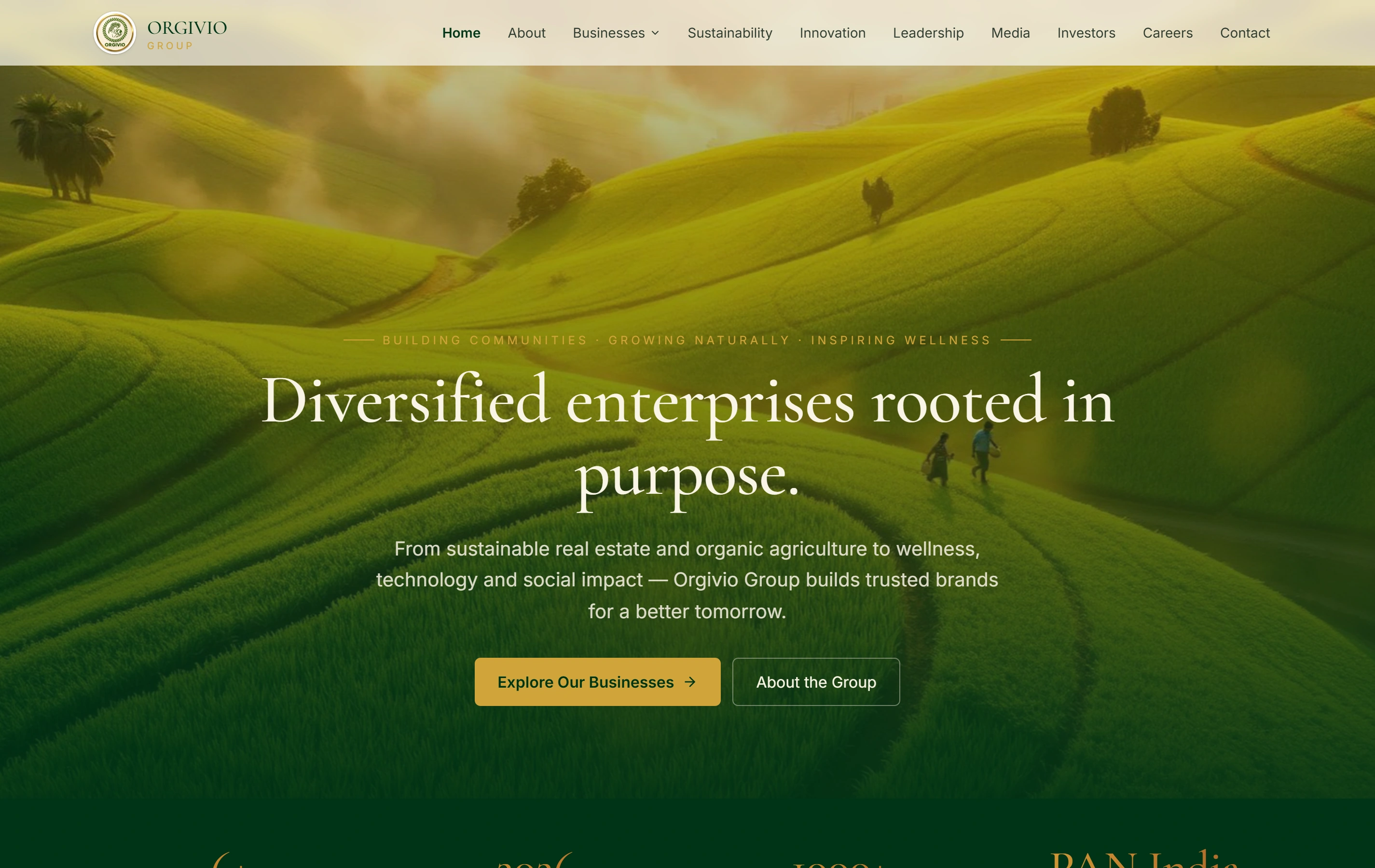
That is a business and identity decision to review, not an automatic consequence of adding a name. We inspect the current materials and the relationship the owner wants to communicate. The scope can define a limited transition while preserving approved assets and information that remain useful.
The business owner provides and approves that wording. The design should make the approved relationship understandable rather than create a claim from a visual arrangement. The decision record also identifies who approves later changes, so future editors do not need to infer naming authority from an asset folder.
The team receives the approved material inventory, applications and transition decisions for the commissioned scope. Our Ranchi team reviews representative uses with the owner. Staff can then identify the intended asset and replacement status, while factual company changes remain with the authorised business reviewer.