Make availability clear before someone places an order.
A good catalogue explains what a customer can buy now and what is still being prepared. For a Kolkata team planning an ecommerce website, that distinction affects product pages, checkout wording and the work handed to fulfilment. Softglimmer connects those decisions before choosing a large collection of store features. The first release should make the edition, availability and next action understandable on a phone. We work remotely from Ranchi and review the catalogue rules with the person who keeps product and dispatch information current.
Stocked products, upcoming editions and dispatch information that customers can understand.
01
Choose the correct edition
Identify the format and product version before adding it to the basket.
02
Read its availability
Separate stock ready to sell from an expected future release.
03
Understand dispatch
The confirmation should match the fulfilment decision the team can carry out.
An example journey, shaped around your requirements.
A hypothetical working example
A stocked title and a forthcoming edition appear in the same catalogue.
Consider a hypothetical independent publisher with stocked books and a forthcoming illustrated edition. This is an example for planning a store, not a Softglimmer publishing client or a statement about Kolkata's market. A customer can buy the stocked title, but the future edition needs a different next action. Presenting both with an identical immediate-delivery message creates a preventable question for the fulfilment team.
Give the edition a usable identity
A title may have different formats or editions with different availability. Keep the identifying details close to the purchasing decision and use an appropriate product or variant model. Images and descriptions should match the selected item. A catalogue search result should help a customer distinguish editions rather than leaving the decision to a small code at checkout.
Do not turn incoming stock into a delivery promise
Let a forthcoming edition show reviewed release information and a clear enquiry or interest action. Accepting a paid pre-order is a separate decision involving merchant payment support, an appropriate app and operational responsibilities. An interest request can record the relevant edition without claiming a confirmed order or automatically adding the person to unrelated marketing.
Stocked products, upcoming editions and dispatch information that customers can understand.
01
Choose the correct edition
Identify the format and product version before adding it to the basket.
02
Read its availability
Separate stock ready to sell from an expected future release.
03
Understand dispatch
The confirmation should match the fulfilment decision the team can carry out.
Hypothetical workflow for project planning. Final rules are agreed with your business.
Before implementation
Agree what each product state means to the buyer.
These decisions set a useful boundary for the first release.
01
Use sellable stock deliberately
On a Shopify implementation, on-hand, available, committed, unavailable and incoming quantities have different meanings. Shopify's inventory guidance distinguishes incoming stock from stock available to sell. Decide who maintains those states and how receipt is confirmed before enabling a buying message. An attractive stock badge should follow the underlying record rather than an editor's guess.
02
Confirm pre-order eligibility first
Shopify documents pre-orders as an app-based purchase option with specific supported payment requirements. We check the merchant's actual account and provider setup before proposing that route. Until it is confirmed, a future product can use a clearly labelled enquiry flow. The store should never imply that a general out-of-stock setting provides a complete pre-order process.
03
Set the mixed-basket rule
Decide what happens when a basket contains items with different dispatch expectations. Will the store sell only currently available items, permit a supported pre-order option or require a separate enquiry? Write the rule where the customer makes the decision and carry it into the order record. Shipping, payment and store policy ownership stay with the merchant.
What you receive
A catalogue and order journey your fulfilment team can use.
Deliverables follow the reviewed scope and its acceptance responsibilities.
01
An edition-aware product structure
We map product identifiers, editions, formats, images and availability fields using real catalogue samples. Search and category pages use the same distinctions as the product page. The owner receives a clear editing procedure so that adding another title does not require rebuilding the layout or inventing new stock labels.
02
A tested purchase and enquiry boundary
The agreed flow includes product selection, basket review, checkout and the alternative action for products that cannot currently be purchased. Test orders use the merchant-approved test setup. Notifications carry the correct product context so the team can distinguish a completed order from a question about a forthcoming release.
03
A dispatch and catalogue handover
The handover identifies who receives stock, changes release copy and answers fulfilment exceptions. It includes reviewed examples for unavailable editions and changed dates. App access, source access and recurring dependencies are recorded, with ongoing catalogue work and support responsibilities agreed separately.
Project preparation
Prepare the catalogue cases that affect an actual order.
Prepare these examples with the person who owns the working process.
Select contrasting product examples
Bring a stocked product, a product with several formats and a forthcoming item. Supply approved images and descriptions for each. Explain which identifier staff use when packing an order. These examples reveal whether the catalogue needs separate products, variants or an enquiry-only listing without relying on a generic store demo.
Describe an unavailable item
Write what the customer should see if an edition becomes unavailable during browsing. Explain which saved quantity or status triggers the change and who can correct it. Agree how the customer receives the outcome of a failed purchase attempt without being left to guess whether a payment or order was created.
Test a mixed basket on a phone
Review the product selection, dispatch wording and confirmation together on a small screen. Ask someone unfamiliar with the catalogue to describe what they believe they ordered and when it may be sent. Record misunderstandings as copy or workflow changes, rather than assuming a successful button click proves the journey is clear.
Keep release information maintainable
Name the person who approves upcoming-product dates and the place where staff record a change. The public page, enquiry acknowledgement and staff view should not give conflicting answers. An editorial checklist for one date change is more useful than a calendar feature nobody is responsible for updating.
See a real ecommerce catalogue in our work.
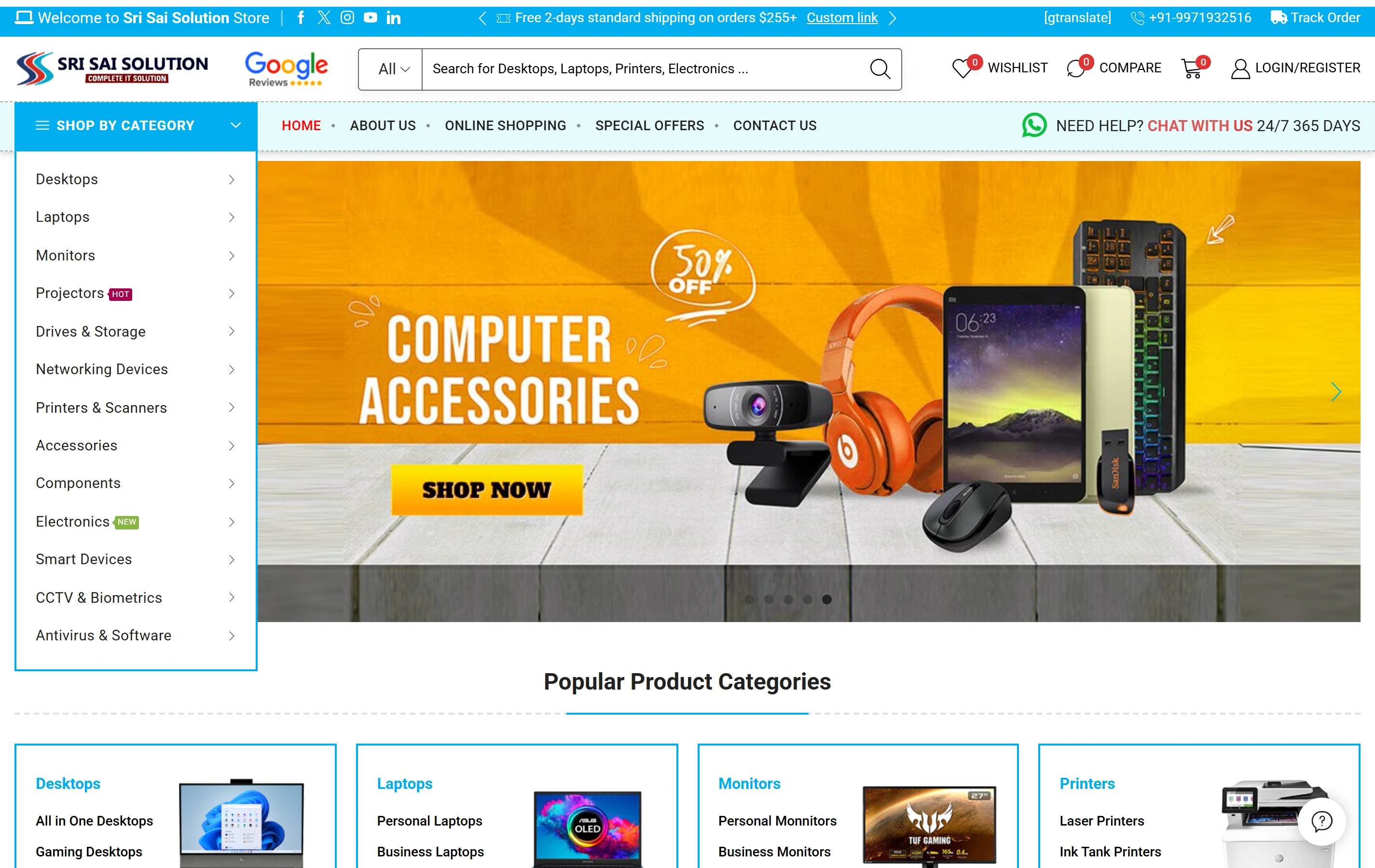
Sri Sai Solution is our documented electronics ecommerce website, with product categories, catalogue search and online shopping. You can review that real work when discussing product discovery and store structure. The publisher and forthcoming-edition scenario above is illustrative; it does not describe that client, establish a Shopify platform claim or imply an achieved sales result.
Use these answers to make the next conversation specific.
Does every future product need a pre-order app?
No. A forthcoming-product page can explain the release and invite a relevant enquiry without accepting an order. A paid pre-order needs a supported merchant setup and a fulfilment plan. We choose the next action that the business can operate responsibly instead of treating every visible product as immediately purchasable.
Can a catalogue be migrated without changing every product URL?
We first review existing URLs, identifiers, images and search visibility. Useful addresses should be preserved where the new platform permits it, and changed addresses need a reviewed redirect map. Catalogue cleanup and migration are planned against actual exports, with reconciliation before the new store becomes authoritative.
Who handles Kolkata catalogue reviews?
Your catalogue and fulfilment owners review representative products and order outcomes with our Ranchi team. We agree remote review windows and document the rules between calls. The Kolkata page describes the service area we can work with; the project scope is based on your catalogue, not an invented local office or publishing client.
Continue with the related service and planning guide.
Review the broader delivery scope, the parent market and the most relevant preparation guide.