
Skip to content

Help the right business buyer start a useful conversation.

Softglimmer offers corporate and B2B website design and development for London organisations through remote work from our Ranchi studio. We connect audience planning, approved company information, responsive design, development and publishing handover. A useful corporate site helps someone understand the business and assess a possible relationship. It should also make a proportionate first enquiry possible without encouraging visitors to place restricted project material into an unspecified public contact route.

Explore the commission
From public capability information to an appropriate first business conversation
  1. 01

    Explain the business

    Organise approved capabilities and company evidence.

  2. 02

    Support assessment

    Answer the buyer’s first questions with relevant material.

  3. 03

    Arrange the next exchange

    Explain how the receiving team will continue.

An example journey, shaped around your requirements.

Commission the corporate presentation and the first buyer journey together.

Start with the people the site needs to serve: a prospective customer assessing capability, a partner considering a relationship, or another stakeholder looking for approved company information. The project identifies their different questions and the pages that answer them. We review existing company material, real work and the current site before proposing a useful information architecture. A larger company description is not automatically a better answer to a specific purchasing question.

The selected engagement can include content planning, a coherent visual system, responsive company and capability pages, genuine project presentation, leadership or resource content, CMS controls and enquiry implementation. An established site adds an inventory of useful material, addresses and working journeys to preserve. Writing, initial content entry, photography and other asset preparation have an agreed extent, with the business approving facts and permitted uses.

The first contact step is part of that design. The receiving team can often assess an initial outline before asking for a detailed specification. We agree which non-sensitive facts help establish fit, what the visitor should leave out, and how a later information exchange is arranged. If the project requires an authenticated portal or controlled document submission, that is a separate, explicit function with its own access and handling requirements. A corporate page and an upload control alone do not establish an appropriate confidential channel.
A hypothetical working example

A procurement buyer is asked for the complete tender before anyone has spoken.

Hypothetical example: a business buyer wants to find out whether a supplier can discuss a project. The draft website asks for a full tender pack as the first enquiry, although that pack contains material the buyer is not ready to share through a general website form. The public site could first explain the relevant capability, request a short permitted outline and describe how the team arranges the next exchange. The company and buyer decide what may be shared and through which approved channel; this is not a London client story or a confidentiality assurance.

Establish fit before requesting restricted project material
  1. 01

    Assess public information

    Read the capability and genuine supporting material.

  2. 02

    Send an initial outline

    Provide only the agreed first-contact context.

  3. 03

    Arrange further information

    Use the channel and permissions the parties have approved.

Illustrative corporate commissioning sequence; the parties approve their information-sharing arrangements.

Define the information exchange before designing the enquiry.

The public website should make the next conversation understandable while leaving commercial and information-sharing decisions with their owners.

DecisionWhy it mattersScope to agreeEvidence to review
Public capabilityA buyer needs enough detail to decide whether to approach the business.Approve the actual services, relevant experience and evidence that may be published.A visitor can explain what the business offers without relying on an unsupported badge or generic claim.
Initial contextThe receiving colleague needs a useful starting point.Choose proportionate questions and clear guidance about material that should not be sent through this route.The first enquiry is usable without a full restricted specification.
Later documentsA detailed exchange may need a different arrangement.Identify the person who agrees the channel, access and required preparation. Scope a portal only when needed.The visitor receives an accurate next step rather than an implied promise that every document can be handled here.
Ongoing publicationCompany facts and enquiry arrangements can change.Give the editor and business approver a routine for reviewing the relevant pages and instructions.An ordinary update preserves the approved capability and first-contact journey.

Receive a corporate website with a practical publishing handover.

Select the pages and functions the business needs; the proposal names both studio work and supplied decisions.

01

Audience and content plan

Map corporate, customer and stakeholder questions to useful pages and genuine material. Record missing facts and their owners.

02

Responsive corporate design

Create representative company, capability, project and contact layouts using approved branding and realistic content.

03

Website and CMS implementation

Build the agreed templates, navigation, editing controls and functions, with technical dependencies reviewed.

04

Business enquiry journey

Implement the selected first-contact questions, guidance, correction messages and receiving destination.

05

Preservation and release checks

Where included, reconcile useful content, media and addresses and follow the important public routes.

06

Editorial and technical handover

Demonstrate a routine company update and explain account ownership, continuing care and further development.

Review the website as a prospective buyer and as its next editor.

For the hypothetical procurement journey, ask a reviewer to establish capability, prepare a permitted initial outline and explain what the website says about detailed documents. Follow a clearly labelled test enquiry into the agreed receiving destination. Review the instructions, unsuccessful attempt and acknowledgement as well as the main page. Any controlled document function needs its own implemented access and handling checks; the public-content exercise does not certify it.

Bring the present site, approved company descriptions, genuine work material and a redacted example of the first conversation your sales team needs. Invite the content approver and the colleague who receives enquiries. London and Ranchi reviews can use dated Europe/London and Asia/Kolkata invitations. Before release, the receiving editor should make an ordinary change and inspect the resulting public information, with maintenance and later project work separately agreed.

Take approved company information through design, build and handover.

A written scope keeps the public website, enquiry function and any later private workspace distinct.

  1. 01

    Discover the audience

    Review company material, buyer questions and the existing contact arrangement. Establish what can be published and requested.

  2. 02

    Design the explanation

    Agree the page model, factual evidence, responsive templates and first enquiry using representative content.

  3. 03

    Build and review

    Implement the selected site, content and functions. Inspect public journeys and the editor’s normal task.

  4. 04

    Release with ownership

    Confirm the accepted material, receiving team, account handover and the agreed care arrangement.

Inspect documented public website work.

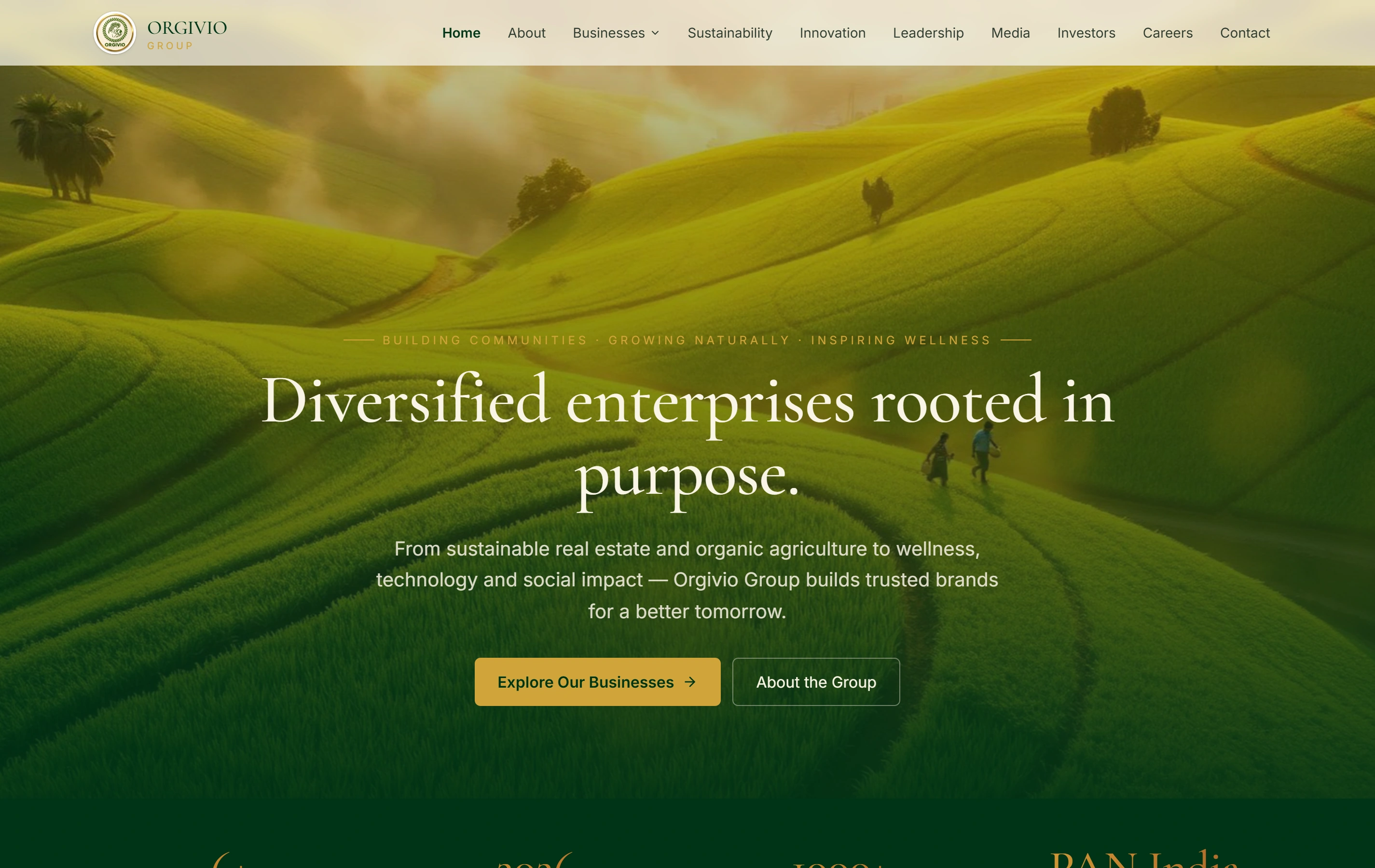
Orgivio Group is a documented corporate group website presenting its businesses, sustainability, leadership and stakeholder information. It offers a real public-information reference. Its portfolio description does not prove the hypothetical procurement/document arrangement, a London client relationship, a particular CMS or an implemented confidential portal.

Group presentationOne recognisable company story
Business divisionsSpecific routes from the overview
Stakeholder informationSeveral audience needs
Orgivio Group websiteOrgivio Group

Questions about the corporate website commission.

Can the website be commissioned without a private portal?

Yes. Clear public information and a proportionate enquiry can form a complete first engagement. A controlled workspace is considered only when a real document or account task justifies its implementation and ongoing responsibilities.

Who approves company claims and supplied project material?

Your authorised company owners confirm what may be published and how it is described. We identify missing inputs and implement the agreed presentation. The website commission does not create certifications, client permission or legal advice.

Can an existing corporate site and useful addresses be retained?

We inspect them before deciding the change. A focused improvement or wider rebuild can include a preservation plan for useful content, media and routes, with migration and content preparation named in the proposal.

How does a London team work with your studio?

Softglimmer is based in Ranchi. We agree remote review dates, the coordinating approver and receiving contacts. The proposal identifies design, build, content, account handover and support responsibilities; this page describes service availability rather than a London office.