
Skip to content
Nashik · Travel Website Development

Turn travel interest into a well-informed enquiry.

Softglimmer designs and develops travel websites for Nashik agencies and tour businesses, working remotely from Ranchi. We bring destination information, tour presentation, responsive design, content editing and the trip enquiry together. The starting point is what your business actually sells and how your team discusses it with travellers. A first website, a catalogue improvement and a larger rebuild can each have a complete, useful scope.

Explore the service
A travel website built around real offers and the people handling enquiries
  1. 01

    Explain the travel offer

    Give destinations, tours and services a useful place.

  2. 02

    Support a trip discussion

    Keep published details and requested changes understandable.

  3. 03

    Prepare the travel team

    Demonstrate editing, enquiry receipt and ordinary upkeep.

An example journey, shaped around your requirements.

Commission the website around the way your agency sells travel.

An agency presenting a small set of defined tours needs different pages from one discussing mostly tailored trips. Discovery reviews your offer, audiences, existing materials and receiving process before deciding the site structure. We identify which destinations deserve detailed pages, what a tour entry should explain and where a visitor needs a conversation. The aim is a coherent travel website rather than a collection of attractive destination covers.

The selected work can include a content inventory, page architecture, visual design, responsive templates, destination and itinerary pages, enquiry forms and CMS controls. Supplied photography, writing, initial content entry and migration receive an agreed extent. Your travel owner approves descriptions, inclusions, conditions and image use; our team organises and implements the presentation. Existing useful pages and enquiry routes are reviewed before replacement.

Choose booking functions separately from the information site. If online availability, payment or another provider connection is needed, we inspect that arrangement and its responsibilities before including it. A well-built catalogue and enquiry journey can stand on its own. The proposal names the pages, functions, inputs, release checks and handover so you can compare the actual work being offered.
Make the catalogue useful before adding more controls.

These choices shape the design, content work and effort needed for a maintainable website.

01

Defined tours and tailored enquiries

List what visitors may select as published and what needs discussion. Use the business’s actual mix rather than forcing every request into a fixed package. Decide what dates, traveller context and preferences help the first response.

02

Page structure and discovery

Choose destination groups, tour details and supporting service pages from your inventory. A small catalogue may need straightforward navigation; filters become useful only when their meanings and source fields are maintained. Review direct entry to a tour as well as homepage browsing.

03

Content and image preparation

Identify who supplies descriptions, itinerary facts, photography and practical conditions. Agree the writing and entry work included. If imagery is representative, its approved caption should make that clear where it matters to the traveller’s understanding.

04

Editing and receiving responsibility

Name who updates tour information and who handles enquiries. Select the fields staff need to maintain, then demonstrate a realistic change. Domain, hosting, forms, provider accounts and continuing technical care have named owners in the handover.

A hypothetical working example

A traveller asks to change one part of a published trip.

Hypothetical example: a traveller opens a published itinerary, likes its route and asks for an extra stop with a different return leg. The agency needs to understand both the tour being referenced and the traveller’s requested variation. Editing the public itinerary to match that one request would confuse the offer other visitors are reading. The review follows the reference tour into an enquiry carrying its identity and a separate description of the requested change. The receiving colleague can discuss feasibility and prepare the next response. The acknowledgement describes a request for review; the additional stop is not displayed as an included or confirmed arrangement. This is a sample journey within the wider website build.

Keep the tour reference and the traveller’s variation distinct
  1. 01

    Read the published tour

    Understand the agency-approved route and details.

  2. 02

    Describe the variation

    Keep the additional stop with the individual enquiry.

  3. 03

    Discuss the next arrangement

    Let the responsible team review the requested trip.

Illustrative enquiry review. Your agency supplies its actual offers and response process.

Receive the public website and a usable publishing handover.

The written scope selects the relevant outputs and assigns the material each side supplies.

01

Travel content and page plan

An inventory of destinations, tours, services and useful existing addresses, with missing facts and approval owners identified.

02

Responsive visual design

Representative destination, tour and contact layouts using approved branding and imagery, reviewed with realistic copy on desktop and phone.

03

Website and CMS build

The agreed page patterns, navigation, media presentation and editing controls, demonstrated with an ordinary tour update.

04

Trip enquiry journey

Appropriate labels, useful trip context, the selected receiving destination and understandable success or correction wording.

05

Content and transition work

The agreed writing, entry, image preparation and migration, with a reviewed treatment for useful pages whose addresses change.

06

Release and ownership notes

A record of accepted journeys, account responsibilities, routine maintenance and the support arrangement after handover.

Bring a representative tour and the way your team answers it.

Share the current website, tour material, approved photographs and one example of the information a traveller normally requests. Include a clear fixed itinerary and a request your team would discuss individually, if both belong to your offer. Remove unnecessary personal information from examples. Identify the content approver and receiving colleague.

Review the form wording with them. W3C’s form instructions guidance supports explaining required and optional information. For this site, decide whether a date is a preference and which details can wait for a conversation. Follow a labelled test enquiry to its agreed destination and inspect the actual information received.

Move from the travel brief to an owned website.

Our Ranchi studio coordinates remote Nashik reviews with the people approving content, receiving enquiries and maintaining the site.

  1. 01

    Discover the offer

    Review the catalogue, visitor questions and current setup. Agree the first release and the material needed for an estimate.

  2. 02

    Design with real content

    Review representative tours, destination navigation and the enquiry, then settle the reusable page patterns.

  3. 03

    Build and review

    Implement the selected site and editing tools. Check content, media, phone use, contact outcomes and the scoped migration.

  4. 04

    Launch and hand over

    Confirm the approved release and account owners. Rehearse a tour update and document ongoing care and later development.

Explore a documented travel website.

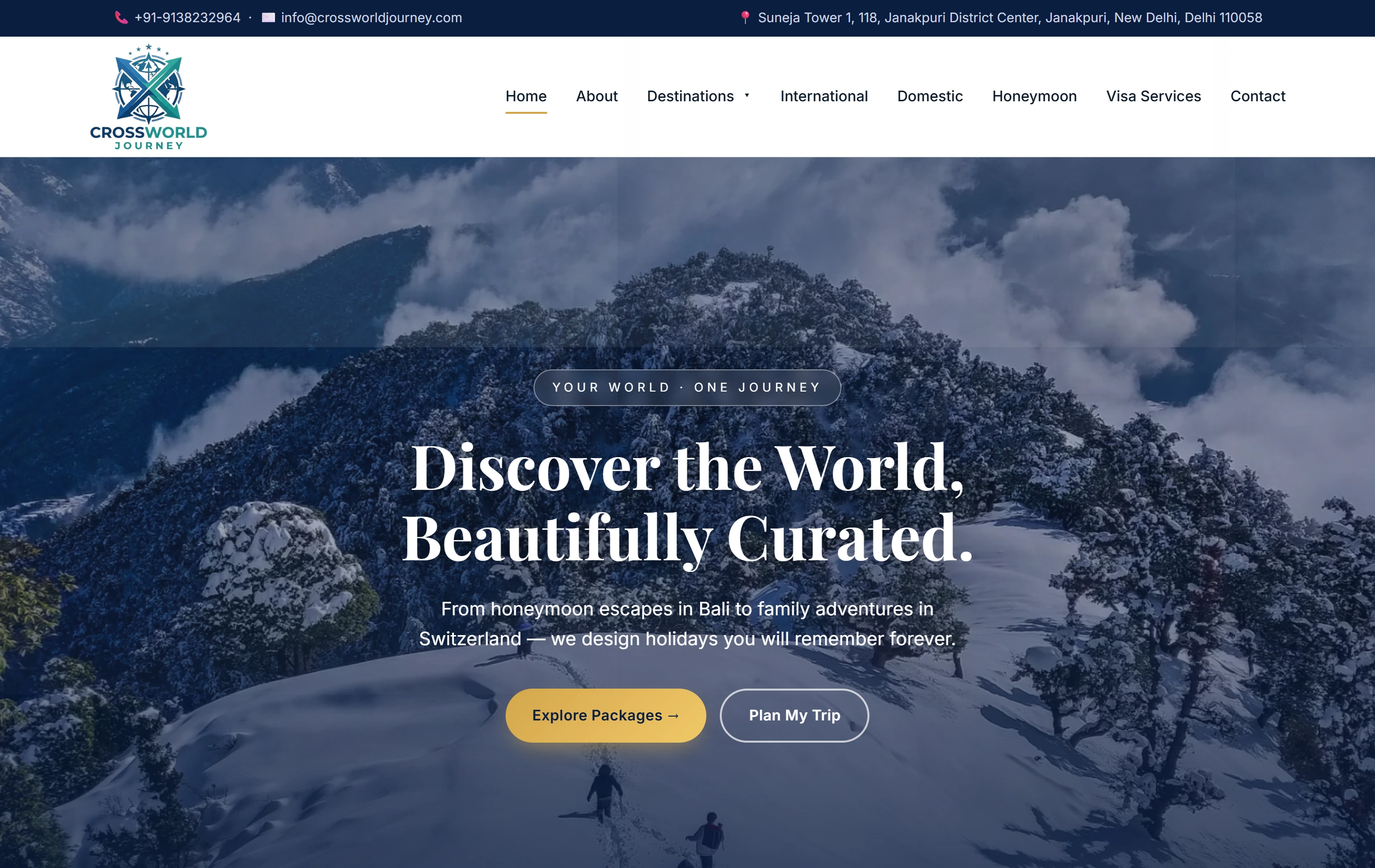
Crossworld Journey is a Softglimmer website presenting domestic and international holiday packages, destination information and trip enquiry paths. It is a useful public design reference. Your proposed website’s booking functions, provider connections and operating arrangements are scoped from your own business.

Domestic and internationalA broad holiday presentation
Destination informationContext for the trip discussion
Trip enquiryA visible next step
Crossworld Journey websiteCrossworld Journey

Questions about the travel website project.

Can we start with tour enquiries instead of live booking?

Yes. A clear catalogue, useful tour detail and an enquiry your team can handle can form a complete first release. Booking and payment are assessed against the real provider, availability source and operating process when needed. The scope should state what the visitor can actually complete online.

Can staff add destinations or update itineraries?

The CMS can include the recurring entries and fields agreed for your offer. We demonstrate adding or correcting a representative tour and inspecting its public page. Your nominated owner approves changing travel facts; the handover explains the supported editing tasks and when technical assistance is required.

What affects the project estimate?

The number of page patterns, catalogue preparation, custom design, existing content, migration and included functions shape the work. Share the current site and a representative tour set so the proposal identifies those tasks. Provider subscriptions and continuing support are described separately from the initial design and build.

How do Nashik teams review the work with Softglimmer?

We work from Ranchi through agreed remote sessions, written feedback and a named approver. The travel content owner reviews facts while the receiving colleague checks enquiries. Before launch, the intended editor rehearses a routine update and the team agrees the account, release and maintenance responsibilities.