
Skip to content
UI & UX design for New York

Make the task understandable. Give the interface a coherent system.

Softglimmer provides UI and UX design for New York teams building or improving websites, apps and business software. We connect task discovery, information structure, interaction design and visual interface work, with prototypes and implementation guidance shaped around the brief. You can commission a focused review or a wider design programme. Our Ranchi studio works remotely with the people who approve, use and build the product.

Explore the service scope
A design commission should answer a product question.
  1. 01

    Understand the people

    Identify the task, context and available evidence.

  2. 02

    Design the decisions

    Make information and important states reviewable.

  3. 03

    Explain the system

    Provide reusable rules and a practical handover.

An example journey, shaped around your requirements.

Start with the user’s goal and the decision the design must support.

A public website, a staff application and a customer service product need different information and interactions. We establish who uses the interface, what they need to accomplish and where uncertainty interrupts the task. Available support questions, product observations and research can help define the problem, with their source and limits kept visible.

The design work can cover information architecture, task flows, wireframes, interactive prototypes, responsive visual layouts and a reusable component system. We consider meaningful content and difficult states alongside the ordinary route. A screen list is useful only when the team can explain what those screens help someone understand or do.

Design-only and design-plus-build are distinct scopes. The proposal names the design artifacts, review activities, implementation responsibilities and acceptance boundary. A prototype can illustrate a journey without executing permissions, saving production records or demonstrating the final product’s behaviour.
Select an engagement with a clear purpose.

01

Review a troublesome existing experience

Share the current interface and specific difficulties. A focused UX review can prioritise changes to structure, labels, feedback or sequence before a larger redesign is considered. Recommendations should refer to tasks rather than preference alone.

02

Design a new or revised journey

Define the people, important decisions and constraints for a bounded flow. Explore alternatives, review a prototype and refine the interface with representative content before expanding the screen set.

03

Unify a growing interface

Inventory patterns across the relevant product areas. Agree components, visual rules and content conventions that reduce accidental inconsistency while retaining differences that genuinely help different tasks.

Six outputs that connect design review with implementation.

01

Task and evidence brief

A shared account of intended users, goals, current problems and assumptions. Identify unresolved business rules and the decisions that need more evidence before detailed design.

02

Information and journey structure

Navigation, content groups and screen responsibilities organised around the selected tasks. Include the context a person needs when entering partway through a journey.

03

Wireframes and prototype

A reviewable sequence with meaningful content and relevant alternative states. Use it to question hierarchy and behaviour before visual detail makes uncertain decisions appear settled.

04

Responsive visual interface

The scoped layouts, typography, controls and content hierarchy using the approved brand. Review longer labels, small screens and important feedback rather than only the ideal presentation.

05

Components and interaction guidance

Reusable patterns with their relevant states and usage rules. Explain labels, waiting, validation and available actions where needed so later screens can follow a coherent system.

06

Evaluation and developer handover

The agreed review findings, revisions, design files and implementation notes. Record open dependencies and show which conclusions come from observed users, stakeholder review or untested assumptions.

Choose an evaluation method that fits the evidence you need.

Access to representative users, suitable tasks and an agreed review method determines what a design evaluation can establish. We can scope those activities with your team. An internal walkthrough or expert review can be useful, but neither should be relabelled as a completed user study. Keep findings attached to the task and version examined.

Bring the development team into decisions about real data, component constraints and error responses. Include keyboard use, readable content and other relevant access needs in the brief, with a defined implementation-review scope. A design file cannot certify the built product or resolve business rules that no owner has approved.

Make the design-to-build handover part of the engagement.

New York reviews can use dated America/New_York and Asia/Kolkata invitations, with agreed asynchronous feedback windows. Softglimmer’s studio is in Ranchi. Nominate a product approver and an engineering contact so conflicting feedback and implementation questions have clear owners.

  1. 01

    Frame the problem

    Review the product, intended users and available feedback. Agree the task coverage, deliverables, evaluation approach and design-only or wider implementation boundary.

  2. 02

    Compare the structure

    Explore information order and interaction choices with realistic content. Resolve important terminology and ownership questions before extending detailed screens.

  3. 03

    Refine and evaluate

    Develop the selected visual direction, components and meaningful states. Assess agreed tasks, document findings and revise against the evidence actually obtained.

  4. 04

    Hand over and support decisions

    Walk through designs and behaviour with implementers. Record unresolved dependencies, acceptance tasks for the built interface and the arrangements for later design questions.

An optional example: the person cannot tell whether an edit was saved.

Imagine an operator changing a single customer-facing record. The screen shows the new wording immediately, but its saved value, current draft and cancel action are indistinguishable. The person leaves and later cannot explain what was retained. A prototype could make the editing state, scope of Save and deliberate discard choice understandable, including a failed save with entered text still visible according to the approved rule. The underlying storage and permissions require implementation. This is a hypothetical interface exercise, not a New York client, observed study result or completed editing system.

Specify what each important state means before reusing its component.

For an editing journey, agree the visible meaning of unchanged, edited, saving, saved and unsuccessful states where those states exist. Other products will need their own vocabulary. Consistent styling helps only when labels and actions describe the actual product rules. Do not rely on colour alone to communicate a consequential difference.

The handover can identify the response information engineering needs to supply and the checks to repeat in the implementation. If the business has not decided whether leaving an edit discards it, keep that decision open instead of embedding a silent assumption in the prototype.

Explore a real service website and enquiry journey.

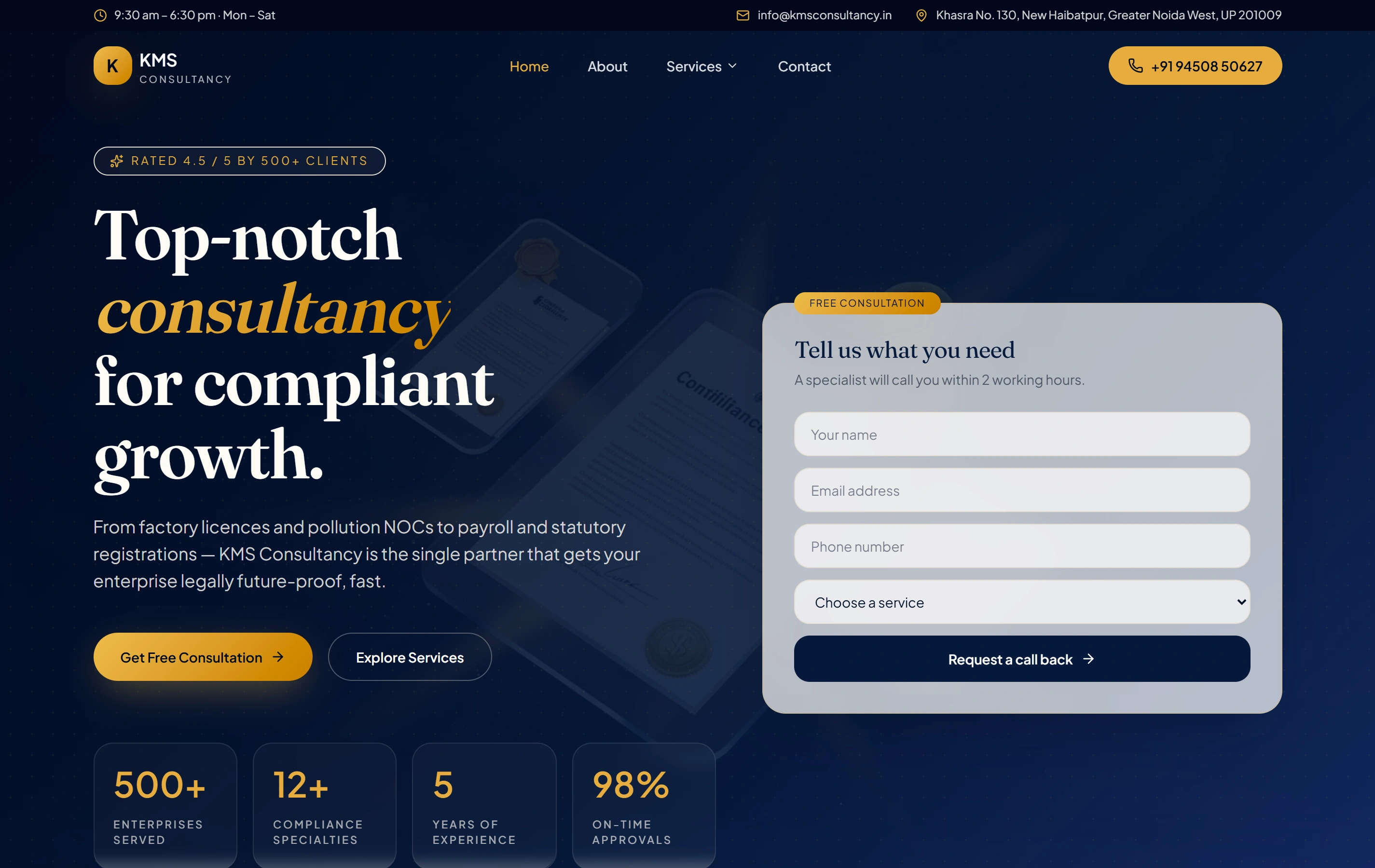
KMS Consultancy’s documented website organises its services and enquiry journey. Explore that website project for its information hierarchy and contact routes. Your UI and UX engagement separately defines research, prototyping, evaluation and implementation handover.

Questions before commissioning UI and UX design.

Can we begin with one difficult journey?

Yes. Define the task, evidence and output needed for a focused review or redesign. It can produce a useful prototype and handover without replacing every part of the product. A later extension should follow a separate scope decision.

Will you conduct research with our users?

That can be scoped where suitable participants, access and a review method are available. We distinguish actual user observations from team feedback and design assumptions, and do not manufacture research findings.

Does the design service include production development?

Only where explicitly included. Design artifacts, interaction prototypes and implementation guidance have different acceptance boundaries from working code, integrations and server-side rules. We make those outputs clear in the proposal.

Can our engineering team implement the design?

Yes, with an agreed handover format and relevant engineering input during design. We explain the states, assets and component rules, then record unresolved dependencies and any later implementation-review or design-support arrangement.