Skip to content
Website Maintenance for New York Update Dependencies

Check the website’s working task after the update, not only the update notice.

A website update can complete in an administration screen while changing something the business relies on publicly. An editor may still open the page even when a contact control or resource journey no longer behaves as expected. Softglimmer plans website maintenance for New York teams around the site’s actual dependencies and useful acceptance checks. Our office is in Ranchi and the work is delivered remotely through an agreed support scope. We inspect the website, hosting and existing update arrangements before defining responsibilities. The maintenance plan should say what is checked, what can be recovered and who decides whether a changed dependency is ready for release.

Explore New York
A recoverable dependency-update process that checks the public contact journey as well as the editing interface.
  1. 01

    Identify the dependency

    Know what the proposed update can affect.

  2. 02

    Check the public task

    Review the journeys the business relies on.

  3. 03

    Recover or accept

    Use evidence to make the release decision.

An example journey, shaped around your requirements.

A hypothetical working example

The update succeeds, while the public contact control stops working.

Consider a hypothetical New York organisation updating a website dependency that contributes to a public enquiry form. The administration screen reports success, but a visitor can no longer reach the intended contact step. This is a planning example, not an incident or client result. A useful maintenance scope would include the contact journey in acceptance and define how the team can restore the previous working arrangement if the change is not ready.

Choose checks tied to the website’s purpose

Identify the pages, controls and resources that support a real visitor task. A homepage response alone may not show that those journeys survived an update. The team should review the agreed contact or information path using a bounded test arrangement, keeping any real business submission separate from a routine interface check.

Make the recovery decision concrete

Know which files, data and configuration the recovery process needs. A backup label does not show that those parts can be restored together. The operating owner should understand the available recovery point and the evidence required to accept a repair or roll back the change, rather than repeatedly updating dependencies while the underlying task remains broken.

Update checks and recovery
  1. 01

    Identify the dependency

    Know what the proposed update can affect.

  2. 02

    Check the public task

    Review the journeys the business relies on.

  3. 03

    Recover or accept

    Use evidence to make the release decision.

Hypothetical planning sequence.

Define the update boundary and a working recovery route.

01

Inventory dependencies and ownership

Record the platform, extensions, hosting and connections the current site uses. Identify who can approve an update and who can investigate an unexpected effect. Do not assume a public screenshot reveals that configuration. Discovery needs the actual operating arrangement before a maintenance scope can describe the changes or support responsibilities it includes.

02

Prepare recovery before changing the site

WordPress’s update guidance recommends backing up the database and files before updating. For the chosen website, review what its recoverable state actually contains and who can restore it. The plan should distinguish a confirmed restore procedure from the existence of an archive, and should retain the evidence from the relevant recovery check.

03

Use a bounded update acceptance set

Choose meaningful checks for the functions the business relies on, including the public contact step and key resource paths. Record what each check proves and whether it uses a local fixture, staging account or separately approved live action. A passed interface check should not become a claim that email, payment or another provider executed successfully.

04

Agree stopped-change handling

Define who reviews a failed check and whether the change is held, repaired or rolled back. Keep the previous working state available according to the agreed recovery plan. The team also needs a way to understand an unresolved dependency or expired access arrangement without mistaking a maintenance ticket’s status for evidence that the public issue is fixed.

Maintenance responsibilities the owner can understand.

01

Dependency and access inventory

The platform and connections in scope, their operating owners and the access needed to assess an approved change.

02

Recovery preparation record

The relevant files, data and configuration, with an explicit recovery point and the evidence available for restoring the agreed website state.

03

Update acceptance checklist

A bounded set of public and editorial journeys that need to pass before the team accepts the dependency change.

04

Support and decision handover

The escalation, stopped-change and rollback responsibilities, with observed results and unresolved dependencies kept visible.

Bring the website’s important journeys into the support brief.

Prepare the current hosting and update arrangements, then identify the visitor and editor tasks the business needs to keep working. A service enquiry, a resource download and an ordinary content correction may each depend on different parts of the website. Choose representative checks that reveal those relationships instead of repeating the same homepage request after every change.

Review the available recovery material with the operating owner. Files and data may need to move together, and a provider or hosting configuration may be another dependency. The maintenance scope should state the evidence available for recovery and any gap that requires a separate task. Do not treat a recent backup timestamp as proof that a complete restore has already been rehearsed.

For remote work, the New York owner confirms the important journeys and release decisions while our Ranchi team records the update and check results. The agreed support boundary determines how incidents and unavailable access are handled. A maintenance report should describe observed behaviour and completed checks, with real provider execution or a live enquiry kept separate from local or staging evidence.

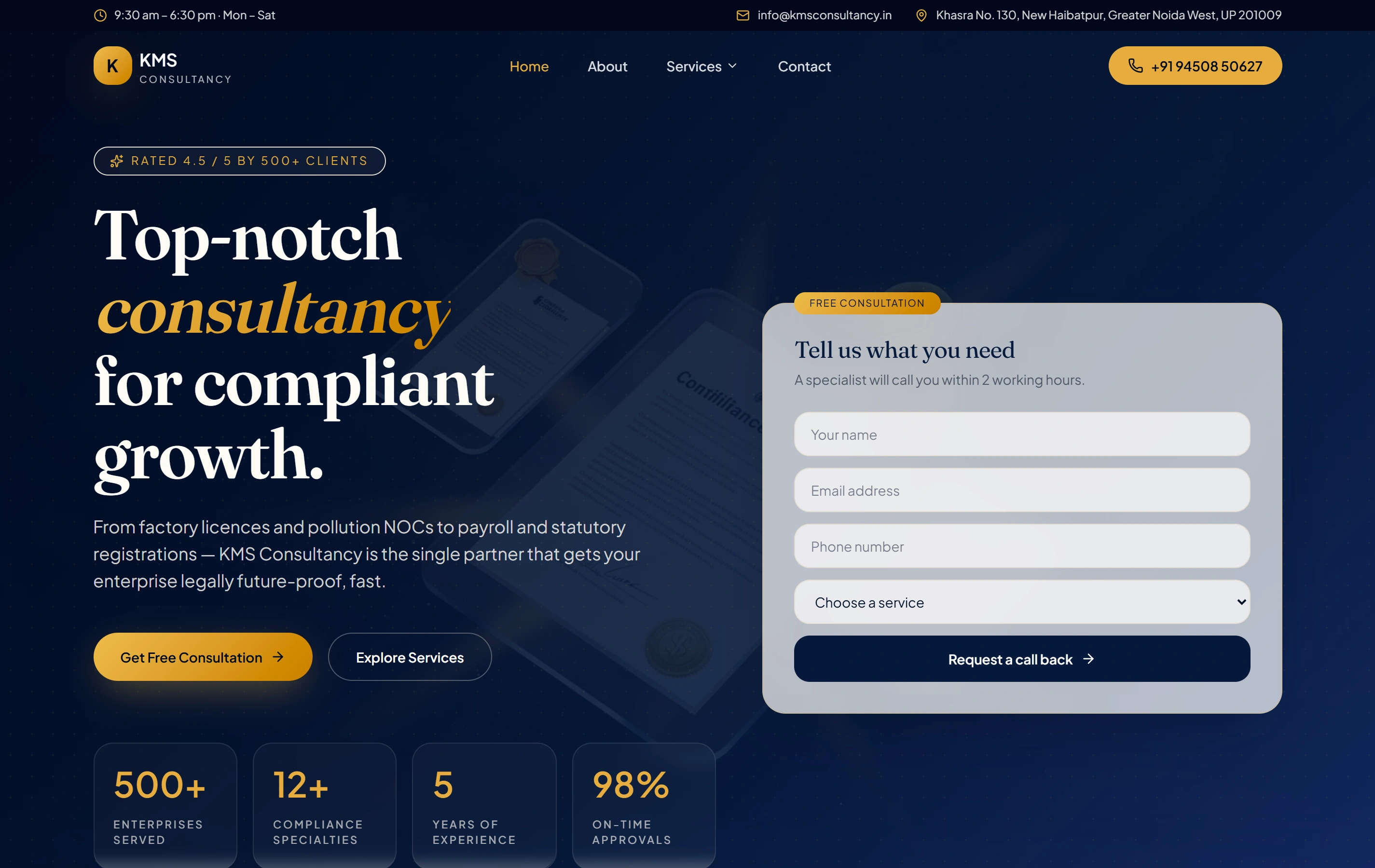
A real website with a useful public service journey.

KMS Consultancy is a documented Softglimmer website with structured service pages and an enquiry journey. It provides a real example of public information and contact functions worth preserving. The portfolio does not prove WordPress technology, a New York maintenance engagement, recovery testing or incident-response results.

ContentCompliance
StructureService pages
ActionEnquire
KMS Consultancy websiteKMS Consultancy

Project questions.

Does an update success message establish that the website works?

It shows the result reported by that update process. The business’s public and editorial tasks still need the agreed checks. We define those tasks with the owner and record their observed behaviour, rather than treating a completed installation as proof that every form, download or connection remains healthy.

Is a backup enough to promise recovery?

The operating plan needs to identify the files, data and configuration involved and the procedure used to restore them. The available evidence should remain explicit. An archive can be a useful input, but its existence alone does not establish that the complete website state can be recovered successfully.

How does the New York owner review remote maintenance?

The owner approves the scope and the meaningful journeys, then reviews the recorded results with our Ranchi team. Support responsibilities and release decisions are agreed in advance. Any missing account access or unverified provider outcome stays visible in the report instead of being presented as completed recovery.