Skip to content
AI Knowledge and Search Planning for Singapore Teams

Make the source of an answer reviewable before asking the team to rely on it.

A team searching internal information needs to know which source answers the question and whether it is current and appropriate for the person asking. Adding an AI response does not remove that requirement. Softglimmer plans knowledge and search systems for Singapore teams around approved documents, retrieval boundaries and a concrete review process. Our office is in Ranchi and delivery is remote through agreed discovery and implementation reviews. We inspect the existing information and working need before choosing a search interface or an AI layer. The project begins with evidence the team can govern, rather than a promise that a system will answer every question.

Explore Singapore
Approved knowledge sources, retrievable evidence and a defined response when information is missing or access is restricted.
  1. 01

    Approve the sources

    Identify the documents the system may use.

  2. 02

    Retrieve relevant evidence

    Check the information available to the current user.

  3. 03

    Review the response

    Show support or explain that the evidence is missing.

An example journey, shaped around your requirements.

A hypothetical working example

Two documents give different instructions for the same task.

Imagine a hypothetical Singapore service team with an older procedure document and a later approved revision stored in separate folders. Staff searching for an answer may find either one. This is a working example, not a delivered knowledge-system claim. Before adding generated responses, the scope needs to identify document status, ownership and the treatment of conflicting or missing evidence. Otherwise a fluent response can conceal the information problem rather than resolve it.

Establish the approved source set

Name the documents in scope and the owner who can confirm their status. A newer file is not automatically the approved replacement, and an older file is not automatically irrelevant. The team decides which material is current, retained for reference or excluded. The search design should preserve those decisions in a form reviewers can inspect.

Define the unsupported-answer behaviour

The system needs a clear response when the approved material does not answer a question or the person lacks access to the relevant source. A useful result may show a document to review or direct the question to an owner. It should not invent a policy or convert an uncertain interpretation into an authorised instruction.

  1. 01

    Approve the sources

    Identify the documents the system may use.

  2. 02

    Retrieve relevant evidence

    Check the information available to the current user.

  3. 03

    Review the response

    Show support or explain that the evidence is missing.

Hypothetical planning sequence.

Choose the knowledge boundary before choosing the answer interface.

01

Inventory documents and ownership

Review the material the team actually uses, its formats and the people authorised to approve changes. Record outdated versions, conflicting instructions and documents with a restricted audience. The first scope can use a small, coherent set of sources. Ingesting every available folder may make the interface appear comprehensive while leaving the underlying authority unresolved.

02

Apply access at retrieval

Decide which users may retrieve each source before the information becomes available to an answer. Microsoft’s RAG overview describes grounding responses in retrieved content and identifies granular access control as a governance concern. The implementation needs its own permission design and denied-access checks; a source link displayed afterward is not a complete access-control plan.

03

Make supporting evidence inspectable

Agree how a result identifies its supporting source and relevant context. A generated statement should be reviewable against the approved material. The team needs to distinguish a retrieved passage, a summary and an unsupported inference. The acceptance brief should include questions where the source is clear as well as cases where the evidence is incomplete or contradictory.

04

Test changes and limits

Choose a bounded question set with the content owner and define what a useful response should do. Include a document correction, a removed source and a user with narrower access. Track the observed results rather than claiming universal accuracy. Provider selection, usage costs and account activation require an explicit scope and approval separate from a local fixture review.

A knowledge scope the content owner can assess.

01

Approved source inventory

The material in scope, its publishing or retrieval status, the audience permitted to use it and the owner responsible for changes.

02

Search and response design

An interface plan showing how users find information, inspect supporting evidence and recognise an unanswered or restricted question.

03

Review question set

Representative questions and expected source behaviour covering useful retrieval, missing evidence, conflicting information and denied access.

04

Content and operating handover

Instructions for approved document changes, review of observed answer failures and the responsibilities attached to any provider or account included in the project.

Resolve document authority before adding more material.

Bring a small set of approved sources and the questions the team needs to answer with them. Include the content owner who can explain which instruction is authoritative. An anonymised review fixture should preserve the structure needed for testing without copying confidential operational material unnecessarily. Discovery should record gaps that require a content decision before implementation.

Compare straightforward search with the proposed AI layer. The need may be to find the right document, answer a narrow recurring question or explore material in a more conversational way. Those are different requirements. Choose the first scope based on the task and available evidence, with an explicit response for information the source set does not cover. A demonstration that answers one prepared question is not proof of ongoing accuracy.

For remote review, the Singapore content owner approves the source boundary and expected behaviour while our Ranchi team presents concrete results and implementation checks. Record which tests use local fixtures and which depend on an approved provider configuration. After a document update, rerun the relevant review questions and inspect the evidence returned. That maintenance task should have an owner before the knowledge system is considered ready for regular use.

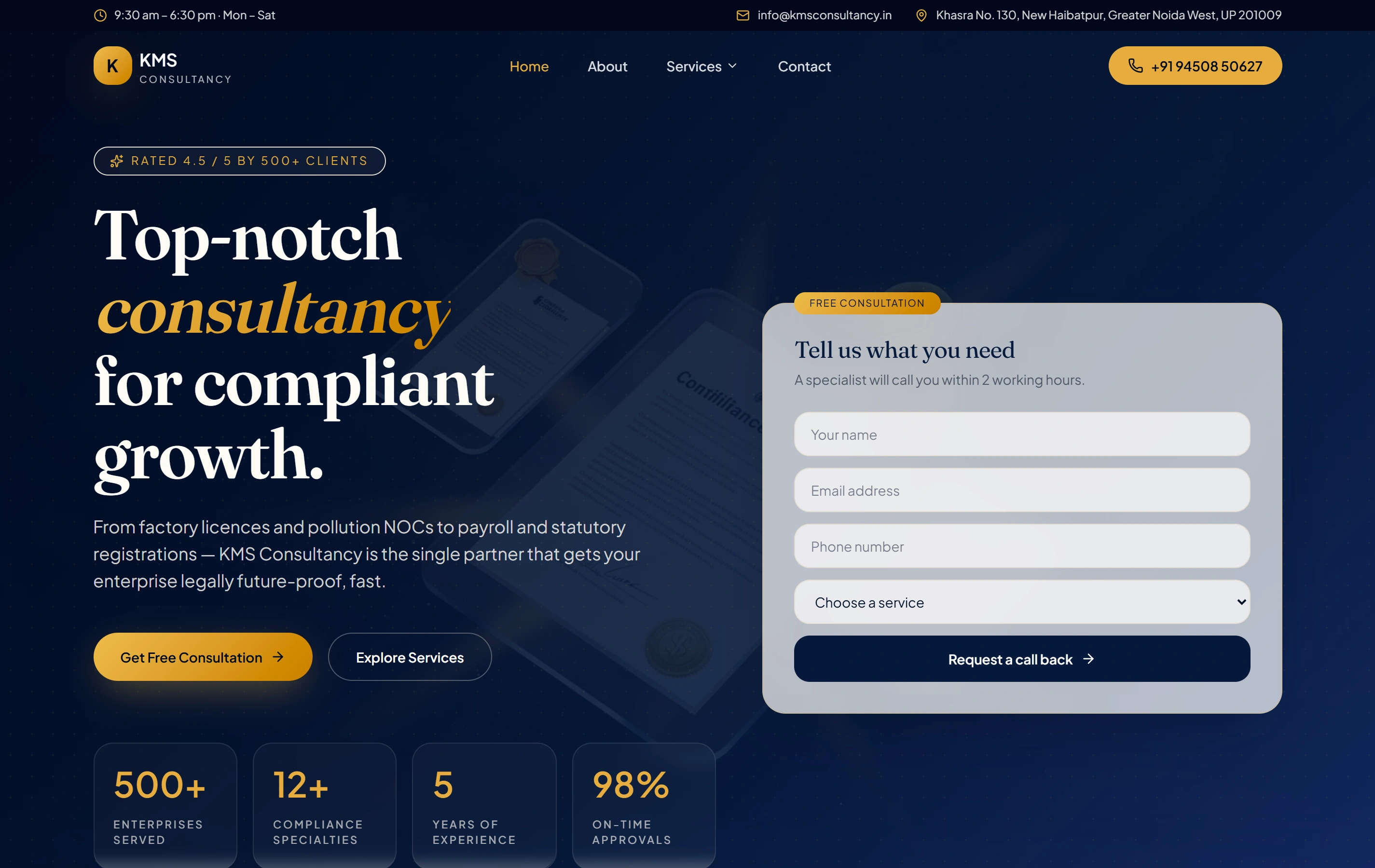
Real website evidence for organising complex service information.

KMS Consultancy is a documented Softglimmer website that structures a complex compliance service catalogue into clear pages and an enquiry journey. It is relevant as an information-organisation example. The portfolio is website evidence only; it does not prove an AI search implementation, answer accuracy, private document retrieval or results for a Singapore team.

ContentCompliance
StructureService pages
ActionEnquire
KMS Consultancy websiteKMS Consultancy

Questions before commissioning the work.

Will the system answer every question from the documents?

That cannot be established from a source inventory or demonstration alone. The project defines a task, approved material and representative review questions. Results should show their support or make the missing evidence clear. Ongoing changes need review, especially when instructions conflict or a source has been replaced.

Can confidential and public material share one search?

That needs an explicit permission model and implementation review. The person asking should only retrieve the material they are allowed to use. We define source audiences and denied-access cases before accepting the system. Showing a citation does not by itself establish that the retrieved content was authorised for that user.

What does the Singapore team maintain after handover?

The team owns source approval, document status and the expected answers for its working tasks. Our Ranchi team documents the agreed implementation and review process. Provider access, usage arrangements and unresolved answer issues also need named owners so a changed document or account does not become an invisible dependency.