
Skip to content
Mobile app development for Vancouver

A useful mobile product. A clear plan beyond the first install.

Softglimmer designs and develops mobile apps for Vancouver teams serving customers or supporting business operations. We connect the repeated user task with application design, the required backend and a practical release plan. Platform choices, device behaviour, account boundaries and ongoing support are part of the scope. Delivery is remote from Ranchi, with agreed milestones and reviewable outcomes rather than an unqualified list of screens.

Explore the service scope
An app is a product and an operating responsibility.
  1. 01

    Choose the mobile task

    Identify why someone needs the product repeatedly.

  2. 02

    Connect the right records

    Define what the device and service each hold.

  3. 03

    Plan the operating release

    Review distribution, ownership and support.

An example journey, shaped around your requirements.

Build around a complete customer or staff task.

An app needs a reason for people to install it and return. We can review a new product idea, improve an existing mobile experience or define a first release around a bounded service or operating task. Discovery identifies the useful outcome, intended users, necessary information and people responsible for the resulting work.

The commission can cover UX and prototype work, application development, account and data connections, explicitly required backend changes, device and workflow checks, distribution preparation and handover. A working backend is not assumed merely because the interface has an account screen. Permissions, notifications, offline work and integrations are included where the reviewed requirements justify them.

A responsive website or browser-based application may serve an occasional information or enquiry need more practically. If an installed app is appropriate, its architecture follows the actual platform, device and maintenance requirements. The optional replacement-phone example below is one product decision, not a restriction of the wider mobile service.
Choose the channel and release boundary before adding features.

01

Browser experience or installed app

Compare frequency of use, required device capabilities and how users receive the product. An installed experience should earn its added distribution and maintenance responsibilities. Keep the first task specific enough to review end to end.

02

Android, iOS or both

Identify the audience and devices to support. Native and cross-platform approaches can be assessed against the feature requirements and future ownership. A shared design does not remove platform-specific checks and release responsibilities.

03

Improve a product or build a first release

An existing app needs review of its code, supporting services and active users. A new product needs a clear initial boundary. In either case, preserve useful behaviour and keep deferred capabilities separate from accepted work.

Six output groups for a complete mobile commission.

01

Product and dependency brief

The audience, repeated task, platforms and first-release outcomes, with backend and provider dependencies named. Record open questions and ownership rather than treating them as completed capabilities.

02

Mobile journey and prototype

Onboarding, navigation and the agreed task using representative content. Include interruptions, uncertain responses and correction routes that matter to the selected workflow.

03

Application implementation

The scoped screens, interaction states and necessary device features. Document the supported operating-system and device range and the implementation approach chosen for maintenance as well as launch.

04

Backend and approved integrations

The required accounts, permissions, data operations and external connections. Agree source ownership and error handling, including supporting administration where it is expressly included.

05

Device and workflow acceptance

Review ordinary and difficult tasks on the agreed devices and release build. Follow the result into the authoritative record so an attractive confirmation screen is not mistaken for a completed operation.

06

Distribution and operating handover

Prepare the selected release route, client-owned accounts, support information and dependency record. Define maintenance, reporting and future-change responsibilities beyond installation.

Decide what belongs to the device, the account and the business record.

A screen may show temporary input, an account-held draft or an accepted service record. Those are different responsibilities even when they look similar. For the intended product, decide which information persists, where it is held, how it is refreshed and what the interface can truthfully say after an uncertain response. Offline entry and later reconciliation require explicit design and acceptance.

Use permissions only for an agreed purpose and review the outcome when a required capability is unavailable. Define the account and role rules with the business owner, and identify the technical owner of any connected system. These requirements must be implemented and checked; a button being hidden does not prove that access is controlled.

Review the task as a product, then prepare its release ownership.

We can arrange Vancouver reviews with dated America/Vancouver and Asia/Kolkata invitations and written approval windows. Softglimmer is based in Ranchi. Include a product approver, the operating owner and a technical contact able to resolve backend and account questions.

  1. 01

    Discover and compare

    Review the intended task, current tools and audience. Compare channels, select platforms and separate essential first-release work from later ideas.

  2. 02

    Prototype and settle the rules

    Examine the user sequence, meaningful states and information boundaries. Resolve business decisions with their owners before a polished prototype makes them look final.

  3. 03

    Implement and follow the result

    Build the app and scoped supporting services. Test ordinary, interrupted and unsuccessful journeys, then compare device feedback with the resulting business record.

  4. 04

    Prepare release and support

    Review distribution requirements, account access and the agreed acceptance evidence. Hand over issue-reporting instructions and define the scope of maintenance and later releases.

An optional example: a draft does not appear on a replacement phone.

Imagine a customer starting a service application in an app, then moving to another phone before submitting it. They sign into the same account and expect the unfinished answers to appear. The brief needs to decide whether drafts are deliberately device-held, saved to the account or not retained. The interface should describe the supported behaviour before people rely on it. Agree the outcome for a replacement device and a submitted record separately, then verify the chosen implementation. This is a hypothetical acceptance case, not a Vancouver app delivery or a promise of automatic draft transfer.

Make support possible without asking users to guess where their work went.

For the chosen draft model, document how staff distinguish unfinished input from an accepted request and what recovery, if any, is supported. Avoid a general assurance that signing in restores everything when that has not been implemented. Test the agreed device-change journey with suitable non-personal sample data and retain the observed result with the release.

The broader handover identifies app and backend access, operational contacts and dependency updates. Operating-system changes, provider changes and new features need an ongoing arrangement. A one-time launch should not imply unlimited future compatibility or round-the-clock support.

Explore a platform’s public introduction.

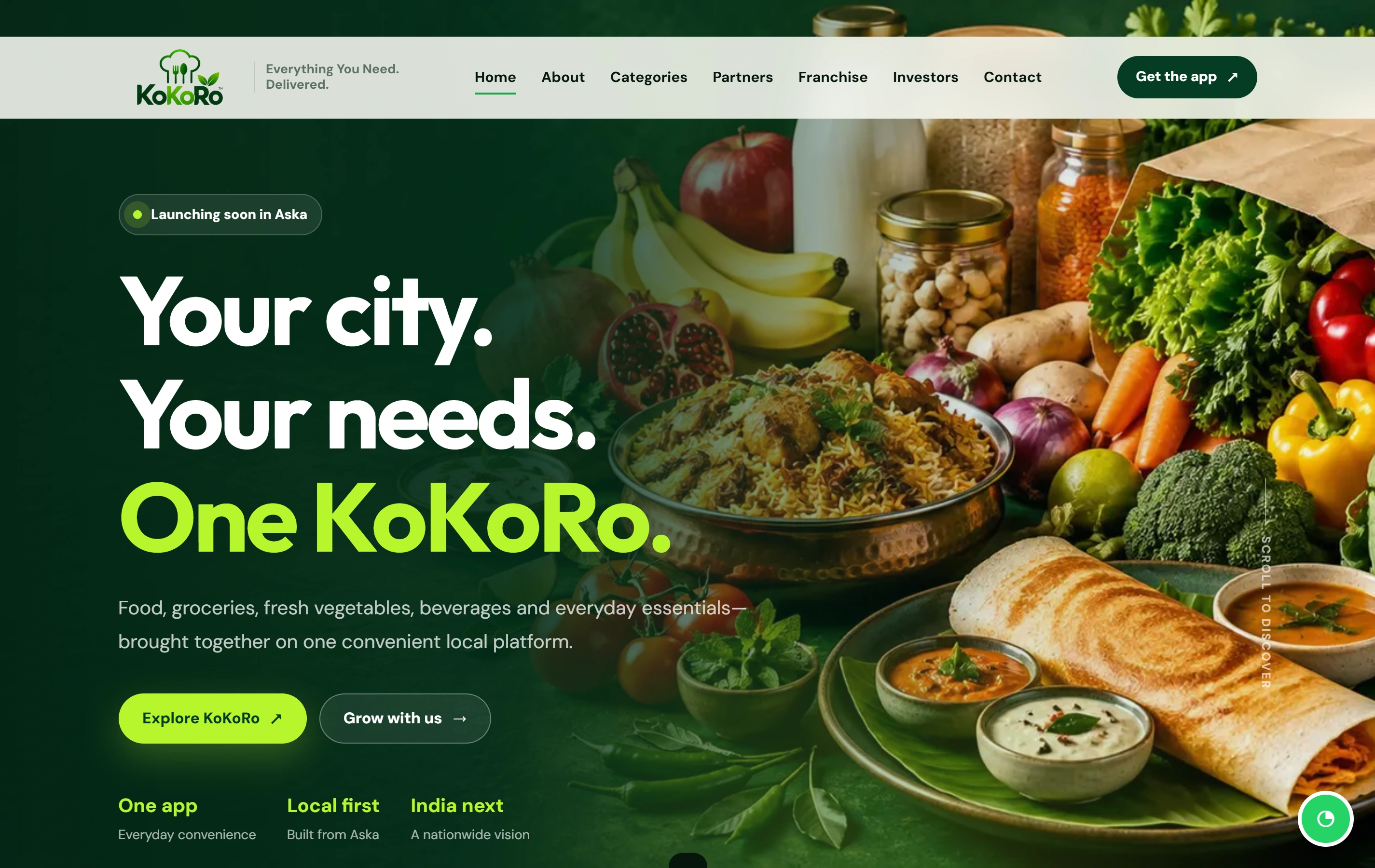
KoKoRo’s documented website introduces a local commerce and delivery platform to customers, vendors and partners. Explore that website project to discuss how different audiences find a useful next action. Your app discovery separately defines the application, account and backend requirements.

Questions before commissioning the mobile product.

Can both Android and iOS be included?

Yes, where both are in the agreed scope. We review device capabilities, platform requirements and maintenance before choosing an approach. Distribution preparation and testing remain explicit for the selected platforms.

Can the app connect to our existing system?

Potentially, where an approved suitable interface or integration method is available. We inspect the actual service, access and record ownership. Backend changes, operating controls and failure behaviour are separately identified rather than assumed.

Will app-store approval or user adoption be guaranteed?

No. Platform review is controlled by the platforms, and adoption depends on the usefulness and operation of the product. We define the submission preparation and implementation work included without promising approval or a particular result.

What should we provide for an initial discussion?

Share the intended users, repeated task, existing tools, platform needs and a representative ordinary and difficult case. Explain who approves the product and operates its records. Avoid sending credentials or unnecessary personal data in a project enquiry.