
Skip to content

Build a useful mobile service. Give people a clear way to leave it.

Softglimmer offers mobile app discovery, design and development for Wellington businesses, delivered remotely from Ranchi. We connect the customer task, mobile experience, supporting records and operating team in one product brief. Planning should include how someone leaves or changes their use of the service. Removing an app from a phone should not be presented as a confirmed cancellation of work the business still holds.

Explore the commission
A device action and a business cancellation need clear meanings
  1. 01

    Define the product

    Choose the recurring task and supported platforms.

  2. 02

    Connect the service

    Name the records and team receiving requests.

  3. 03

    Include the leaving route

    Explain what changes and what still needs a decision.

An example journey, shaped around your requirements.

Commission the app, its records and its operating journeys.

Begin with the audience, the task people return to and the service team behind it. We can assess a new product or an improvement to an existing app, comparing browser-based and installed options against the real need. The first release needs a coherent outcome for the user and business rather than a collection of disconnected screens.

The agreed scope can cover research or discovery, interface design, application development, required backend and administration, approved integrations, device acceptance and release preparation. Define platform coverage, accounts, authoritative records and access dependencies. Existing services are inspected through their owners before they become a promised connection. Distribution accounts, supporting services and continuing technical work have explicit responsibilities.

Ordinary use and leaving deserve the same clarity. Signing out, removing the installed interface, asking to cancel a request and asking to close an account may affect different things. The authorised service and information owners supply those rules, including any retained records and communication requirements. We design and implement the selected journeys around them; a general app brief does not create a cancellation policy or provide legal advice.
The app is removed while a service request is still active.

Hypothetical example: a customer removes the app from their phone after deciding not to continue with a service. An earlier request is still active in the business system. The product brief must explain how the person actually asks to cancel, what remains pending and how the responsible team confirms the result. Do not infer a business instruction merely from a device action.

Offer an understandable route to a real service decision
  1. 01

    Reach the service

    Use the agreed cancellation or help route.

  2. 02

    Identify the request

    Make clear which active work the person means.

  3. 03

    Confirm the outcome

    Distinguish a received request from an accepted cancellation.

Illustrative product-lifecycle exercise; cancellation, account and retained-record rules come from the authorised business owners.

Keep four leaving-related actions understandable.

The interface wording must match the implemented service and the owner-approved rules. These actions should not share an unexplained label.

ActionWhat it concernsScope to defineResult to verify
Remove the appThe installed interface is no longer on that device.Give people an appropriate documented route to the service if they no longer have the app. Do not depend on detecting an uninstall as a cancellation instruction.A person can find the supported help or request route without an installed session.
Ask to cancel active workThe customer identifies a particular request or service.Define the actual receiving system, necessary context and whether staff review is required.Receipt wording is accurate and the selected request remains recognisable.
Confirm the business outcomeThe responsible service process has accepted or otherwise resolved the request.Explain the resulting state and any owner-approved next step. Include the route for a request that cannot be cancelled as asked.The interface and included staff record agree about the actual outcome.
Request account closureA separate account or information decision may be involved.Use the policy and requirements supplied by authorised owners. Identify any remaining active work rather than silently treating every record as erased.The agreed account action is explained separately from cancellation of one service request.

Plan a product that its users and team can operate.

The proposal identifies the useful first release and the implementation work behind its visible journeys.

01

Product and platform plan

Define audience, repeated tasks, selected devices and channel choice, with current-system and provider dependencies.

02

Customer and staff journeys

Design entry, ordinary use, help and the included leaving actions with realistic content and meaningful states.

03

Application build

Develop the selected interfaces and behaviour for the agreed platforms, including account and device features the task genuinely requires.

04

Supporting services

Implement scoped backend, administration and suitable connections. Agree which record confirms each customer action and who handles an exception.

05

Release acceptance

Review complete tasks on agreed devices and builds, following the result into its authoritative record rather than judging a confirmation screen alone.

06

Operating handover

Prepare the distribution route, account/source responsibilities, support instructions and continuing care. Identify business-owned policies and settings.

Follow a cancellation request through its real receiving process.

Use a safe active request and the cancellation rule supplied by the owner. Review the customer route while the app is available, then the agreed help or request route without the installed interface. Check receipt, any pending review and the confirmed or refused outcome in both customer wording and the included staff record. Account closure is exercised separately if it is commissioned. The tests should not pretend the product can infer a reliable business instruction from uninstalling software.

For discovery, bring the service journey, representative active work, current help route and the authorised cancellation and account instructions. Include the product approver, operating team and supporting-system owner. Wellington reviews can use dated Pacific/Auckland and Asia/Kolkata invitations with our Ranchi studio. The estimate covers the selected design, application, supporting services and acceptance work; distribution approval, further policy decisions and continuing support retain their own owners.

Make the service meaning visible through delivery.

  1. 01

    Discover and choose

    Map useful tasks, platforms, supporting records and the owner-approved service decisions.

  2. 02

    Design the whole journey

    Review ordinary use and the selected leaving actions with customer and staff context.

  3. 03

    Build and inspect

    Implement the agreed app and supporting services. Follow requests into their actual outcomes on the supported build.

  4. 04

    Release and prepare operation

    Hand over account, source and operating responsibilities, including where users find help and how later changes are managed.

A documented public website reference.

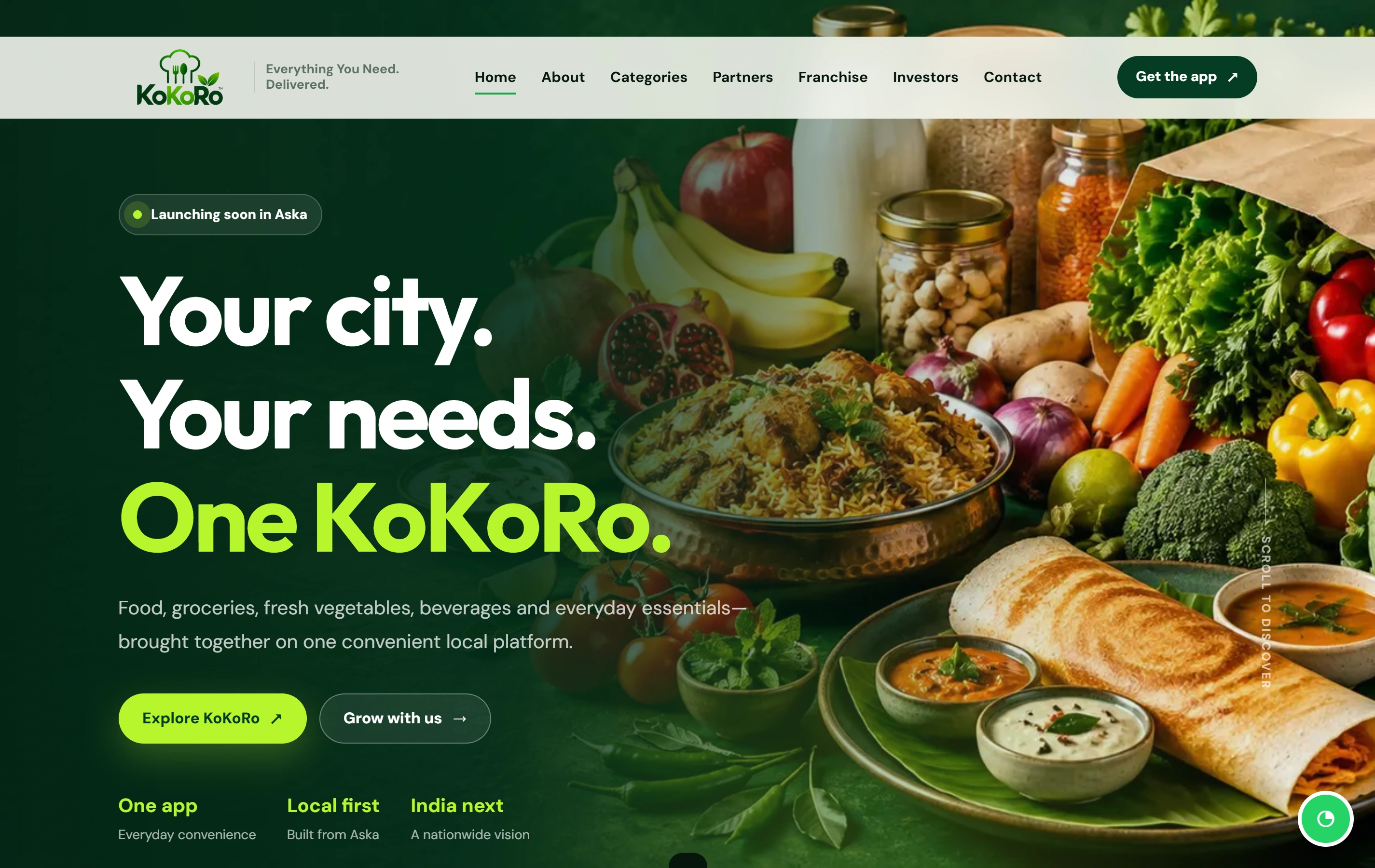
KoKoRo is a documented public website introducing a commerce and delivery platform to customers, vendors, delivery partners and franchise audiences. It is a factual reference for audience information. The proposed mobile service and cancellation process need their own agreed implementation.

Launch introductionClear launch context
Commerce categoriesAn approachable proposition
Partner journeysDistinct conversations in one brand
KoKoRo websiteKoKoRo

Questions before commissioning the app.

Does deleting an app cancel a service?

The project must not assume that. A device action and an instruction to the business need distinct meanings. The owner supplies the cancellation rule and we scope the route that actually communicates and records it.

Must cancellation always be automatic?

No. The service may require an owner-approved review or another defined process. The app should explain receipt, waiting and the actual outcome accurately instead of implying immediate acceptance.

Can we connect an existing service system?

We inspect supported interfaces, source records and access with the authorised owner. Selected backend and administration work is scoped alongside the mobile flow. An existing platform can remain authoritative for service outcomes when its actual capabilities suit the project.

Can development begin before every later feature is decided?

A complete first release can have a clear boundary while later capabilities remain separate. Essential dependencies and the ordinary operating route still need decisions before that first product is accepted.