Technical information with an owner
Agree the product names, dimensions, capacities, documents and application details the manufacturer can substantiate. Keep units consistent and assign responsibility for changes before the catalogue is published.

Website design for manufacturers and industrial suppliers. Organise equipment ranges, technical specifications and application information so buyers can assess suitability and send a useful quotation enquiry.
An industrial website needs to explain what a product does, which details matter and how a buyer can discuss its application. Start with a structured range and trustworthy technical information, then give the enquiry a clear route into the business.
Agree the product names, dimensions, capacities, documents and application details the manufacturer can substantiate. Keep units consistent and assign responsibility for changes before the catalogue is published.
Collect the product or application, working environment and contact details needed for a first assessment. Capacity selection, engineering advice and final quotations remain with the responsible business team.
Use product categories and clear names to narrow the requirement.
Present approved specifications, application context and supporting documents.
Give the sales team enough context to assess the enquiry.
An example industrial website journey. Required information and sales responsibilities are agreed with the business.
Build around the range you actually supply and the information procurement and technical buyers need.
Organise equipment families, models and related products around how buyers explore the range.
Present approved specifications, dimensions and application information with consistent units.
Plan downloads for the manuals, drawings and certificates the business is authorised to share.
Use approved product images and installations to explain context without inventing performance results.
Capture the application and product information your team needs to assess a request.
Give the team a maintainable publishing workflow for product changes, documents and availability information.
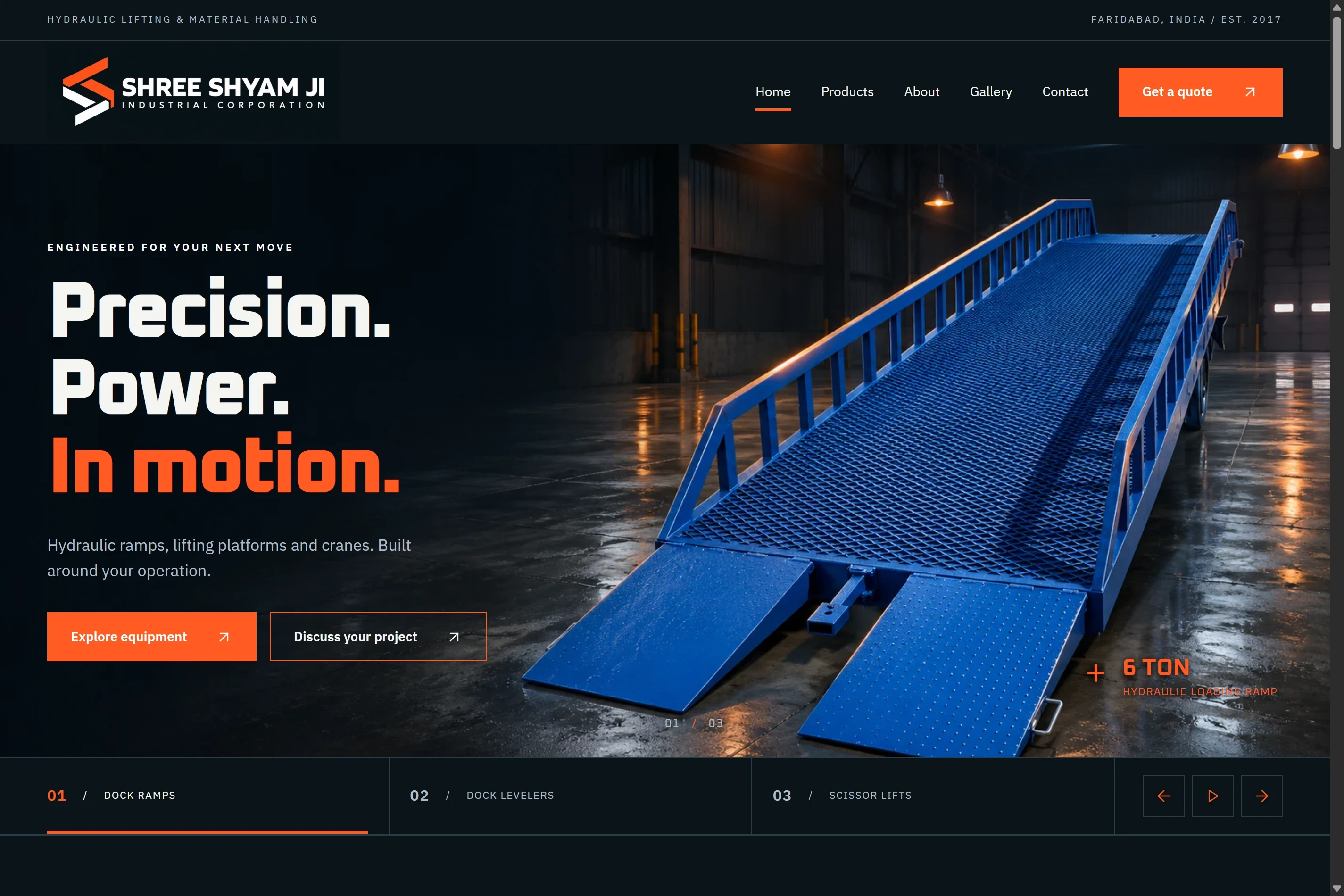
Explore the published project: an equipment catalogue with product categories, technical details and quotation enquiry routes.
The scope and milestones are agreed around the project. Each stage has something concrete to review.
Understand the audience, objective, content and current systems.
A shared brief.Review the information, interface and important journeys.
A concrete design to assess.Implement the agreed scope and check the complete journeys.
A release with acceptance evidence.Plan the switch, handover and ongoing responsibilities.
Ownership after launch.Agree the product information, enquiry requirements and publishing ownership before implementation.
Yes. Start with the product families, attributes and documents that need to be maintained. Search, filters and content entry should be scoped around that actual catalogue.
Yes. A quotation enquiry can include the relevant product, application and contact information. Pricing, suitability checks and the final proposal remain with your team.
Yes, where the business supplies and approves them. Agree document versions, who maintains them and which files are public or restricted.
The portfolio shows the public equipment website, its product discovery, technical presentation and enquiry routes. ERP connections, engineering calculations and private customer portals require a separate agreed scope.
Let’s turn it into something your customers can actually use — and your business can grow with.