Current or proposed URL
Copy the actual current address, or clearly mark a proposed destination. Keep its current purpose visible. A suggested new page is a scope option until the business agrees what useful question or task it serves.

Softglimmer provides website, ecommerce, design, software and connected-workflow services for Agra businesses through remote delivery from Ranchi. We help turn an initial idea into a practical proposal: what people need to understand, what they should be able to do and which work will make that possible. The scope includes the selected design, development, review and handover responsibilities.
See which pages, functions and creative outputs are included.
Give content and data a clear place in the plan.
Know how the result is operated and maintained.
An example journey, shaped around your requirements.
A strong public presence starts with a clear offer and a useful next step. More involved work may also support ordering, customer records or a staff process. We can plan those parts together while keeping the choices understandable. The project should show which information needs improving, which function needs building and what the business will operate after delivery. Our work can cover discovery, content organisation, identity and interface design, responsive development and the agreed system connections. We also review the material and tools you already have. A proposal sets out a finished scope, the inputs needed to deliver it and the review points that let you make decisions. This gives you a practical basis for approving the work, whether it is a focused website project or a wider digital programme.
Give each proposed page or function a row. These six columns help decide what should be carried forward, changed, combined or deferred.
Copy the actual current address, or clearly mark a proposed destination. Keep its current purpose visible. A suggested new page is a scope option until the business agrees what useful question or task it serves.
Write the main question the page answers in ordinary language. If two pages answer the same question, inspect their content before assuming both need to be rebuilt. A staff function needs an equally clear task.
List the approved facts, genuine images or source records needed. Name the person who can confirm them. Missing evidence is an input to resolve; it should not be replaced with an invented claim to fill a layout.
State what someone should be able to do next and what the business will receive or provide. Connect the page or function to that result, rather than add an action simply because another page has one.
Identify who maintains the material and how often it changes in practice. Include the relevant editing controls or working tool in the scope, with a review route for changes that need approval.
Write the observable result and choose reuse, rewrite, merge, retire or build. Explain the reason. A deferred item should name the missing decision or input that must be resolved before it can proceed.
The agreement describes the actual pages, files, functions and responsibilities selected from these groups.
A record of the business goal, intended audiences and selected customer or staff tasks. Include the starting setup, useful existing material and the alternatives considered. The summary names decision owners and the questions that must be settled before the agreed work can progress.
An outline of pages, information and assets with the preparation and approval responsibilities attached. For a product or operating tool, include the relevant field meanings and record requirements. Mark what is reused, updated or created so the business can prepare the material needed for review.
The agreed visual direction and reusable page or interface patterns, using representative copy and imagery. Review the hierarchy, navigation and relevant interaction states at suitable widths. List the assets and guidance included so the design work can be understood by its next owner.
The agreed website, storefront, application or configuration, including the controls and supported connections named in the scope. Content entry, account setup and transferred material should be visible in the work plan. Review changes against that plan before they become an unexamined part of the build.
A set of representative tasks and the observations needed to decide readiness. Review the customer experience together with any operating result included in the project. Record corrections and remaining limitations, with a named person agreeing the conditions for release.
The supplied files, account information and instructions needed to use the delivered work. Walk through a normal edit or operating task. State what support and maintenance cover, how to request a change and which dependencies require continuing attention from the business or an appointed provider.
The addresses below are placeholders for a general planning exercise. Replace them with the actual addresses in your brief. They describe no Agra client or existing customer website.
At “https://example.com/services”, the question is “What help does the business offer?” The business owner supplies the approved service facts; the content editor maintains them. The action is to find a relevant service and its contact route. Decision: reuse the useful overview structure and rewrite outdated facts. Acceptance: the approved current options and destinations are understandable.
At “https://example.com/old-service”, the page repeats that overview and has no separate approved purpose. Decision: merge any useful current detail into the chosen page and review the old address in the migration plan. The acceptance row identifies where the retained information can be found and how the previous route is handled.
A proposed “https://example.com/customer-area” would answer a different question: “What is happening with my request?” Its record source and operating owner are undecided. Decision: defer the function until those inputs and access responsibilities are established, then assess a separate build. The public website can still have a complete, useful scope.
Start with representative pages and functions, not an exhaustive catalogue. Group the decisions into material to reuse, content to rewrite, redundant material to combine or retire, and new work to assess. Include the owner and reason for each decision.
We can use that record to plan content preparation, design, implementation and migration, with editing and acceptance responsibilities attached. It also shows what is deliberately deferred. This keeps the estimate connected to the useful work selected, while leaving room to investigate a larger application or integration separately.
Our studio is in Ranchi. Agra reviews and delivery are arranged remotely, with dated Asia/Kolkata sessions and agreed written feedback from the relevant approvers.
Review the current material and intended result. Establish the people, information and existing tools needed to select the right service scope.
Organise the selected information and review the proposed direction using realistic examples. Record approvals and the inputs needed for the build.
Implement the agreed pages or functions and inspect the representative tasks. Resolve findings with the people responsible for content and operation.
Confirm the accepted release and access arrangements. Demonstrate normal use, supply the agreed materials and explain the route for ongoing care and changes.
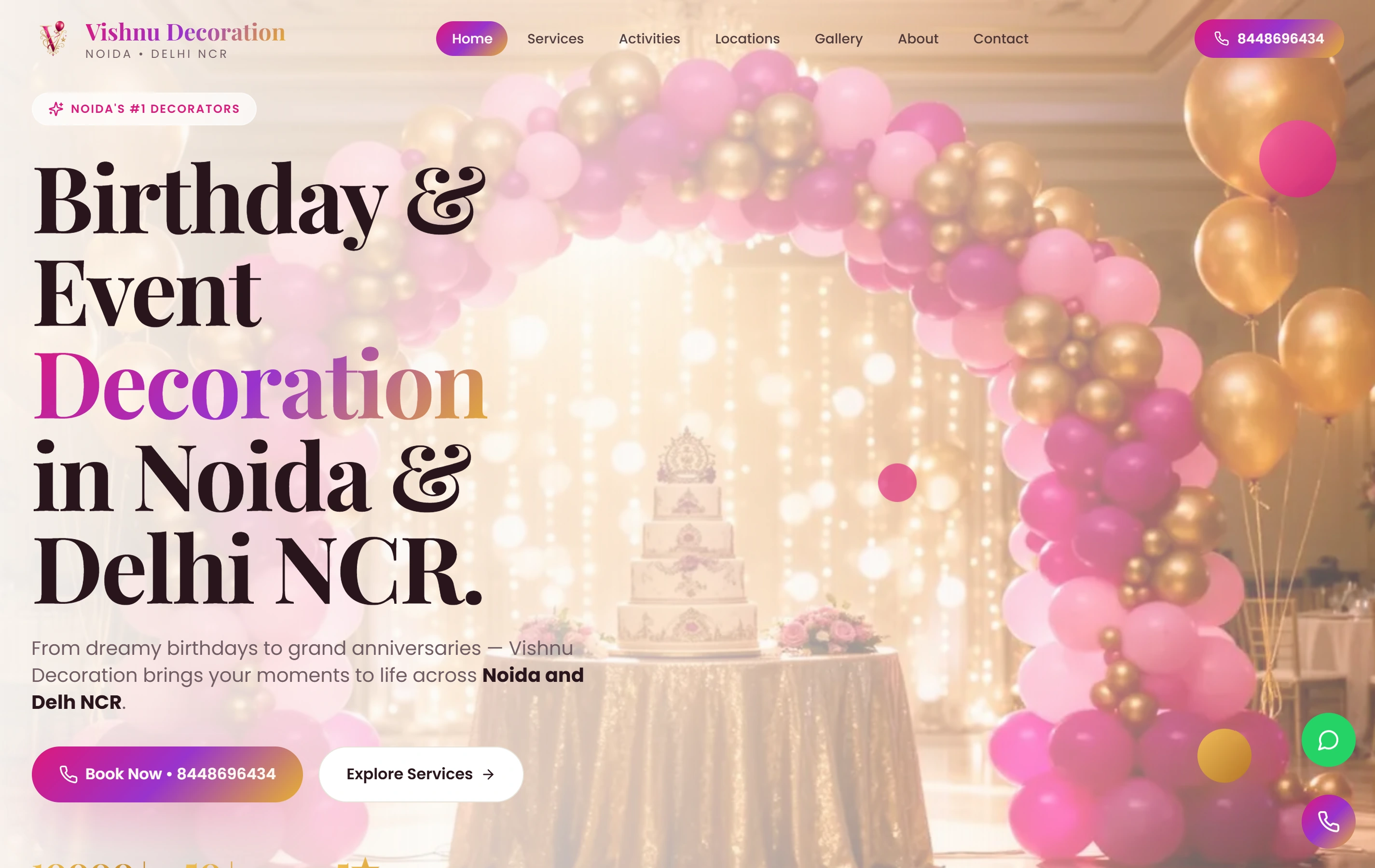
Vishnu Decoration is a published website project with themed service galleries, a mobile-first presentation and a direct WhatsApp contact path. Its case provides a concrete website reference for discussing genuine imagery, service information and the route from browsing to a conversation.
Discuss these points before the scope and estimate are approved.
Yes. A complete website and an understandable enquiry route may be the right scope. We can identify wider possibilities during discovery without including them automatically. The proposal should explain what the initial project supplies and which additional software, app or connection would need separate requirements and approval.
Show us what is available and identify the gaps. Enough representative material is needed to assess the offer and design, while the remaining preparation can be planned with its owner. The scope should make clear which content work is supplied by your team and which work is included in the engagement.
The handover should cover the agreed editing and operating tasks, account responsibilities and support route. We demonstrate relevant ordinary use with its owner. Continuing technical care, larger design changes and future functionality are discussed explicitly, rather than left as assumptions about what happens after delivery.