
Skip to content
Digital services for Amritsar

Turn the next digital project into something the team can use.

Softglimmer plans, designs and develops websites and business tools for Amritsar businesses. We can help with an editable public site, ecommerce, an application or connected workflow, choosing the work around your audience and operating needs. Our Ranchi studio delivers remotely, with a clear brief, reviewable progress and a handover for the people who will maintain the result.

Explore the service choices
A practical digital-services plan with approved information, useful working functions and a release that preserves the business changes made during delivery.
  1. 01

    Set a clear starting point

    Bring the present material and the change you need.

  2. 02

    Review the useful result

    Check the customer task and the work behind it.

  3. 03

    Plan the release and ownership

    Keep content, access and operating responsibility visible.

An example journey, shaped around your requirements.

A complete digital project

Define a complete project, with the inputs it needs to succeed.

The first discussion establishes what the business wants customers or colleagues to do more clearly. That may lead to a new company website, a better catalogue, an online store, a mobile product or a staff application. We can take the selected work from discovery through content structure, design, implementation, review and release.

The proposal should explain the supplied pages and functions, the content your team approves and the existing arrangements it relies on. A project can use accurate current material, revise selected information or prepare an agreed new set. Where a website or system is being replaced, the work includes deliberate decisions about migration, links, access and the transition into ordinary operation.

For an Amritsar business, remote delivery still needs people who can settle the business questions. We identify the content owner, the operating colleague and the approver for the selected scope. Their participation helps the team evaluate the actual result: useful information, understandable actions and a maintained route through the work that follows.
Make the scope understandable

Make the starting material and the release decision explicit.

These choices help the project move forward while the business continues its ordinary work.

01

Which information should be carried forward?

Review current pages, records and assets with the relevant owner. Identify useful material to retain, facts requiring revision and content needing new preparation. The website or system should use an agreed source rather than leave the delivery team to guess which of several versions is authoritative.

02

What is required for the first usable release?

Choose the pages, functions and complete tasks that belong in the initial scope. Record the inputs and external dependencies they require. A future application or integration can remain a defined option while the first release supplies a useful, reviewable experience on its own.

03

How are changes handled during delivery?

A business may update its public information while new work is being built. Agree who records those changes and how they reach the release review. Requests that add new scope should also identify their effect on design, development, content and acceptance before they are approved.

Six concrete output groups

Six output groups for a reviewable project.

The proposal lists the actual pages, records, formats and functions included in each group.

01

A scoped project brief

Document the audience, business goal, selected services and intended tasks. Set out the current situation, useful material to preserve and decisions still needed. Include the people who supply information and the basis on which the business will review the finished work.

02

Content and migration inventory

List approved page material, assets and any selected records to be transferred. Mark sources, owners and preparation work. For a replacement site or tool, identify the addresses, relationships or exchanges that matter to the transition and state how late changes will be reviewed.

03

Responsive designs and interaction decisions

Prepare the agreed layouts and user journeys with representative content. Review navigation, normal actions and meaningful error or incomplete states. The design records the chosen visual direction and behaviour so implementation can be checked against a shared understanding.

04

Working implementation and editing controls

Develop the selected pages, application functions and supported connections. Provide the agreed controls for ordinary content or record updates. The scope identifies backend and data work, account access and third-party dependencies alongside the visible interface.

05

Acceptance and transition checks

Review the implemented tasks with the people using or operating them. Check the supplied content, chosen devices, links and selected migration outputs. Record corrections and the business release decision, including the handling of a current change made during development.

06

An explained handover

Supply the agreed files, access information and operating notes. Walk the nominated owner through routine use and an ordinary update. Explain continuing account responsibilities, the selected maintenance or support arrangement and how later changes will be requested and assessed.

A clearly hypothetical worked example

A hypothetical example: the enquiry includes services the visitor did not choose.

Imagine a business whose enquiry page lists several services. A visitor wants to discuss one, but two additional choices are already selected when the page opens. The summary reaching the team describes interest in all three, even though the visitor has made only one deliberate choice.

During planning, agree whether service interests are optional, how the initial choices appear and how people review them before submitting. A clear summary can retain the choices the visitor actually made, while allowing them to explain a wider requirement in their own words. The receiving colleague can use that information to begin a useful conversation; the detailed project scope is agreed through the subsequent review.

Rehearse a single interest, several interests and a visitor who changes a selection. Compare the visible summary with what the receiving team gets. This is a hypothetical website-planning example about the meaning of an initial enquiry, with no example price, bundle commitment or claim about an existing client.

Prepare a useful first conversation

Bring the current work and the people who know it.

Share the present website or process, the reason for change and a small set of representative tasks. Identify the material you want to preserve, the facts that need updating and the content still awaiting approval. If a data transfer or connection is proposed, include its owner and a suitable sample with private information removed.

List the colleagues who will provide content, approve decisions and operate the result. Explain any planned business changes that may affect the first release. We can use those inputs to propose an appropriate delivery sequence and written estimate. Where further discovery is needed, its questions and output should be clear before wider implementation work is agreed.

Remote delivery from Ranchi

Design, build, review and hand over the agreed work.

Our team works from Ranchi and arranges remote Amritsar reviews using dated Asia/Kolkata invitations. The project plan names the approver and how written feedback is consolidated.

  1. 01

    Discover and define

    Review the goal, current material and representative tasks. Select the appropriate services, record client inputs and dependencies, and agree what the first completed release will allow people to do.

  2. 02

    Design and implement

    Develop the information structure and interface with approved examples, then build the agreed scope. Keep content decisions and requested changes visible so the business can review progress against the same brief.

  3. 03

    Verify the intended result

    Check the customer and staff tasks, responsive layouts, supplied content and selected connections. Include the relevant operating owners, review any late content updates and record the final corrections and release decision.

  4. 04

    Launch and hand over

    Coordinate the approved transition and confirm access. Demonstrate routine editing or operation, supply the agreed material and explain the support arrangement, account responsibilities and route for later improvements.

A documented website reference.

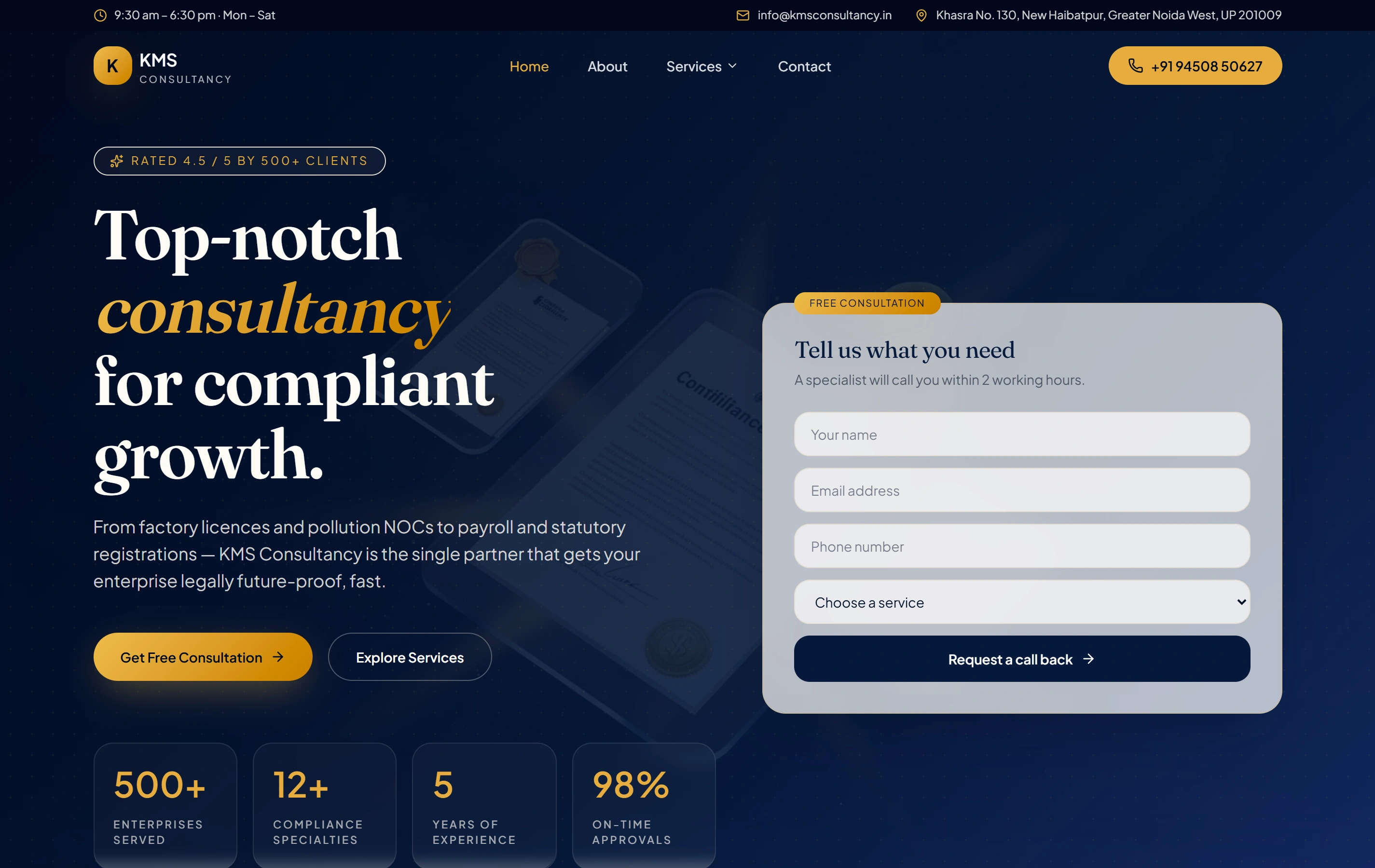
KMS Consultancy is a documented public website project that turns a complex service catalogue into clearer service pages and an enquiry journey. It is a useful reference for organising information that customers need to understand. Your project would be planned around your own approved service content, editing responsibilities and release requirements.

ContentCompliance
StructureService pages
ActionEnquire
KMS Consultancy websiteKMS Consultancy

Questions about an Amritsar digital project.

The written scope sets the deliverables, responsibilities and review arrangement.

Can you help if we do not yet know which technology to choose?

Yes. Begin with the audience, present process and result you need. We can compare a website, a suitable existing platform and a custom application against those requirements. The proposal identifies the selected approach and its dependencies so the decision follows the business task rather than a technology name.

How is existing content handled in a rebuild?

We agree what is retained, revised or newly prepared and who approves it. The scope can include a content inventory and migration review, with a route for changes made while development continues. Important pages, contact destinations and supplied information should be checked as part of the transition.

Will our team be able to operate the result after handover?

The project identifies the people who will edit content or perform the agreed tasks. We choose appropriate controls, explain their use and demonstrate an ordinary update or working journey. The agreement also records continuing account ownership and the maintenance or support work selected for the release.