
Skip to content
Bhubaneswar · AI Assistants & Chatbots

Helpful conversations. A clear next step.

Softglimmer plans and builds AI assistants and chatbots for Bhubaneswar businesses through remote delivery from Ranchi. We begin with a useful task, the people asking for help and the information your team can approve. The work brings knowledge preparation, conversation design, an interface, selected connections and evaluation into one project. Human support and ongoing ownership are planned alongside the assistant, so the service has a practical home after launch.

Explore the service
Approved information, understandable conversations and a responsible human route
  1. 01

    Choose a useful task

    Understand the audience, questions and simpler alternatives.

  2. 02

    Design the conversation

    Connect approved information with clear current context.

  3. 03

    Prepare its operation

    Review real examples and equip the responsible team.

An example journey, shaped around your requirements.

Build an assistant around a service people actually need.

A public information assistant, a staff knowledge tool and a conversation that prepares a support enquiry serve different purposes. Discovery identifies the intended users, common questions and result that would be useful. We compare clearer website content, ordinary search and fixed conversation rules with AI assistance. The choice should follow the task and available information, rather than start with a model name or a chat window.

For the selected approach, the work can include source preparation, conversation and interface design, implementation, approved connections and a reviewable first release. We agree what the assistant may discuss, what the user can inspect and when a person should continue the conversation. Public information and account-specific support have different access and operating requirements. Any proposed business-system action is assessed explicitly as part of the scope.

A useful project also prepares the people running it. The knowledge owner needs a way to supply corrections; the support owner needs to understand a handed-over question. Provider accounts, approved data use, running costs and technical care are identified before release. A focused pilot can settle important uncertainties before a wider audience or additional sources are included. The proposal names the selected implementation and the work needed to put it into service.
Set useful boundaries without making the conversation awkward.

These choices connect the visitor experience with the team maintaining and receiving it.

01

Audience and information

Identify the people using the assistant and the material suitable for them. Name approved sources and update owners. Public answers, internal knowledge and personal account information should have deliberate boundaries rather than be combined because the files are available.

02

Conversation and current intent

Decide how the assistant asks a useful question, accepts a correction and recognises a changed request. The user should understand the topic being discussed. Select what earlier context remains relevant and when an important detail needs confirmation.

03

Human continuation

Choose the actual route for unresolved questions and the context it should carry. Explain whether the visitor follows a contact link or submits a request through an included connection. The receiving colleague needs the current need, rather than an unexplained transcript alone.

04

Evaluation and operation

Prepare representative questions, unclear requests, corrections and unavailable information. Agree how reviewers assess useful and unsuitable results. Provider access, usage review, source updates and a way to pause or correct the assistant belong in the operating plan.

A hypothetical working example

A visitor corrects the service they want to discuss.

Hypothetical example: a visitor first asks about service A, then explains that they actually need service B. Some details from the first request may no longer apply. Before preparing a human handover, the assistant should help the visitor recognise the current topic and confirm the context that matters to the new need. We review that conversation alongside a simple clarification and a genuinely unsupported question. The receiving person should be able to see the visitor’s corrected need without treating earlier assumptions as confirmed instructions. The illustration helps shape the conversation and handover within a complete assistant project. Your team supplies the actual service meanings and receiving process; the example describes no booking, account change or completed client deployment.

Keep the corrected need clear to the visitor and receiving team
  1. 01

    Recognise the correction

    Distinguish a changed request from a missing detail.

  2. 02

    Confirm useful context

    Keep relevant information and revisit earlier assumptions.

  3. 03

    Continue with the right need

    Give the responsible person an understandable current request.

Illustrative conversation review. The actual task and receiving process determine the agreed behaviour.

Receive the assistant and the means to look after it.

The agreed scope selects the implementation, knowledge work and operating responsibilities.

01

Task and feasibility brief

Users, useful questions, alternatives and an achievable first audience, with open decisions identified.

02

Knowledge and access plan

The approved material, owners, audience boundaries and method for keeping information current.

03

Conversation and interface design

Answer presentation, clarification, correction, unavailable states and the agreed human continuation.

04

Scoped implementation

The selected assistant and interface, plus expressly included channels or supported system connections.

05

Evaluation examples and findings

Representative conversations, expected source context and a record of useful results and problems needing attention.

06

Operating handover

Provider/account ownership, source upkeep, usage review, issue handling, support and pause or correction guidance.

Bring ordinary questions and the people who answer them.

Share the intended task, representative public pages or approved source samples and the questions your team hears repeatedly. Include a question that is unclear and a conversation in which the person changes their requirement. Remove unnecessary personal details from discovery material. Identify the information owner and the colleague who would receive a question that needs human attention.

During review, compare the proposed response with its permitted source and the user’s current need. Try a clear question, a correction, a changed topic and material the assistant cannot answer. Where access restrictions apply, those controls receive their own implementation checks. Record the findings and what must change before the chosen audience uses the feature. A fluent answer is useful to examine, but it is not an assurance of correctness.

The estimate depends on source condition, interface and channel scope, access needs, connections and evaluation work. Running services and continuing care are identified separately. Your Bhubaneswar team and our Ranchi studio can review the work through scheduled calls and shared written feedback. The handover should let the team correct approved information, report a poor conversation and know who handles the next step.

Take the assistant from a useful brief to an owned service.

Each stage gives your reviewers a concrete experience or working decision to assess.

  1. 01

    Discover the task

    Follow current questions and compare simpler ways to help. Agree the first audience and information boundary.

  2. 02

    Prepare and design

    Organise approved material and review the conversation, interface and receiving route with realistic examples.

  3. 03

    Implement and evaluate

    Build the selected scope and examine ordinary, corrected and difficult conversations with the responsible reviewers.

  4. 04

    Release and equip the owner

    Agree access, operation and support. Hand over source updates, usage review and the correction or pause process.

Explore a genuine information-design reference.

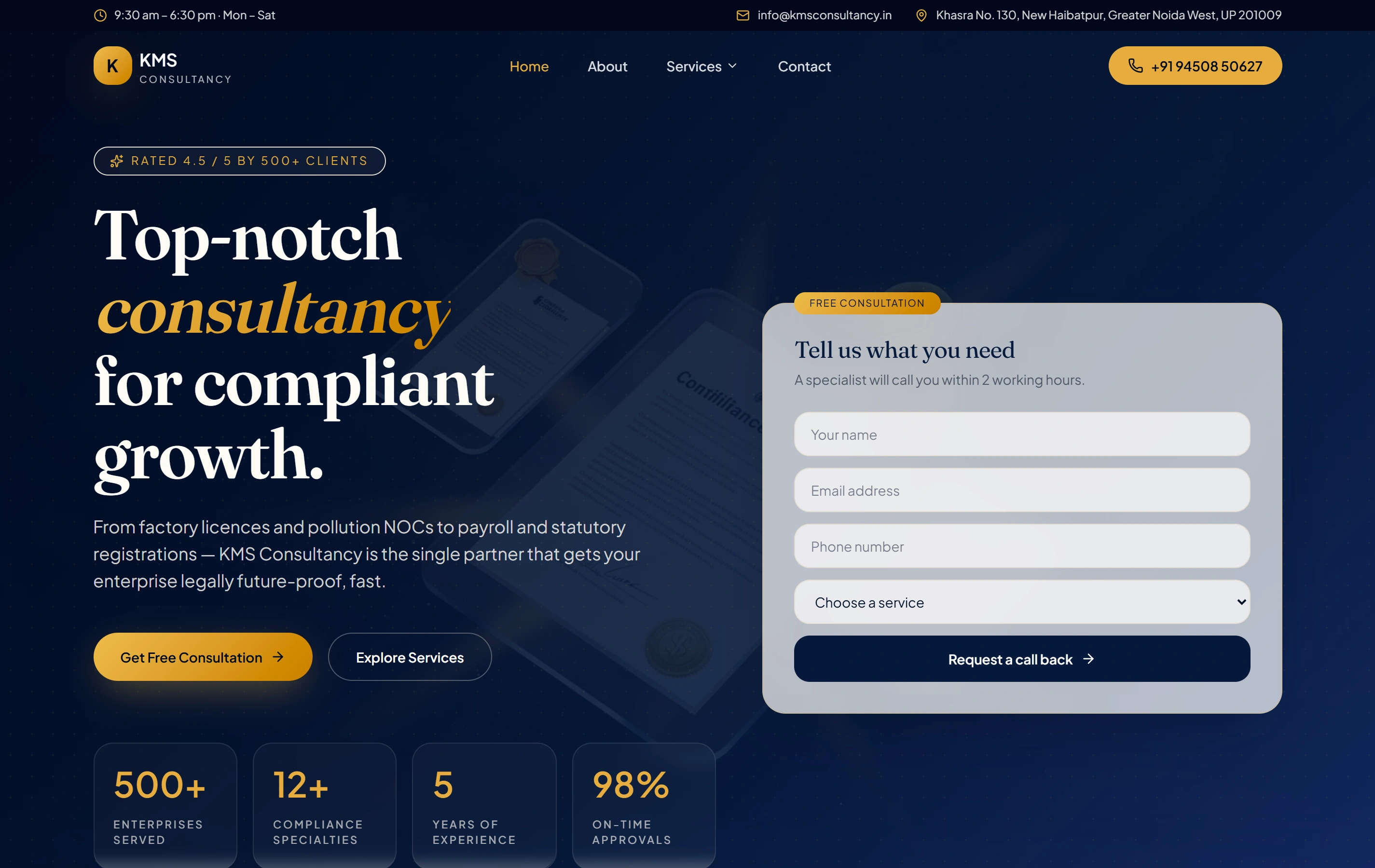
KMS Consultancy is a documented website presenting a complex service catalogue and enquiry journey. It provides a real reference for organising business information clearly. The portfolio entry covers public website work; the assistant described here needs its own approved sources, implementation and evaluation.

ContentCompliance
StructureService pages
ActionEnquire
KMS Consultancy websiteKMS Consultancy

Questions before starting an assistant project.

Do we need generative AI for the first release?

Not necessarily. Clearer content, ordinary search or a fixed conversation flow may handle the need well. We compare the options against your users, source material and operating responsibilities. Where AI assistance is useful, the first scope should have a task and examples your team can judge.

What if a visitor changes their mind during a conversation?

The conversation design should distinguish a correction from another detail about the same request. We agree how the current need appears, which earlier information remains relevant and what requires confirmation. The review includes these cases alongside the ordinary journey, so a human continuation can carry useful current context.

Can the assistant connect with our existing tools?

We inspect the supported interfaces, access and permitted use with the relevant account owners. The scope identifies the specific connection and what it may read or do. An information conversation and an action affecting a business record have different responsibilities, so the proposed project names the actual operating boundary.

Who maintains the assistant after launch?

Your information owner supplies approved business changes and a support owner receives unresolved issues. The agreement names provider accounts, technical maintenance, usage review and continuing support. We include guidance for reporting a poor result and pausing or revising an unsuitable feature, rather than leaving ownership with the original demonstration.