
Skip to content
Retail & Ecommerce Websites for Chennai

Help shoppers find the product and understand the next step.

Softglimmer plans and develops retail and ecommerce websites for Chennai businesses, connecting useful product information, clear presentation and the way the business actually sells. The project may be an enquiry catalogue, an online store or an improvement to an existing site. Our Ranchi studio delivers remotely, with platform, content and operating responsibilities agreed before the build.

Explore the scope
Product discovery, a useful buying journey and a manageable operating plan.
  1. 01

    Organise the catalogue

    Give products an understandable structure.

  2. 02

    Explain the choice

    Present the facts shoppers need.

  3. 03

    Connect the next step

    Match buying or enquiry to the actual operation.

An example journey, shaped around your requirements.

Plan the catalogue and the customer journey together.

A retail website needs to help people find a relevant product, understand its approved information and choose an appropriate next action. Category structure, product detail and the route to buying or enquiry should support the same selling model. A catalogue with good imagery still needs clear options, useful context and maintained information.

The commission can include discovery, information structure, responsive design, product and collection templates, content controls and the selected order or quotation journey. We can plan a new website or inspect an existing one before proposing improvements. Representative products and ordinary operating tasks make the scope easier to assess.

Platform choice follows the catalogue, editing and operational requirements. Shopify, another suitable CMS or custom development may fit different needs. Payment, stock and fulfilment connections require their own feasibility and account review. The website should describe only the selling and service arrangements the business is prepared to approve.
Choose the journey that the business can support.

01

An enquiry-led catalogue

Use product information to help a buyer prepare a relevant question when price, specification or availability needs review. The next step should be an understandable enquiry, without presenting an unconfirmed request as an accepted order.

02

A defined online purchase

A store needs approved products, options, prices and buying conditions, with the selected cart and checkout responsibilities agreed. Include how staff handle the order and how the customer finds help afterward.

03

Improve the existing storefront

Review useful pages, catalogue data and working functions before replacing them. Product discovery or content improvements may be appropriate without changing every system. A platform move adds its own migration responsibilities.

Specify the customer and operating scope.

The proposal selects the templates, functions and connections needed for your selling model.

01

Catalogue structure

Map categories, product relationships and meaningful options. Agree the identifiers and facts used by the business, with representative items rather than a list of empty fields.

02

Product and collection presentation

Design readable detail, imagery and comparison information. Review longer names, option explanations and phone layouts with approved material.

03

Buying or enquiry journey

Implement the selected cart, checkout or quotation path. Define validation, feedback and the handover the business is ready to receive.

04

Content management

Provide the agreed product, collection, media and site-content controls. Demonstrate an ordinary update and explain who approves the facts being published.

05

Supported operating connections

Review required payment, inventory or fulfilment interfaces and account access. Define which system owns each fact and how staff handle an uncertain result.

06

Launch review and handover

Check discovery, product detail and the selected next action. Include agreed search foundations, migration work and instructions for continuing content and technical care.

Know who maintains the facts and what happens after the customer acts.

Product descriptions, selling options and service instructions need an owner who can approve them. An editor should understand where a change appears and whether it comes from the website or another maintained source. The content model and any connection should reflect those responsibilities rather than creating competing copies.

Also agree the information a customer needs after a purchase or enquiry. Useful help routes, order references and business-approved instructions can be part of the public experience. Returns, exchanges, delivery arrangements and other policies are supplied or approved by the business; the design and implementation scope follows those actual decisions.

Review real products and an ordinary customer journey.

For Chennai–Ranchi reviews, use dated Asia/Kolkata invitations and nominate the content, operating and technical contacts who can settle decisions.

  1. 01

    Define the selling model

    Bring representative products, current tools and approved arrangements. Compare an enquiry catalogue with online buying and identify the first release.

  2. 02

    Design with actual information

    Review catalogue navigation, a product page and the selected next action. Resolve missing product facts before extending the layouts.

  3. 03

    Develop and examine

    Build the agreed templates and connections. Follow product discovery, ordinary editing and the buying or enquiry handover using suitable review material.

  4. 04

    Launch and explain operation

    Agree the release conditions and account responsibilities. Demonstrate updates, receiving work and support routes, with later changes and continuing care identified.

An optional example: an existing customer needs order help, not another product enquiry.

Imagine a customer returning to a product page with a question about an earlier order. Its only contact action starts a new product enquiry, so the receiving team cannot tell which order the question concerns.

The website could provide a clearly described order-help route asking for the limited context the business uses to find that order. The response should explain the next step without implying that a return, replacement or refund has been approved. The actual policy and receiving process must come from the business.

This is a hypothetical retail website example, not a Chennai client or a claim that a particular commerce platform already supports the required workflow.

Website project references.

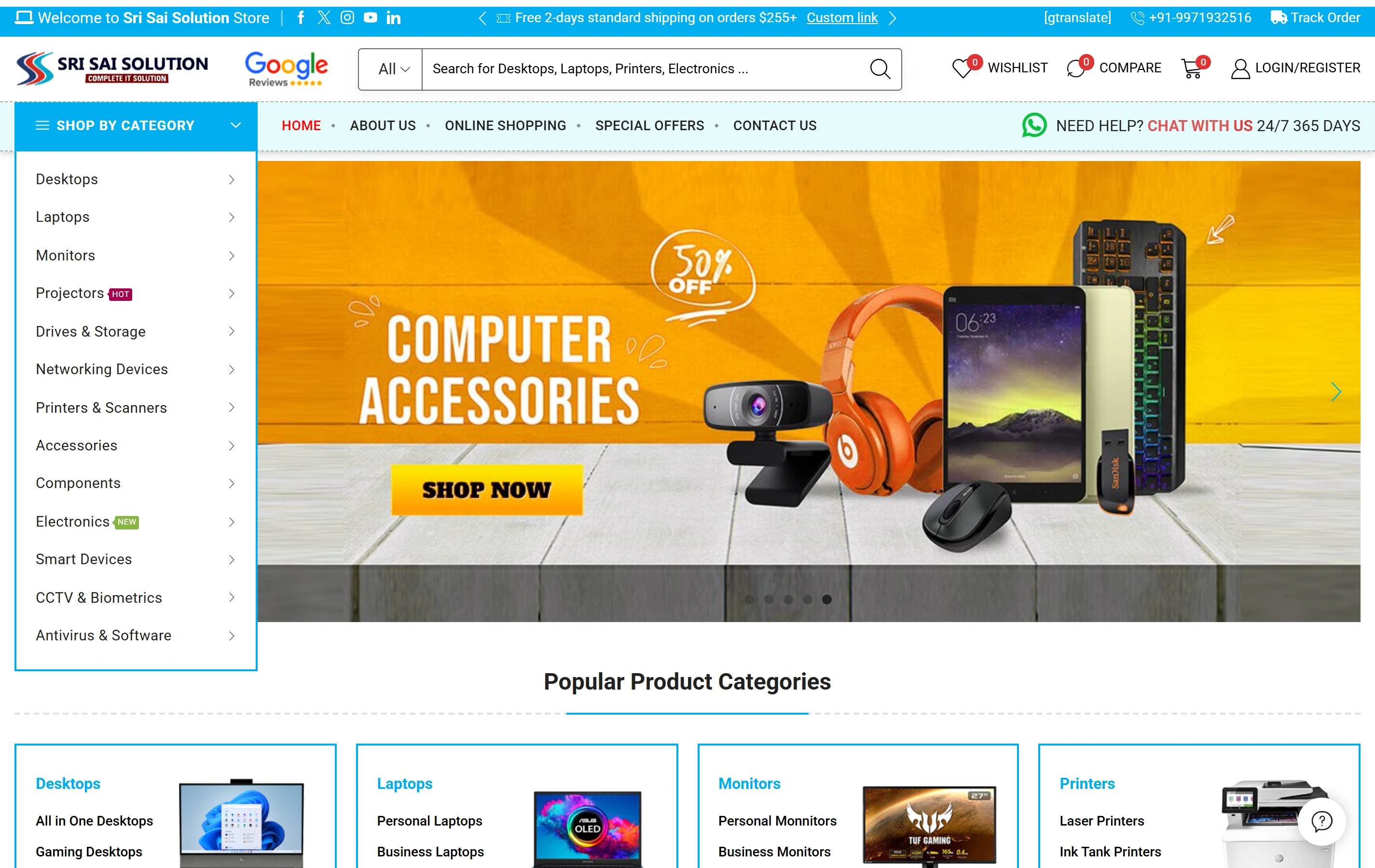
Sri Sai Solution presents computers and electronics through product categories, catalogue search and online shopping. Review its documented storefront when discussing the catalogue and product presentation your own brief needs.

Questions before starting the retail website.

Is the team based in Chennai?

Our studio is in Ranchi, India. We can work remotely with your Chennai contacts through agreed reviews and written approvals. This service-area page does not represent another office.

Can the website be a catalogue without checkout?

Yes. An enquiry-led catalogue can suit a selling process that needs a conversation or quotation. We define what information is useful and how the receiving team handles the request.

Does the project have to use Shopify?

No. The platform follows the catalogue, buying, editing and operating needs. If Shopify is selected, its implementation is scoped explicitly; this industry service is not limited to one platform.

Can stock, payment and fulfilment be connected?

Suitable supported connections can be reviewed. Existing systems, provider capabilities and authorised access determine feasibility. The proposal identifies included work, dependencies and the person responsible for exceptions.