Content within an agreed pattern
A colleague changes an introduction, replaces an approved image or updates a contact detail. Define the relevant editing fields, any approval step and how the person checks the result before it becomes public.

A useful launch should leave the business able to make the changes it expects to repeat. Softglimmer offers planning and development for Dehradun businesses, covering websites, stores, applications and connected workflows, including what their team can maintain. We deliver remotely from our Ranchi studio and explain the agreed editing, operating and support responsibilities alongside the design and build.
An example journey, shaped around your requirements.
Updating a paragraph, adding an existing kind of service and introducing a new customer account journey are different changes. Asking for an editable website does not settle all three. The useful question is what the team expects to change, how often and with what effect on the rest of the experience. List a few likely changes before selecting the CMS or application scope. We can then identify the controls to include, the person who will use them and the review needed for larger work. This makes ownership clearer without asking a small business to manage technical decisions it has not commissioned.
A colleague changes an introduction, replaces an approved image or updates a contact detail. Define the relevant editing fields, any approval step and how the person checks the result before it becomes public.
The business changes an enquiry recipient or a list of selectable services. Agree which settings are exposed and who can change them. Review the resulting journey, since a small setting can affect who receives the work.
A request introduces an account area, a new checkout rule or a connection to another system. It needs an assessment of content, design, dependencies and testing; it should not be assumed to be an ordinary copy edit.
Discuss how an incorrect update is corrected and what recovery is included. The handover should identify the responsible contact and agreed recovery process rather than promising that every possible mistake can be reversed instantly.
Suppose a business wants to update a service description, send enquiries to a different colleague and let returning customers see their previous requests. This example illustrates three decisions; it is not a Dehradun client story.
The description can be an ordinary content update using the agreed page fields. Changing the recipient may be a controlled setting or a supported change request, depending on the selected system. The team should submit a test enquiry and verify its destination after that change. Showing request history is a different feature: it raises account access, record ownership and ongoing operating questions that deserve a separate scope.
By naming these distinctions before the build, the business can compare proposals on useful terms. It can buy the editing controls it needs now, identify a support route and keep the account feature as a considered future choice rather than discovering that “editable” meant something different to each reviewer.
Remote delivery from Ranchi allows the Dehradun project’s future editor or operator to join the review, rather than receiving access only after launch.
Bring examples of an ordinary update, a setting change and a larger improvement. We use them to discuss editing controls and estimate the selected build.
The person who will maintain the content tries a representative update using the agreed controls. Record unclear labels, missing guidance and changes outside the proposed scope.
Handover names access ownership, included files, support contacts and technical maintenance responsibilities. Later work can then start from a shared description of the existing system.
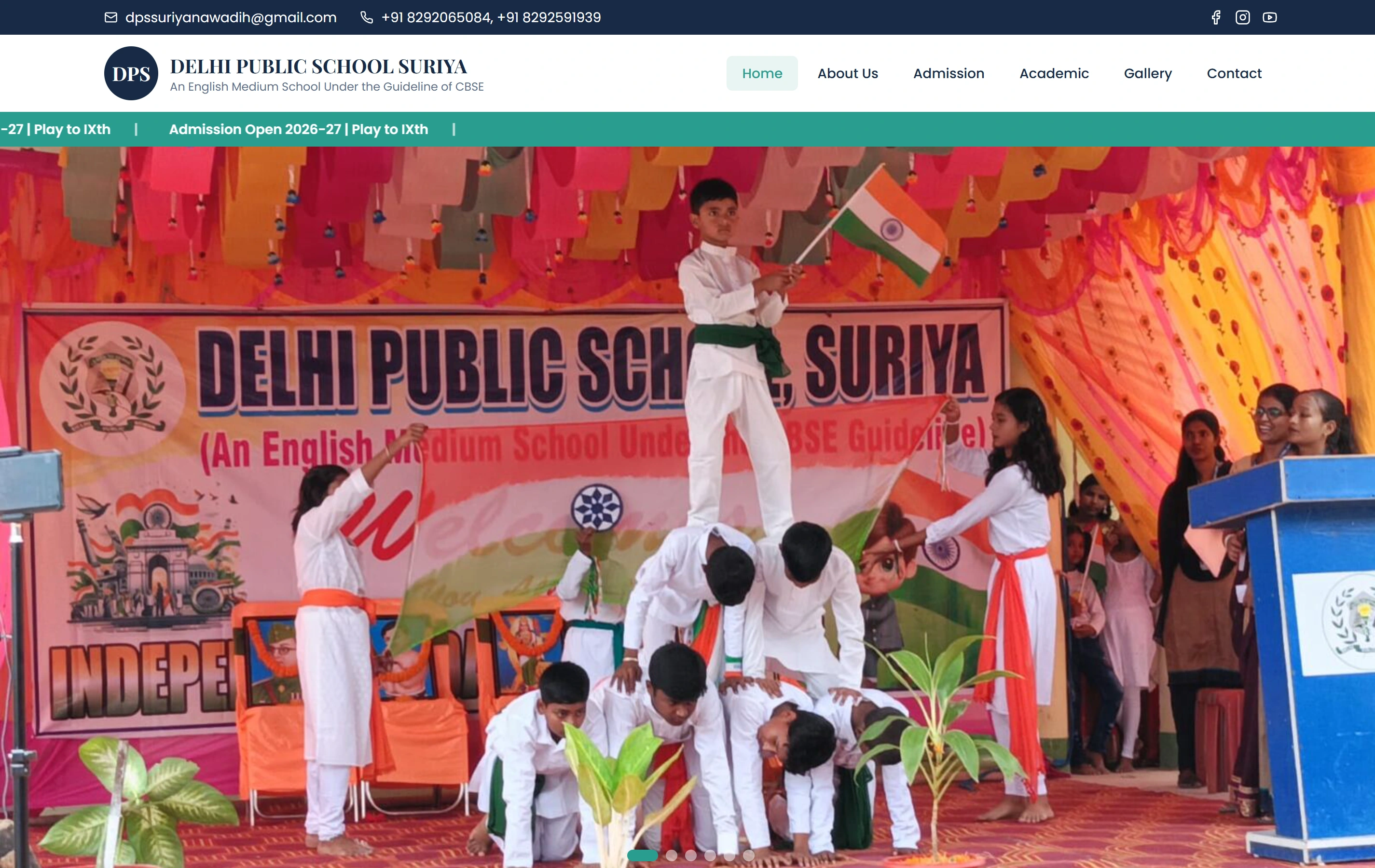
Delhi Public School, Suriya is a documented mobile-friendly website presenting programmes, campus information and an admissions journey. It is a useful public-content reference when discussing which facts require an authorised owner. The portfolio case describes the website experience; it is not evidence for the CMS controls or support arrangement your project would receive.
The agreement should distinguish technical upkeep, routine assistance and additional development. A new workflow or interface can require discovery and a separate estimate. We discuss the expected changes before proposing support so the business knows what is included and how a further request will be assessed.
Yes, where that fits the business and the selected tools. The important part is understanding the effect of each control and having a practical review or recovery route. A small team does not need unnecessary roles, but it should know which actions can affect a public page or enquiry destination.