
Skip to content
Delhi NCR · AI Knowledge & Search Systems

Make your knowledge easier to find and use.

Softglimmer plans and develops knowledge and search systems for Delhi NCR teams, starting with the questions people need answered and the material available to support them. We help prepare sources, design the search or answer experience and build the agreed implementation. Your team stays involved in the information and decisions behind it. Our Ranchi studio delivers remotely, with a practical handover for keeping the system useful.

Explore the scope
From usable source material to a helpful search and answer experience
  1. 01

    Choose the useful questions

    Start with the work people need the information for.

  2. 02

    Prepare the sources

    Inspect what the system can actually read and retrieve.

  3. 03

    Build and improve

    Try the complete experience and give it an operating owner.

An example journey, shaped around your requirements.

Commission a useful information service, from sources to daily use.

A knowledge project begins with a person trying to do something: locate an instruction, understand a service or find the material behind a decision. We work with those users and the content owner to choose a useful first set of questions. The right starting point may be clearer documents, straightforward search or an AI-supported answer experience. We compare those options against the task and the state of the information.

The selected engagement can include source preparation, ingestion and indexing, retrieval, interface design and implementation. We define the audience and access boundaries, the included document types, the way sources are kept current and what a useful result should show. Any connected system, provider account or hosting requirement has a named responsibility in the scope.

A working feature also needs a way to judge and improve its results. We assemble representative questions with expected supporting material, try them through the proposed experience and discuss incomplete or misleading outcomes. The handover covers adding or correcting sources, investigating an unsuccessful search and getting technical help. The project is complete only when the agreed information journey and its ongoing responsibilities are understandable to the people receiving it.
Choose the information task before the technology.

These choices give discovery and implementation a useful direction.

01

Finding a document or preparing an answer?

Some users need a specific reference; others need help locating a passage or understanding several pieces of information. Describe the result that would help them continue their work. That lets us compare a search interface with a more conversational or assisted experience.

02

What can the supplied material support?

Bring representative files, not just a folder count. We inspect readable text, structure and the location of useful information. Preparation may be needed before a source can support the intended questions, and that work belongs in the scope.

03

Who is allowed to use each source?

Identify the intended audience and any restricted material before a connection is made. The application and source arrangement must support those boundaries. Your business decides what information may be used and who can approve changes.

04

Who will run the service?

Name someone to maintain the material and someone to receive a poor-result report. Account costs, source refreshes, access changes and technical care need a practical arrangement. A small first release can establish that routine before the knowledge set expands.

Receive the knowledge experience and its operating foundation.

The proposal names the material, functions and preparation work included.

01

Task and source brief

A useful set of questions, intended users, approved source locations and business owners. We record which information belongs in the first release and what is still needed from your team.

02

Source preparation plan

Representative files are inspected for the text and structure the chosen approach needs. The agreed work identifies conversion, organisation or other preparation required, with a way to check the result.

03

Search and answer design

Users can recognise the result, inspect relevant source context and understand the next step when information is missing. The selected interface reflects the task rather than adding a conversation by default.

04

The agreed implementation

Build the selected ingestion, retrieval and interface work, together with supported connections and application controls. Provider and account dependencies are identified before they become part of the service.

05

A representative question set

A repeatable collection of ordinary, difficult and unsupported questions helps the team assess the delivered experience. The expected material and observed result stay available when content or implementation changes.

06

An operating handover

Demonstrate a source update and a poor-result report. Explain access, account ownership, technical help and the ongoing care included, so the team knows how to keep the service usable.

Develop it around representative sources and questions.

The content owner and intended users help shape each stage.

  1. 01

    Explore the information need

    Discuss the work people do and choose a small, useful knowledge domain. Bring example questions and the sources a knowledgeable colleague would consult.

  2. 02

    Inspect and shape the sources

    Try representative formats and establish what preparation is needed. Agree the audience, permitted material and the result people should be able to inspect.

  3. 03

    Build and try the experience

    Implement the selected search or assistance and work through the question set. Discuss gaps in source coverage separately from problems in retrieval or presentation.

  4. 04

    Equip the owners

    Demonstrate updates, issue reporting and the agreed release process. Hand over the information and technical responsibilities, including the route for changes as the service grows.

A hypothetical working example

The relevant instruction is inside a scanned page.

Hypothetical example: an approved manual contains a readable contents page, but an instruction needed by staff appears in a scanned page. A search finds the section heading. That result does not yet show whether the instruction itself is available to the system. We inspect the material actually used for search and ask the content owner to identify the expected passage. The project may need source preparation, a different presentation or a narrower first scope. Until the relevant material is usable, the interface should make the limitation understandable and offer the agreed route to the source or a responsible person. The same question is then tried again after the chosen preparation. This connects the source work to the user’s experience. It does not assume that every scan can be converted automatically or that an answer based on a heading alone is sufficient.

Check the useful passage, not only the presence of a file
  1. 01

    Name the expected information

    A knowledgeable owner points to the useful instruction.

  2. 02

    Inspect what is available

    Compare the searchable material with that passage.

  3. 03

    Choose the next step

    Prepare the source, narrow the task or give a human route.

Hypothetical source-readiness example. The actual formats, preparation method and useful result are agreed for your project.

Bring a question that a colleague can answer from the material.

For discovery, prepare a small selection of authorised documents or pages and a few questions your team asks about them. Include one source that is difficult to use and one question the chosen material does not answer. A knowledgeable colleague should be able to point to the expected information. Remove unnecessary private details and identify who can decide whether each source belongs in the project.

Microsoft describes retrieval-augmented generation as grounding model responses in retrieved content, and highlights access control as a governance concern. Our project discussion turns those general ideas into concrete decisions: what information is available, who may use it, what the result shows and how the team handles a source or answer problem. No model or platform is selected merely because a demonstration sounds convincing.

Delhi NCR and Ranchi teams can use agreed IST sessions with written questions between them. At handover, let the intended owner add or correct representative material and repeat the relevant questions. Separate content decisions from technical investigation, and agree who controls provider accounts, usage costs and support. That gives the knowledge service a practical home after its first release.

Look at real information-organisation work.

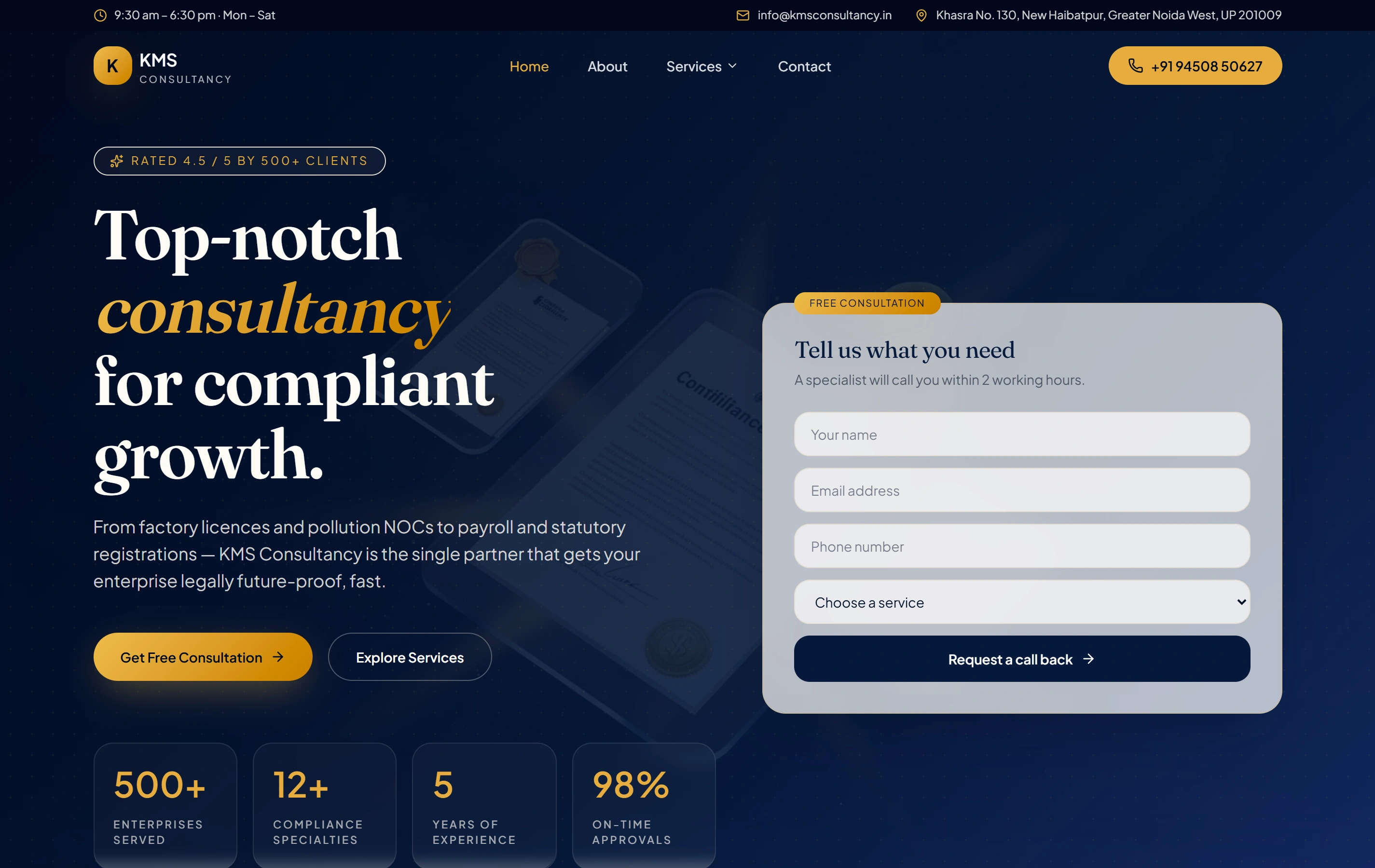
KMS Consultancy is a documented Softglimmer website presenting a complex service catalogue through clear pages and an enquiry journey. It provides a public information-design reference for this conversation. The knowledge system described here is commissioned around your own sources, audience and working tasks.

ContentCompliance
StructureService pages
ActionEnquire
KMS Consultancy websiteKMS Consultancy

Questions before we begin.

Use these points to prepare your first conversation.

Do we need AI rather than ordinary search?

Not necessarily. We compare the user task, available material and ongoing effort. Clearer source content or a straightforward search experience may be the better starting point. If AI assistance is useful, its role and the result people should inspect are defined before implementation.

Can our existing PDFs and documents be used?

We inspect representative files and their permitted use first. A familiar file type does not settle whether its useful content is available in a form the chosen system can use. Preparation, supported connections and the extent of content work are included explicitly in the proposal.

How do we judge whether the delivered system helps?

Choose representative questions with the people who know the sources. Try the search or answer journey, inspect the supporting information and include incomplete or unsupported cases. Keep those questions for later source updates so improvements and new problems can be discussed concretely.

What will our team maintain after handover?

Your content owner maintains the approved information and helps assess reported problems. The agreement identifies technical care, access and provider-account responsibilities, source updates and support. Our Ranchi team explains the agreed tasks remotely with your Delhi NCR colleagues before the service is handed over.