
Skip to content
Dhanbad · Event Planner Website Design

A clear website for your event business.

Softglimmer designs and develops websites for event-planning businesses serving Dhanbad, bringing the service story, genuine work and useful enquiries into one public experience. We help distinguish the people commissioning an event from visitors looking for information about a particular occasion. The project connects content, responsive design, CMS editing and launch preparation, with the selected functions clearly scoped. Our studio works remotely from Ranchi.

Explore the service
A permanent business website with purposeful routes for different visitors
  1. 01

    Explain the business

    Present the services and work your team can support.

  2. 02

    Guide each visitor

    Separate commissioning questions from event-specific information.

  3. 03

    Keep it useful

    Give content owners practical publishing and handover tasks.

An example journey, shaped around your requirements.

Build a lasting public home for the business.

Your business website introduces the work you invite people to commission. It may show services, creative direction, genuine event photographs, the team and a sensible first conversation. Information for one event has another purpose: a guest may need a programme, an arrival instruction or a contact supplied by the organiser. Discovery identifies which of these audiences your website should serve and where a separate event destination is more appropriate.

We can plan the information structure, develop an original visual direction and build the responsive website with the editing controls your team needs. Service pages, work entries, image presentation and contact journeys are designed together. The proposal also names writing, image preparation and initial content entry. A replacement site adds decisions about existing work, media and useful addresses, with their owners approving what remains public.

The audience plan shapes the implementation. A prospective client should understand your offering and prepare a relevant project enquiry. A guest arriving through an event link should recognise the purpose of that page and the responsible source of its information. Some businesses need only the permanent marketing site. Others may include a limited event-information area or links to an organiser's own destination. We choose that arrangement from your actual work and the responsibilities your team is prepared to maintain.
Choose the information each audience needs.

A coherent visual identity can connect the pages while their purposes and actions remain clear.

01

The permanent service offer

Explain the events and services the business actually accepts, supported by approved descriptions and real work. Identify what a prospective customer needs to understand before a discussion. The page plan should give that offer a lasting structure beyond a single occasion.

02

Event-specific information

Decide whether the business is responsible for publishing any programme or arrival material. Name its source and owner. An event may belong on a separate destination; the agency website can provide an accurate link without adopting every function of the organiser's system.

03

Work and media selection

Choose photographs and descriptions the business may publish and explain what they show. Give the editor a maintainable way to organise different work entries. Agree how private event details and material with limited publication permission stay outside the public selection.

04

Useful receiving routes

A new event brief, a supplier question and a guest's practical query can need different recipients. Choose the routes actually supported by the business and describe what each starts. Registration, tickets, live availability and payments are additional functions to assess when required.

Receive the website and the means to maintain it.

The agreed engagement connects the business presentation with its publishing and receiving work.

01

Audience and page plan

A map of the permanent services, useful work content and any included event-information journeys. Each page has an intended reader, source material and appropriate next action.

02

Original responsive design

Representative service, work and contact layouts developed with approved branding and real imagery. The phone arrangement gives the explanation and actions the same attention as the opening gallery.

03

Website and CMS implementation

The selected templates, navigation, content fields and public functions. Editors receive defined patterns for maintaining the agreed information rather than recreating a new layout for every entry.

04

Work-content preparation

An agreed selection of text and images, with writing, preparation, entry and migration responsibilities stated. Your owners approve factual descriptions and permission to publish supplied material.

05

Visitor and editor review

Important direct arrivals, service browsing, contact routes and ordinary updates checked with the people who use or maintain them. Event-specific content receives its own responsible review where included.

06

Launch and ownership notes

The accepted release, account responsibilities, editor walkthrough and route for continuing help. Technical maintenance, later event content and new functions have a clear place in the support arrangement.

Develop the business story into working pages.

Your coordinating owner helps bring creative, content and operating decisions together.

  1. 01

    Discover the audiences

    Review the current site, service offer and actual enquiries. Identify who uses event-specific links and who supplies that material before choosing the website boundary.

  2. 02

    Design with real work

    Develop the information structure and visual direction using approved services, photographs and representative page content. Review the relevant phone journeys alongside desktop layouts.

  3. 03

    Build and try the journeys

    Implement the selected pages and editing controls. Follow commissioning enquiries and included event-information paths into their intended destinations with the responsible team.

  4. 04

    Launch and equip

    Agree the public content, useful existing routes and ownership. Demonstrate a new work entry or practical correction, then document the continuing publishing arrangement.

A hypothetical working example

A guest arrives at the new-project enquiry.

Hypothetical example: a guest opens a shared page about an upcoming event, looking for an organiser-approved arrival instruction. The page gives them the agency's general form for commissioning a new event. The guest has found the business, but the journey has not answered the question that brought them there. The project owner decides what event information the agency is authorised to maintain and where an organiser-controlled destination is more appropriate. We can design a clearly identified information page or onward link while preserving the separate route for a prospective customer with a new brief. Review both direct arrivals with someone unfamiliar with the site. They should be able to explain which event the material concerns, who owns it and where the offered action leads. This is a hypothetical website-planning exercise, not an event client or an included guest-registration service.

Understand the visitor's purpose before choosing the destination
  1. 01

    Identify the arrival

    A guest question and a new commission begin differently.

  2. 02

    Choose the owned information

    The organiser or business approves the public destination.

  3. 03

    Follow the right action

    Inspect the information route and project enquiry separately.

Hypothetical audience-planning example. Actual event facts and publication responsibilities are supplied by their authorised owners.

Bring the service material and the enquiries people actually send.

Share your present site, approved services, brand files and a small selection of work you can publish. Explain what the business contributed to each example. Include the person who approves media use and the colleague who receives project enquiries. If guests or organisers also use the website, bring a redacted example of their questions and identify who controls the relevant event information.

Choose representative content before the visual system expands. A work entry with several images, a concise service and a more detailed project description reveal different page needs. Review direct entry to those pages as well as the homepage. The intended editor should try adding a work entry and correcting an included event instruction, with the relevant owner approving the change and its public result.

Our Ranchi studio agrees remote review times with your Dhanbad team and keeps decisions available in writing. The estimate follows the page patterns, original design, content preparation, image work, existing-site transition and selected functions. Before handover, settle who keeps event information current and when it should leave the public website. A new event, larger content library or transactional function can then be scoped against the website your team already understands.

Explore a documented event-business website.

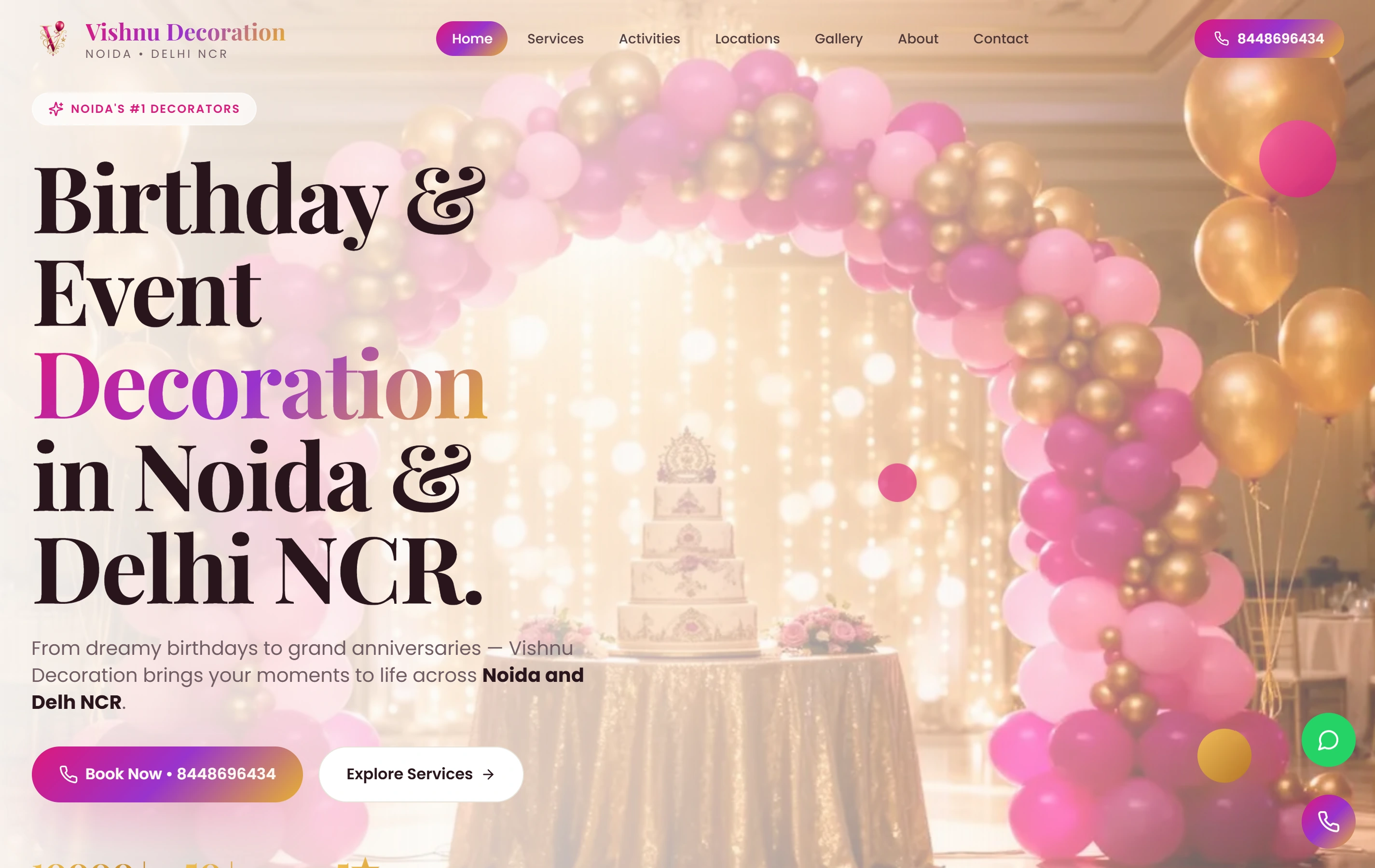
Vishnu Decoration's documented website uses themed galleries and a mobile-first presentation to introduce its decoration work and a direct WhatsApp enquiry route. Explore that public browsing experience as a real reference for connecting event imagery with a useful conversation.

ExperienceMobile-first
ContactWhatsApp
FocusService gallery
Vishnu Decoration websiteVishnu Decoration

Questions about the event-business website.

Choose the public experience and ongoing responsibilities that fit your business.

Do we need a separate website for every event?

Not automatically. We compare the purpose, content owner, lifetime and functions of the event information with the permanent business site. An ordinary public page, an external organiser link or a separate destination may be appropriate. The project chooses the arrangement rather than presuming a new site for every occasion.

Can our team add new work and photographs?

Yes, where those content patterns are included in the CMS. We agree the fields, image preparation and publishing responsibilities, then rehearse a real entry with your editor. Your business confirms the factual description and the right to publish the chosen material.

Will the website manage tickets or confirm bookings?

Those functions need an explicit requirement, supported implementation and operating owner. A public enquiry can begin a discussion without confirming availability or a booking. The proposal identifies any additional transaction or organiser-system work separately.

What is needed for a useful first estimate?

Bring the current site, service list, brand material, representative work and the audiences you need to serve. Page variety, content condition, imagery, migration and functions affect the scope. Our Ranchi studio reviews those inputs remotely with your Dhanbad contacts before proposing the work.