Task and return pattern
Write the task and when someone is likely to return. An occasional public enquiry and a daily staff action deserve different consideration. Repeat use is a reason to investigate, not an automatic instruction to build an app.

Softglimmer designs and develops websites, ecommerce experiences, business applications and connected workflows for Faridabad businesses. We can shape a new project or improve an existing arrangement, from the information customers read to the tools staff use. Our studio is in Ranchi; discovery, reviews, implementation and handover are delivered remotely within an agreed scope.
Give customers useful information and a clear next action.
Include the staff task that the selected scope must support.
Agree how the finished work is edited and maintained.
An example journey, shaped around your requirements.
A customer may need a straightforward explanation before making contact. A colleague may need enough information to respond, prepare a quotation or continue an existing conversation. Those needs belong in the same project discussion, even when the finished work uses separate pages and tools. We help establish what each part should provide and which parts you need to purchase now. The engagement can cover content structure, visual design, responsive development, editable pages and the working functions included in your brief. Where a staff application or connection is useful, we define its records, users and decisions alongside the public experience. A website improvement can also stand on its own. You receive a scope that explains the selected work and gives the people approving it a concrete basis for review.
Complete these fields for the intended task before comparing a responsive website and a mobile application.
Write the task and when someone is likely to return. An occasional public enquiry and a daily staff action deserve different consideration. Repeat use is a reason to investigate, not an automatic instruction to build an app.
Name any essential camera, location or other device interaction, and why the task needs it. Establish whether the proposed approach supports it. Separate a useful requirement from a feature that merely sounds attractive.
Record how people arrive: a public link, a signed-in account or a managed staff device. Consider whether installation or account creation adds useful capability or simply adds another step before the person can begin.
Identify the records the task reads or changes and who owns them. A mobile interface still needs an agreed data and operating arrangement. Include the responsible account owner before treating the connection as available.
Describe how the same task would work on a responsive website. Note any essential capability it cannot provide in the agreed conditions. If browsing and making contact complete the requirement, this may be sufficient.
State the selected channel, reasons and open questions. Choose a representative task that will demonstrate the benefit of that choice. Any remaining technical investigation belongs in discovery before a wider build is approved.
The written proposal selects the relevant detail in each of these six groups.
A concise account of the audience, current experience and intended customer or staff task. Record who supplies information, who approves it and who receives the resulting work. Open questions remain visible with their owners, giving design and development a shared starting point.
A page outline, content inventory and field definitions for the selected scope. Identify genuine images and evidence, required product or service information and any records to be transferred. The specification distinguishes supplied material from preparation and entry work included in the project.
Layouts and reusable patterns using realistic headings, images and record lengths. Review navigation and relevant states at agreed desktop and mobile widths. Comments should identify the page, task and change required, allowing the next design decision to be made with enough context.
The working website, application or configuration described by the proposal, with the selected editing controls and connections. Development covers the approved behaviour and dependencies. An additional audience, provider or operating rule is reviewed as a change so its effect on the work is understood.
A practical set of tasks covering the intended journey and meaningful exceptions. Inspect what the person sees and what the receiving team can actually use. Record findings, corrections, limitations and the responsible release approver, rather than relying on a general presentation of completed screens.
The agreed files, access arrangements and instructions for normal use. Demonstrate a routine update or staff action with its owner. Clarify technical upkeep, support and later improvements so the business knows what it can maintain and how to request further work.
Consider this hypothetical brief, used only to demonstrate the worksheet. The task is to read approved product information and ask about a requirement. People return when another purchase is being considered. They arrive through a shared public link, and no device function beyond ordinary browsing and typing has been identified.
The business names a product-information owner and an enquiry recipient. Its existing staff process can handle the conversation; a new customer account or app backend has not been requested. The first option is therefore a responsive catalogue and a clear enquiry route. An app is retained as an option if a distinct recurring account task later justifies it.
For review, open the public link on the agreed phone and desktop, find an item and follow the enquiry route into its intended destination. The result should retain the useful item context without implying that an enquiry confirms availability or an order. These are example planning decisions, not a Faridabad client case.
Share the present website or tool and one real task with sensitive details removed. Identify the audience, return pattern and any device capability you consider essential. Add the information the task uses and the people able to explain its source.
We can then compare the channel choices alongside content, design, build and handover work. Record open questions before the estimate is agreed. A proposal should explain the selected approach and its dependencies, so the project does not purchase a second interface without a clear task for it.
Faridabad projects are delivered remotely from our Ranchi studio. We arrange dated Asia/Kolkata reviews with the relevant participants and record the decisions needed for the next stage.
Review the present experience, intended users and useful existing tools. Compare a focused improvement with a larger build, then select the initial scope and client inputs.
Prepare the content structure and interface direction around representative material. Consolidate feedback from the people approving the business information and the operating task.
Implement the agreed work and demonstrate the relevant public and staff journeys. Resolve findings against the brief, including any dependencies needed for release.
Coordinate the approved change, confirm access and demonstrate ordinary operation. Supply the agreed materials and document the maintenance and support arrangement.
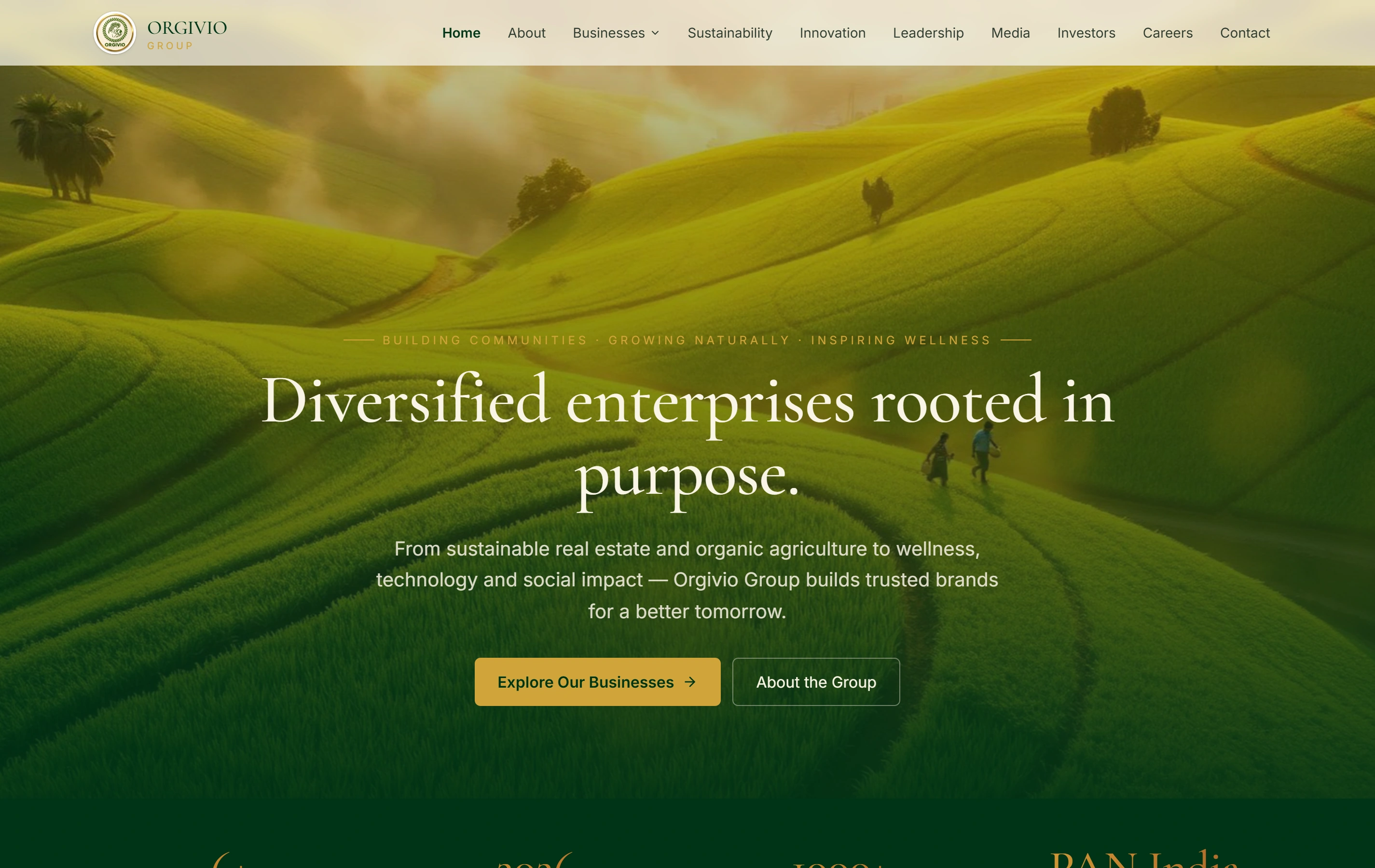
Orgivio Group is a documented corporate website project presenting its businesses, sustainability, leadership and stakeholder information. Explore the published case for its company presentation and routes into business information while considering the public pages your own project needs.
Discuss these points before the scope and estimate are approved.
Yes. A focused website scope can retain the current receiving process. We review what useful information should reach it and state whether the project includes a direct connection or an agreed manual step. A wider staff application can be assessed separately when its users, records and decisions are understood.
Choose a project contact and the people who can approve content and operating requirements. We share reviewable work and arrange dated sessions from Ranchi, supported by written decisions. The plan identifies client inputs and review stages so the next step does not depend on an informal conversation being remembered.
The selected outputs, amount of content, existing setup and external dependencies all affect the work. We first establish those inputs and identify any discovery needed. The proposal states design, development, migration and ongoing responsibilities separately where appropriate, with changes reviewed against the agreed scope.