
Skip to content
Jaipur · Travel Website Development

A travel website that helps people plan their next conversation.

Softglimmer designs and develops travel websites for Jaipur agencies and tour businesses, working remotely from Ranchi. We organise destinations, tours, practical details and enquiry routes into a useful public website. Responsive design, content editing, migration and launch preparation can be included in one scope. Where your offer includes scheduled departures, we plan how those dates sit alongside the tour and how your team keeps them current.

Explore the service
A clear travel offer with useful tour, date and enquiry information
  1. 01

    Present the travel offer

    Give destinations and tours a useful structure.

  2. 02

    Make the details readable

    Connect the itinerary with approved departure information.

  3. 03

    Prepare the agency

    Review enquiries, publishing and ordinary upkeep.

An example journey, shaped around your requirements.

Build the website around the way your agency offers travel.

Start with the trips and services your business actually sells. A small agency discussing tailored journeys needs different content from a tour business advertising defined itineraries and departure dates. We review your material, the questions travellers ask and the information staff use to respond. The page plan connects destination photographs with the practical details visitors need to understand the offer before making contact.

The work can include destination architecture, tour and service pages, visual design, responsive development, forms and CMS editing. We agree who prepares descriptions, photography, itinerary details and initial content. For a replacement website, useful existing addresses, resources and contact paths receive a clear treatment. The design, build and transition are planned together so the new presentation retains information people still need.

Scheduled departures can be included where they belong to your actual offer. We distinguish the reusable tour description from its advertised dates and the changing information your team approves. The first release can be a complete catalogue and enquiry website. Live availability, online payment or booking work is evaluated separately against the relevant provider, access and operating process before it is included.
Make the travel catalogue useful to browse and maintain.

These decisions shape the pages and the information staff will look after.

01

Which journeys are you presenting?

Bring a representative mix of destinations, tours and travel services. Decide what deserves a detail page and what helps visitors compare. The structure should follow meaningful differences in your offer, not create a large menu of pages with little useful information.

02

What belongs to the tour or its date?

An itinerary can remain useful while a particular departure changes. Identify the information shared across the tour and the details maintained for a date. Your travel owner decides the terms and status that visitors should see, using an agreed update routine.

03

What does the first enquiry need?

Choose the tour reference, intended date or period and traveller context that help staff begin the conversation. Make preferences and advertised dates understandable. The receiving team should know what was requested without reading a public form as a confirmed arrangement.

04

How will the content stay current?

Name the people approving travel facts, preparing images and publishing updates. Demonstrate changing an ordinary entry and handling missing information. Catalogue size, useful filters and provider connections are assessed from the real material and the team available to maintain it.

Receive the travel site and a practical publishing routine.

The proposal identifies the selected pages, content work, functions and release responsibilities.

01

Travel content and page plan

Organise destinations, tours, services and important existing links. Identify the information travellers need, missing inputs and the person who approves each kind of changing fact.

02

Responsive website design

Create representative browsing, tour and enquiry layouts using approved branding and photography. Review realistic itinerary lengths, date information and the actions that matter on a phone.

03

Website and CMS implementation

Develop the agreed templates, navigation and editing controls. The extent of initial entry, image preparation and any migration is stated, with reusable content demonstrated using actual examples.

04

Useful enquiry journey

Build the selected questions, readable instructions, receiving destination and confirmation. Tour and date context stay understandable from the public page to the staff conversation.

05

Content transition and launch review

Prepare retained or changed routes, relevant metadata and the selected release checks. Follow important destination, tour and contact journeys rather than reviewing only the homepage.

06

Agency ownership and care notes

Demonstrate routine publishing and a correction. Hand over account and domain responsibilities, technical-care arrangements and the route for later additions to the catalogue or functions.

Use real tour material from the first review.

The agency approver, receiving colleague and future editor help assess the website as it develops.

  1. 01

    Discover the offer

    Review the present site, catalogue and common questions. Agree the first-release scope, content responsibilities and the inputs needed for an estimate.

  2. 02

    Design a useful journey

    Follow a representative destination into a tour and enquiry. Settle the content relationships and responsive presentation before repeating the page patterns.

  3. 03

    Build and try the updates

    Implement the selected site and editing tools. Review enquiries and a realistic tour or date change, including the resulting public information.

  4. 04

    Launch and hand over

    Approve the release and retained routes, demonstrate ordinary publishing and confirm accounts. Leave a clear arrangement for ongoing care and further work.

A hypothetical working example

One departure changes while the tour remains part of the offer.

Hypothetical example: a tour business advertises the same itinerary on two dates. It later withdraws one departure, while the other remains part of its approved offer. Removing the entire tour would discard useful information; leaving both dates presented alike would confuse someone preparing an enquiry. The business decides how the withdrawn date should be described and what route remains useful to a visitor with an older link. The website keeps the itinerary and its particular departures understandable. Staff update the relevant information and inspect the tour page, date presentation and enquiry context together. The review includes a person arriving directly at the affected date as well as someone browsing destinations. A request about another date still goes to the team for discussion. This review case helps the agency agree the content relationships and the routine for maintaining them within the complete website project.

Maintain the tour and its particular departures deliberately
  1. 01

    Find the itinerary

    Keep the approved tour explanation available.

  2. 02

    Review the date

    Show the business-approved departure information.

  3. 03

    Continue with context

    Give travellers a useful route to the agency.

Hypothetical catalogue update. The agency supplies the dates, status wording and enquiry arrangements for its own tours.

Bring a catalogue the travel team can explain.

Useful starting material includes the present website, a small range of tours, itinerary descriptions, approved photographs and the questions your team normally clarifies. If scheduled departures belong to the offer, include the information maintained for each date and show where it comes from. Identify the approved images and details, then name the owners who will prepare or confirm the remaining material.

Choose an ordinary tour, a longer itinerary and a changed date for the first review. Ask the intended editor to make a realistic update and follow it into the public views. For the enquiry, W3C guidance supports explaining required and optional information. Your agency decides whether the visitor is choosing an advertised departure, suggesting a travel period or asking about a tailored journey; the labels should express that distinction.

Jaipur and Ranchi teams can work through agreed remote sessions and consolidated written feedback. Content condition, page patterns, design, migration and selected functions determine the effort. Before handover, follow a test enquiry to its agreed destination and check the receiving context. The agency owner approves travel facts and publication, while the handover explains editing, accounts, technical care and the route for future changes.

Explore a documented travel website.

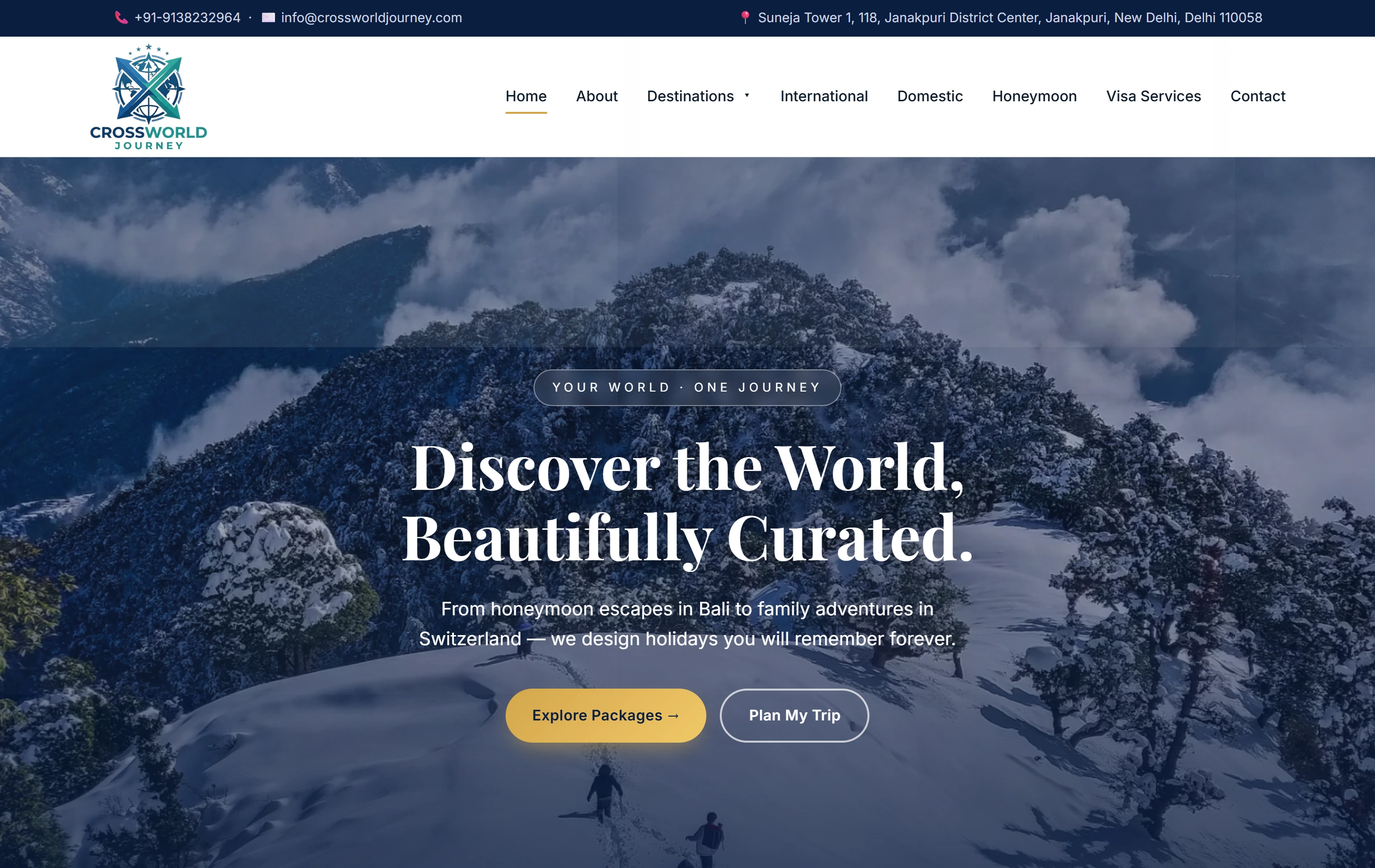
Crossworld Journey is a Softglimmer website presenting domestic and international holiday packages, destination information and trip enquiry paths. It offers a real public design reference for discussing travel content. Your proposed departure structure, publishing routine and any booking connection are planned around your own business.

Domestic and internationalA broad holiday presentation
Destination informationContext for the trip discussion
Trip enquiryA visible next step
Crossworld Journey websiteCrossworld Journey

Questions before we begin.

Can we start with tour enquiries rather than online booking?

Yes. A useful catalogue, readable tour detail and an enquiry your team can handle can form a complete first release. We evaluate live availability, payments or booking connections separately against the actual provider and operating process. The scope states what a visitor can complete on the website.

Can staff maintain tours and departure dates?

Those editing tasks can be included in the CMS scope. We agree the recurring entries, fields and public treatment, then demonstrate an ordinary update with the intended editor. The agency remains responsible for approving changing travel facts and deciding what a withdrawn or changed date means.

Do all tours need fixed departure dates?

No. The structure follows your actual mix of scheduled tours, open travel periods and tailored discussions. We use representative material to choose the page patterns. Labels and controls should match the actual request types your agency handles.

What affects the estimate and launch preparation?

The catalogue size and condition, variety of page patterns, custom design, content work, migration and included functions shape the scope. Share the current site and representative tours. The proposal separates initial design and build from provider subscriptions, continuing publishing assistance and technical care.