Make the approved identity usable beyond the first presentation.
A brand kit should help the next person prepare a proposal, website asset or announcement without guessing which logo or type style is approved. Softglimmer plans brand identity and launch materials for Kochi businesses around those real uses. Our studio is in Ranchi and delivery is remote, with a nominated approver and defined review stages. The first scope identifies the assets, editable templates and instructions your team needs; website coding, legal clearance and ongoing campaigns are separate decisions.
Approved identity assets and consistent launch materials with clear ownership.
01
Approve the core assets
Choose the logo versions, palette and type for agreed uses.
02
Review working materials
Apply the direction to a real proposal and launch template.
03
Release an owned kit
Supply the right files and explain how editors can reuse them.
An example journey, shaped around your requirements.
A hypothetical working example
The founder approves a logo, but the proposal still looks unfinished.
Imagine a hypothetical business founder preparing to hand launch materials to a colleague. The colleague has a logo preview but no suitable version for a dark background, no agreed text styles and no editable proposal. They resize the image and invent the missing rules. This example is a planning scenario, not a Kochi client or evidence of an existing Softglimmer identity project. The problem is the gap between approving a visual direction and releasing a usable set of materials.
Review the logo in the places it must appear
List the actual uses before requesting exports: a website header, proposal cover, social profile and any agreed printed material. Review legibility, cropping and background choices at realistic sizes. If the identity needs a compact or single-colour version, approve it explicitly. An editor should not redraw the mark or change its proportions because the supplied file is inconvenient.
Make the editable document part of approval
A proposal needs ordinary headings, body copy, tables and contact information, not only a striking cover. Put representative approved content into the chosen format and let the responsible editor make a simple change. Check whether the layout remains understandable with a longer service name or a second page. This practical review shows what belongs in the template instructions.
Approved identity assets and consistent launch materials with clear ownership.
01
Approve the core assets
Choose the logo versions, palette and type for agreed uses.
02
Review working materials
Apply the direction to a real proposal and launch template.
03
Release an owned kit
Supply the right files and explain how editors can reuse them.
Hypothetical planning example. Final requirements are agreed with your team.
Decisions before design
Agree the rules that editors will actually use.
A useful kit sets a small number of clear boundaries.
01
Separate colour expression from readable text
A palette can include expressive accents while body text uses combinations that remain readable. W3C’s WCAG 2.2 contrast guidance sets 4.5:1 for normal text and 3:1 for large text, with a logotype exception. That exception does not extend to ordinary website text just because it uses brand colours. Review the actual foreground and background pairs; a palette sheet alone does not establish accessibility.
02
Keep fonts and asset permissions with the kit
Record the selected fonts, their source and the relevant licences supplied for their intended use. Google Fonts’ official repository directs users to each family’s licence; the collection should not be treated as one universal permission. Supplied photography, illustrations and other assets also need an identified source and approved use. Retaining these records helps an editor avoid replacing an unavailable file with an unverified substitute.
03
Describe the website function of an asset
A logo in a header may also be a link to the homepage. W3C’s functional-image guidance says the alternative text should convey the function of an image used as a control. The website handover should identify that use, while the developer checks the actual implementation. Decorative placements and meaningful illustrations need their own treatment; one filename cannot decide every context.
An agreed delivery scope
An approved kit with files, templates and instructions.
The exact formats and number of materials are agreed before production.
01
A controlled set of identity assets
The handover lists the approved logo variants, colour references and type choices for the selected uses. It distinguishes editable source material from final exports and identifies any files that depend on licensed software or fonts. Agreed naming and a clear current folder make it easier to keep rejected concepts out of everyday use.
02
Templates in the team’s working format
The scoped proposal and social materials include representative content, editable areas and a reviewed text hierarchy. We agree which parts an editor may change and when new artwork needs approval. Where website assets are included, their export requirements are documented separately from the page code, CMS and publishing process.
03
A practical release and handover note
The release note records the approved version, access owner, asset sources and guidance for common edits. Your nominated editor checks one normal reuse before sign-off. Additional layouts, new campaign materials or a future identity refresh can then follow an understood approval route rather than being assumed to fit the first template.
Prepare the project
Test the kit with the person who will use it.
Prepare these examples before the final approval meeting.
Bring realistic copy and dimensions
Use an approved service description, ordinary contact details and a representative proposal section. Confirm the actual social and print uses rather than exporting every possible size. Longer headings, paragraph copy and tables reveal limits hidden by a short presentation headline. We can then agree which variation is supported and what requires a new layout.
Ask an editor to make one ordinary change
Have the responsible person replace a heading, update contact information and export the agreed material using their normal software. Check that fonts and images remain available and that the approved mark is not distorted. Record any missing instructions. The handover should work for that person without requiring access to a designer’s private working environment.
Define how changes reach the team
Name the approver for a new logo variant or template and the person who maintains the current kit. Agree how earlier versions are archived and which active materials need replacement after a correction. For remote reviews between Kochi and Ranchi, consolidate feedback in one place so a supplier or editor does not act on an unapproved attachment.
Documented website work
A real website showing a public business presentation.
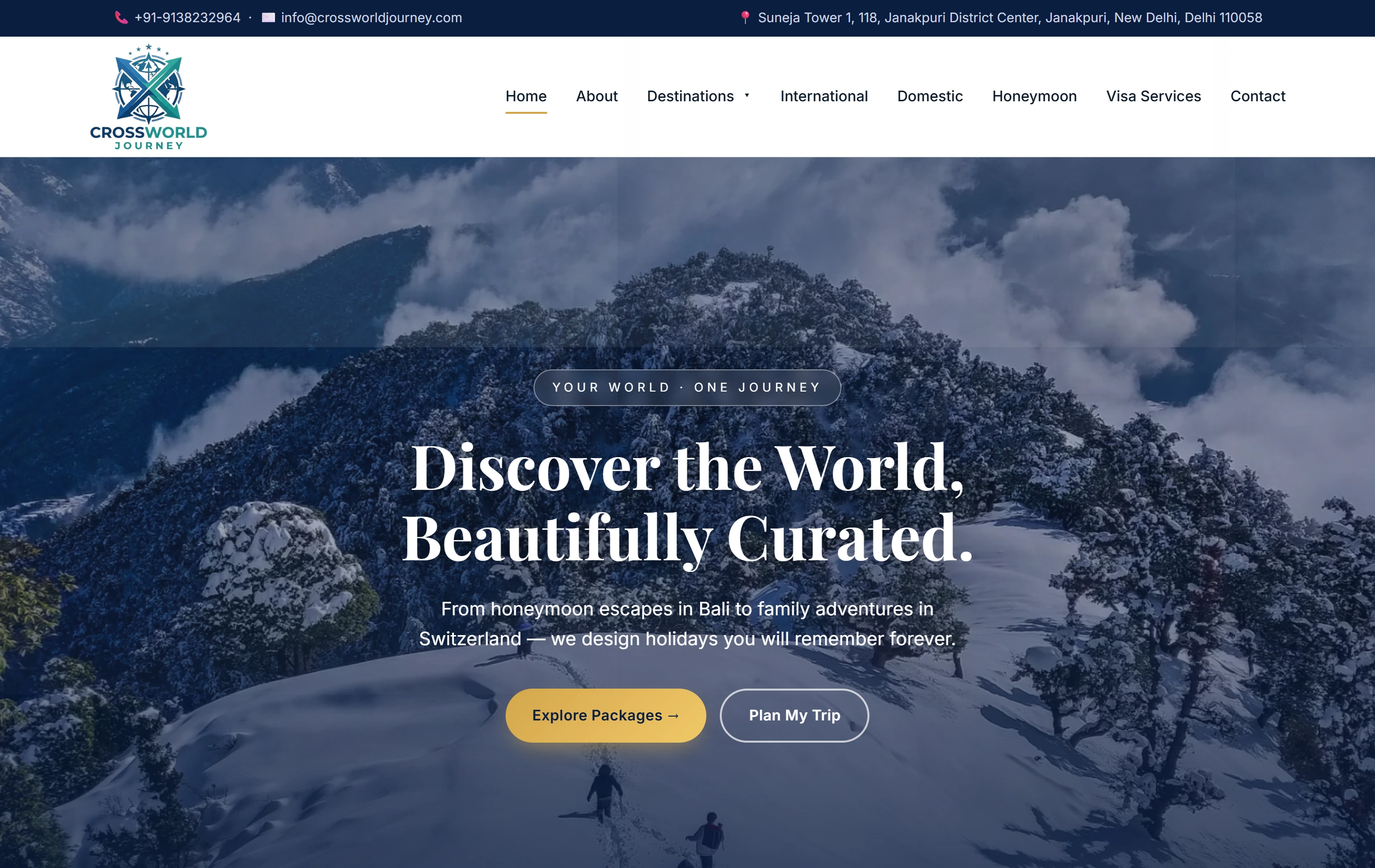
Crossworld Journey is documented in our portfolio as a travel website presenting holiday packages, destination information and trip enquiry routes. The featured screenshot is that website. It shows website presentation, not proof that Softglimmer designed the logo or delivered this hypothetical launch kit. There is no Kochi client or branding-outcome claim attached to this reference.
Domestic and internationalA broad holiday presentation
Destination informationContext for the trip discussion
Does a logo delivery include editable source files?
The agreement should state exactly which editable files and final exports are included, along with any dependencies needed to open them. We settle the working format with your team before production. A preview image is useful for approval but is not a substitute for the agreed handover.
Can we keep our existing name and mark?
Yes, subject to your rights and the supplied files. We can focus on consistent variants, typography and usable materials rather than assume a new mark is needed. Any change to the identity is reviewed explicitly; legal availability or registration is outside a design approval.
Will this guarantee accessibility or stronger sales?
No blanket outcome is promised. We can review the agreed text combinations and materials for readability, but a complete website assessment involves more than brand colours. Commercial performance depends on the offering and other factors. Completion is judged against the approved kit and usable handover.
How does delivery work for a Kochi team?
We deliver remotely from Ranchi with your nominated approver and editor. Review stages cover the identity direction, representative materials and the final kit. This page does not claim a Kochi office or a previous local brand project; the working example is hypothetical.
Continue planning
Connect the kit to the next piece of work.
Review identity delivery and website implementation as defined scopes.