
Skip to content
Manchester · Webflow Development

Bring the approved design into a working Webflow site.

Softglimmer develops Webflow websites for Manchester teams that already have an approved visual direction and need a working, maintainable implementation. We review the design files, content and intended visitor journeys, settle missing decisions and build the agreed responsive pages. CMS structure, forms, preservation work and editor handover can be included in the same engagement. Our studio works remotely from Ranchi, with your designer and business owner involved at the points where their decisions matter.

Explore the commission
An implementation brief that connects the design, the content and the finished website
  1. 01

    Review the design pack

    Locate approved layouts, assets and unresolved states.

  2. 02

    Build the working pages

    Connect responsive components and agreed editable content.

  3. 03

    Hand over the site

    Rehearse publishing and identify future design changes.

An example journey, shaped around your requirements.

Commission the website behind the approved artwork.

Bring the current design files and explain what has actually been approved. We distinguish the visual direction from the remaining website decisions: page types, responsive behaviour, reusable content, navigation and what happens after a visitor acts. A project may begin with a complete design pack or a few representative pages. The first review identifies the implementation work and any design completion needed before an estimate can be agreed.

The Webflow build can cover responsive templates, reusable sections, selected CMS collections, content entry, forms and supported connections. We define which content editors will maintain and which changes need design or development assistance. A marketing website with recurring services and projects has different requirements from a customer application. That distinction helps select an appropriate platform and keeps a website brief from silently acquiring an unspecified business system.

For a replacement website, inventory useful copy, media, page addresses and working contact destinations. Decide which material moves unchanged, which is revised and who approves it. We plan the launch and handover alongside the build, so the client receives an understandable operating website rather than only a set of pages that resembles the design file.
Choose an implementation scope that fits the starting point.

The proposal explains the work supplied by your designer, the work supplied by us and the decisions still needed.

01

Implement a complete design pack

Review the approved pages, brand assets, responsive layouts and intended interactions. Agree the templates and reusable patterns, then build and check them with real content. The handoff includes access and a route for design questions.

02

Complete missing design decisions

If only a desktop page or ideal content sample exists, identify the missing layouts and states before repeating it across the site. We can include agreed design completion, with the original design owner approving the resulting direction.

03

Retain or move an existing site

A focused implementation can retain useful content and working arrangements. A migration adds a defined content and URL inventory, a transfer method and release checks. We compare those options against the actual site and ownership.

Receive a working site and a usable handoff.

The written scope names the included pages, content preparation, account dependencies and review responsibilities.

01

Design-to-build map

A page and component inventory connects the approved files to the website templates. It records open questions and the person who settles each one.

02

Responsive implementation

The agreed layouts use representative copy and images. Navigation, links, forms and relevant interaction states are reviewed on the selected screen sizes.

03

Editing structure

Included recurring content receives defined fields and templates. Your intended editor reviews how to add an entry and how that content appears across the site.

04

Content and preservation work

The agreed copy, media and existing addresses are prepared or transferred, with responsibility for missing material and factual approval identified.

05

Connected actions

Forms and any selected tools have named destinations and account owners. The release review follows a representative action through its agreed result.

06

Release and ownership notes

Receive the agreed account, domain, publishing and editing handover. Platform costs, third-party tools, maintenance and later structural changes are stated separately.

A hypothetical working example

A desktop card hides information a phone visitor needs.

Hypothetical example: an approved desktop design reveals a short service explanation when a pointer rests on a card. The mobile design contains only the card title, leaving the implementation team unsure how visitors will read the explanation. Before building every service card, the designer and content owner choose a visible text treatment or an explicit disclosure that fits the page. This is an illustrative handoff question, not a Manchester client case.

Ask what the visitor must learn

Decide whether the explanation is essential to choosing a service. Check the reading order and intended action with a representative card. The decision concerns the information and its usable presentation, not simply reproducing a hover animation.

Review the chosen interaction

W3C guidance describes predictable handling of additional content shown on hover or focus. Use that principle when reviewing the actual design, including keyboard and touch access. An agreed review of this component is not a claim that every accessibility requirement has been certified.

Explore this option
Resolve the missing state once, then implement the agreed pattern
  1. 01

    Review the design pack

    Locate approved layouts, assets and unresolved states.

  2. 02

    Build the working pages

    Connect responsive components and agreed editable content.

  3. 03

    Hand over the site

    Rehearse publishing and identify future design changes.

Illustrative design-handoff review: information, interaction and responsive treatment are approved together.

Review the implementation with the people receiving it.

We start the review with representative pages rather than empty layouts. Include a long heading, a page with less content, an image with a different crop and the actual enquiry task. Compare the implemented structure with the approved direction and record decisions against the reviewed version. A change to the visual brief can then be distinguished from a defect in the agreed implementation.

Before handover, the intended editor performs an ordinary update: for example, add an approved project entry and inspect the resulting pages. Confirm which fields are available, who approves public facts and which changes require technical help. Review forms, important links, metadata and any agreed address transitions through the actual release arrangement.

For a written estimate, send the design pack, page inventory, sample content, current website and required tools. Identify the designer, business approver and future editor. We arrange dated Europe/London and Asia/Kolkata reviews from Ranchi and keep questions in a shared written record. New page patterns, additional copy, complex application behaviour and continuing content work can be scoped separately from the agreed implementation.

Move from the handoff to an owned website.

Each stage has something concrete for your team to assess.

  1. 01

    Inspect and scope

    Review the files, content, current site and required functions. Resolve the questions that affect the implementation and written estimate.

  2. 02

    Build a representative page

    Implement a useful template and its responsive states. Let the designer and content owner confirm the pattern before the rest of the build expands.

  3. 03

    Complete and check

    Apply the agreed system to the scoped pages and content. Review the visitor actions, editing tasks and selected connections.

  4. 04

    Launch and explain

    Agree the release, account ownership and recovery arrangement. Demonstrate everyday publishing and the route for later assistance.

Inspect a documented service-led website.

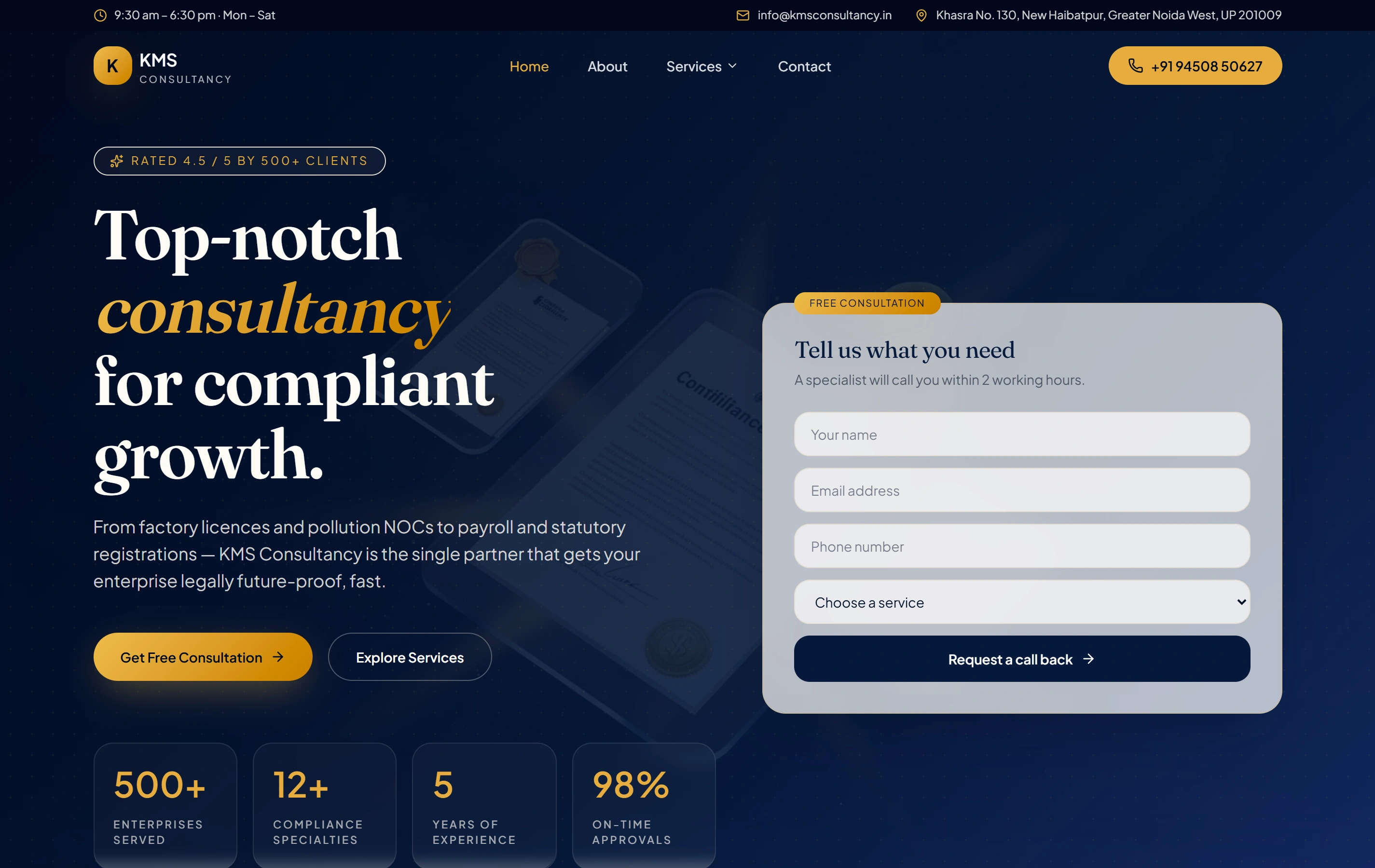
KMS Consultancy is a documented website organising a compliance service catalogue and consultation enquiries. It offers a real reference for making complex service information approachable. Its recorded scope is the public website; the Webflow implementation and approved-design handoff described here are agreed for your own project.

ContentCompliance
StructureService pages
ActionEnquire
KMS Consultancy websiteKMS Consultancy

Questions before starting the project.

Use these answers to prepare the brief and compare the work included.

Can you work with a designer we already use?

Yes. We review the supplied files and agree who approves design decisions, implementation questions and public content. That gives the project a clear working relationship without assuming a redesign is required.

What if the designs do not include phone layouts?

We identify the missing layouts and behaviour during the initial review. Design completion can be included with a stated extent and approval owner before the implementation is estimated or repeated across the site.

What do you need to estimate a complete Webflow build?

The design pack, page types, content samples, current website, editing needs and required tools are a useful start. Page variety, missing design work, content entry, migration and connections affect the scope. Provider subscriptions and ongoing support are listed separately.

What will our team receive after launch?

The agreed working website, access responsibilities, publishing walkthrough and operating notes. We demonstrate the everyday edits included in the project and explain when a new layout or function needs further design and development. Delivery is remote from Ranchi.