
Skip to content
Website Design & Digital Services for Manchester

Choose a clear working relationship.

Softglimmer offers website design and development for Manchester businesses, alongside ecommerce, software, apps, automation, AI and identity design scope. Our studio is in Ranchi, and we work remotely with your owners. Review the current need, choose a useful first phase and agree whether the project requires a build, continuing support or both.

Explore our work
Plan the first useful project.
  1. 01

    Define the engagement

    Separate the build need from recurring operating work.

  2. 02

    Review the deliverables

    Name the outputs, inputs and acceptance owners.

  3. 03

    Plan the handover

    Agree maintenance and the next improvement separately.

An example journey, shaped around your requirements.

Compare a focused improvement, a complete build and ongoing support.

A website commission may address a specific journey or replace an outdated structure. An ecommerce project adds product and operating decisions. A custom tool, app or automation can support a repeated task behind the website. We can review these service options with the business owner and propose the combination that belongs in the first phase, with later work identified separately.

Send the current site or process and a representative task through the project enquiry. We assess the required inputs, access and review needs before proposing named deliverables, delivery stages and a written estimate. Continuing maintenance should have a stated scope and accountable owner. A finished build and an ongoing operating relationship are related decisions, but neither should be silently assumed from the other.

A hypothetical working example

The business needs a new website and a reliable update process.

Consider a hypothetical Manchester consultancy replacing its website. The owner approves new service pages, while a colleague expects someone to publish future staff and service changes. One conversation describes a fixed build; another sounds like ongoing support. A useful brief can explain the release deliverables, the editing handover and any continuing maintenance requirement. The same distinction applies when a software or automation project needs an operating owner after launch. This is an illustrative planning example, not a Manchester client claim.

Name the work that ends with the first release

List the pages, design assets, implementation and acceptance tasks included in the build. Identify the business information supplied by the client and the person who approves it. A handover belongs in the delivery scope, with the intended editor involved early enough to review the update task. An undefined expectation to handle every future change does not make the first brief clearer.

Describe the recurring responsibility separately

Explain what a continuing owner needs to maintain: content, software dependencies, integrations or provider accounts. The proposal can identify support work, response arrangements and exclusions without inventing a standard package that has not been agreed. Review an ordinary update and a problem that requires a separate development change so the boundary is practical.

A practical scope example.
  1. 01

    Define the engagement

    Separate the build need from recurring operating work.

  2. 02

    Review the deliverables

    Name the outputs, inputs and acceptance owners.

  3. 03

    Plan the handover

    Agree maintenance and the next improvement separately.

Illustrative planning sequence; not a local client case study.

Provider-selection decisions to settle with the project owner.

01

What the customer or colleague must complete

Choose the main public or operating task. A service explanation and enquiry route differ from an online purchase or an internal approval. Ask for the relevant inputs and alternative states before deciding on the technical approach. The service choice should follow the work, rather than requiring the team to commission every available capability.

02

Preservation and implementation boundary

If an existing website or tool is being replaced, inventory the useful content, URLs, records and connected systems. State what the first phase changes and what must be retained. Access and integration feasibility need confirmation. Design approval is not enough evidence that every connected system will work after release.

03

Readable structure and labels

W3C guidance explains that headings communicate page organisation. Apply that principle when presenting build, handover and support information so visitors can compare the engagement options. The implemented structure should be checked with its navigation and forms; visually bold text alone is not complete evidence of a meaningful heading hierarchy.

04

Acceptance and ongoing ownership

Agree who reviews public facts, interface behaviour and technical delivery. Include editing and the recovery route relevant to the commissioned work. If continuing support is needed, describe the actual responsibility and how a new request is reviewed. Future changes should enter a clear process rather than an informal promise that the project never ends.

A proposal with a complete delivery boundary.

01

Service and engagement brief

The chosen website or digital task, first-phase outputs and input responsibilities. It distinguishes a focused improvement, a larger build and continuing support needs. It records important existing content and systems that require preservation or an agreed change.

02

Reviewed design and commissioned build

The agreed page or workflow design, development and release checks. Relevant alternative states are included so acceptance covers more than the ideal visitor. Any external system or provider has named prerequisites and a separately demonstrated connection.

03

Handover and support decision

An everyday update demonstrated with the intended owner, plus scoped maintenance and recovery notes. The client can decide whether to retain operation internally or commission defined continuing support. Later development remains reviewable through its own scope and estimate.

Agree the build and support responsibilities in the same review.

Bring the current site or tool, the intended first improvement and a recurring update the team needs to make afterwards. Identify the owner who can approve content and the person who will operate the result. Use those two examples to assess the service scope and handover, rather than comparing providers only by a list of technologies.

For a Manchester project, we can agree remote sessions using Europe/London and Asia/Kolkata, with the actual calendar date and a written feedback window. Your team does not need to attend every implementation step, but the project needs access to the owners who can settle the offer and acceptance decisions. Review schedules are agreed for the engagement rather than presented as an invented local office arrangement.

Before release, ask the intended editor or operator to perform the ordinary update within the agreed scope. Confirm who takes responsibility for dependencies, connected accounts and later improvements. That review helps your business compare a complete delivered project with an ongoing service relationship on useful, stated terms.

Real business websites to inspect when comparing scope.

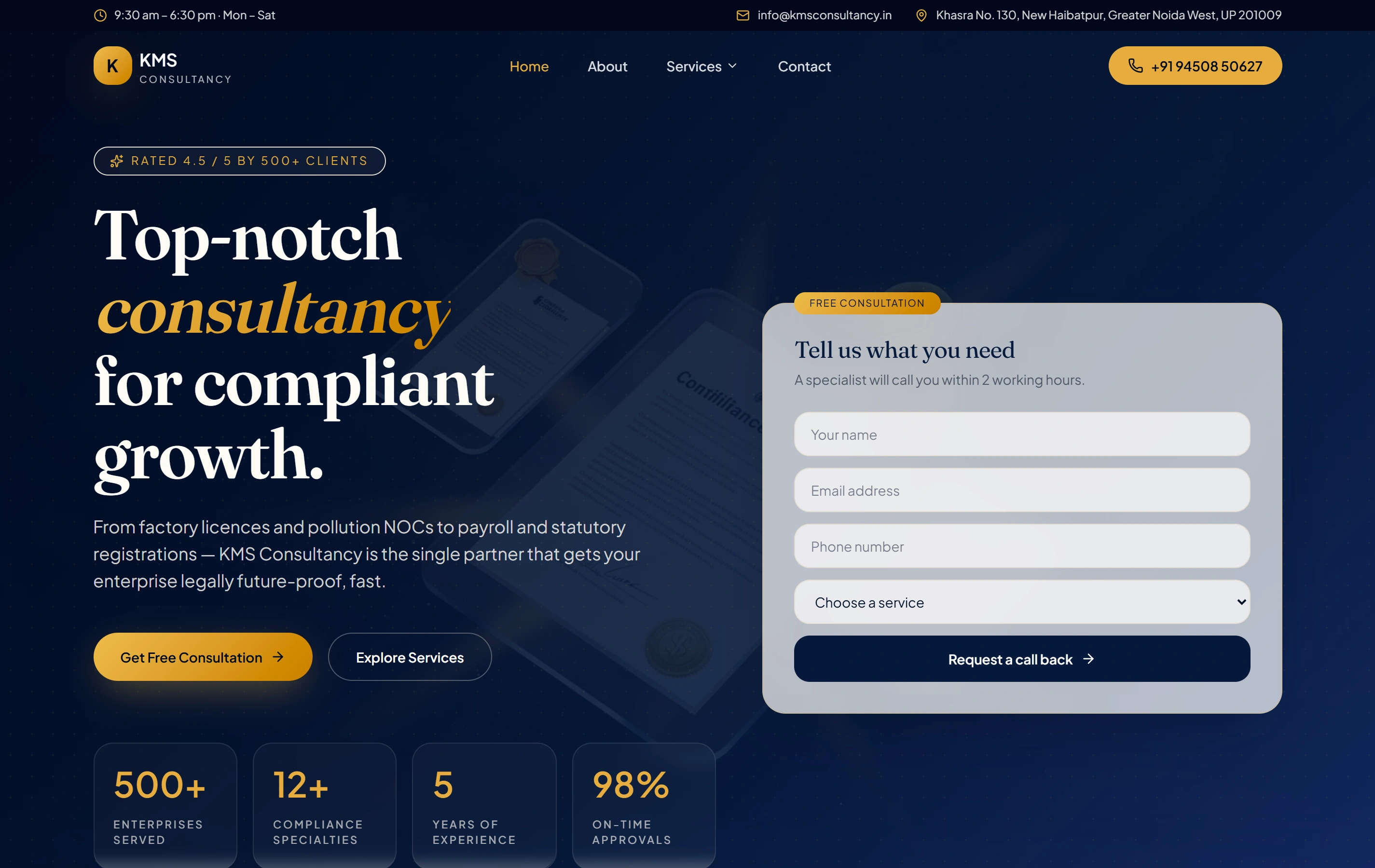
KMS Consultancy presents consultancy services through an organised catalogue and enquiry journey. Orgivio Group presents its businesses, leadership, sustainability and stakeholder information. These genuine existing websites offer different structures to inspect when discussing a build. They do not establish Manchester client work, a support contract or a measured local outcome.

Project questions.

Can we commission one focused website improvement?

Yes. We review the reason for the change, affected pages and acceptance task before proposing scope. A focused improvement and a complete rebuild have different delivery requirements.

Is ongoing maintenance automatically included in a build?

The proposal should state the handover and any continuing support explicitly. We discuss the updates, dependencies and operating owner so your business can choose the appropriate arrangement.

Can you scope software or automation behind the website?

Yes, where it addresses a defined operating need. Source records, roles, access and provider requirements are reviewed before a connection or automated workflow is included in the implementation scope.

Where is your team based for Manchester work?

Softglimmer is based in Ranchi. We can agree remote reviews, delivery and handover with your Manchester owners. This page describes market availability and does not claim a Manchester office or local client.