
Skip to content
Melbourne · Webflow Development

Make a growing service offer easy to choose.

Softglimmer designs and develops Webflow websites for Melbourne businesses, from a new website to considered changes to an inherited site. We bring discovery, content architecture, original design, CMS development and launch into one commission. When several services have grown around a business, we help organise their differences and connect each offer to relevant information and a useful enquiry route. Our studio works remotely from Ranchi, India, with your team approving the business story and the scope of the working website.

Explore the commission
A complete Webflow website shaped around the services people need to understand
  1. 01

    Make the offer understandable

    Give each service a clear purpose, boundary and useful next step.

  2. 02

    Design the connected website

    Bring service pages, relevant work and enquiry routes together.

  3. 03

    Prepare the next change

    Build the agreed content system and rehearse an ordinary update.

An example journey, shaped around your requirements.

Commission the website around what a customer is choosing.

A business can add new services faster than its website explains them. Separate pages may repeat the same introduction, while the important difference is buried in a proposal or known only to the person answering enquiries. We start with the actual offer: who each service is for, what work it includes, what the customer should bring and where another service is more appropriate. Your team supplies and approves those facts. Discovery turns them into a website brief rather than inventing new products or promises.

The commission can include information architecture, copy preparation, visual design, Webflow implementation, CMS collections, reusable sections, forms and selected connections. A service overview needs to help people compare choices; a detail page needs room to explain its own scope and supporting work. We plan those roles together, then design representative pages with real material. Some content can follow a repeatable structure, while a genuinely different service may need an additional section or page pattern.

For an inherited website, we inspect the existing pages, CMS structure and agreed functions before deciding what to retain. Clear pages, useful visual patterns and working destinations can remain. If a restructure or migration is justified, the proposal identifies the content, media and addresses affected, the preparation included and the launch responsibilities. A new website follows the same offer and content decisions without assuming there is an existing system to replace.

Webflow is assessed against the proposed design, editing tasks, required functions and continuing costs. We confirm the relevant account capabilities and dependencies before committing to the implementation. A public service website can explain a commission and collect an enquiry; booking, payment or private customer operations need their own defined requirements. The written scope connects the design and build to the website your team will actually operate.
Choose the amount of change the website needs.

A review of an inherited site informs the decision. The engagement can then carry that decision through design, implementation and release.

01

Create the first service website

Start with your business offer, approved identity and representative material. Agree the service overview, detail pages, relevant work and contact journey. We can develop the visual direction and content structure together, with the first release sized around information your team can approve and maintain.

02

Improve a useful existing Webflow site

Keep the parts that serve the business and identify where the current offer is difficult to understand. A focused commission might reorganise navigation, redesign a service family, improve its templates and prepare the content. It can include the connected build and launch work without treating the initial inspection as the finished service.

03

Rebuild or move the website

Choose a wider rebuild when the required information, design or content structure cannot be supported sensibly by smaller changes. Inventory the included material and functions, agree new page roles and map important old destinations. Transfer and review work is estimated alongside the new responsive site.

Give each service a reason to have its own page.

Use the actual offer to settle these decisions before writing near-identical pages or creating a large CMS structure.

Page decisionQuestion to answerContent work to agreeWhat the visitor receives
The customer’s starting pointWhat has happened, or what does the customer need to decide?Describe the situations the service is intended to address, using wording the business can stand behind.An overview helps a visitor recognise the relevant route without requiring internal product names.
The work and its boundaryWhat is included, what must already exist and what would need another agreement?Explain the activities and outputs. Separate a useful dependency from an optional next stage.A detail page answers the scope question instead of repeating the overview with a different heading.
Supporting materialWhich approved project, explanation or practical detail helps someone assess this offer?Connect relevant material deliberately. Describe only what a project record actually establishes.The service has useful support, or an honest explanation where a suitable case is not available.
The next conversationWhat information would help the business respond to this enquiry?Choose a clear contact action and any useful service context, then agree where the enquiry is received.The visitor can ask about the chosen work without treating the form as an instant quotation or acceptance.

Design a service family without making every page interchangeable.

We develop a visual system around your identity and the content people need to read. Typography, imagery, navigation and page composition should make the site recognisable while leaving enough room for meaningful differences between offers. Representative designs use a concise service and a more involved one, along with the actual supporting material. That helps decide which sections belong in a shared template and which need a distinct treatment. The responsive design follows the information through a service overview, a direct arrival on a detail page and the contact action. The proposal identifies the layouts, interaction states and extent of usability and accessibility review included. Supplied artwork can be part of the input; where a direction has not been designed, the commission can include that creative work before implementation.

A useful overview

Present the distinctions that matter when choosing a service. Let visitors open the relevant explanation without reading every detail in a crowded grid. A simple set of links may be sufficient; filters or comparison tools are included only when the content and a real task justify them.

A complete direct arrival

A person may reach one service from a shared proposal link rather than the homepage. Give that page an understandable introduction, scope, relevant support and next action. Keep the wider service family reachable without making the visitor restart the journey.

Readable supporting work

Place a project or example where it helps explain the offer, using approved images and descriptions. The design should still make sense when the available case has a different image shape or less detail. Decorative repetition should not imply that every service has the same evidence.

Receive the content decisions, the designed site and its working implementation.

The proposal names the included page types, content preparation, functions and transition work. These outputs make the complete commission reviewable.

01

An offer and website brief

A reviewed account of the services, intended readers and page roles. It identifies the business facts to approve, missing material, enquiry purposes and first-release boundaries. For an existing site, it records the useful parts being retained and the reasons for the selected changes.

02

Content architecture and prepared material

A service map, navigation plan and content inventory, with the agreed extent of writing, editing, image preparation and entry. Repeated information and service-specific explanations have deliberate homes. Useful existing content receives a keep, revise, merge or retire decision with an approver.

03

An original responsive design

Representative overview, service, supporting-content and contact layouts establish the visual direction. The design includes meaningful content variations and the agreed interaction states before the system is applied across the remaining pages.

04

The Webflow build and CMS model

Implement the selected pages, reusable components and recurring content. The model gives the intended editor fields for ordinary changes while preserving the agreed page hierarchy. Included forms and connections have named destinations and checked dependencies for the selected setup.

05

Content transition and launch work

Transfer the agreed pages and media, prepare metadata and important destination mappings, and review the implemented website. The release plan names the authorised switch, recovery arrangement and public checks, with responsibility for domain and connected accounts made clear.

06

An editor walkthrough and care plan

The receiving editor practises a relevant update and reviews its public effect. Handover includes the agreed access, instructions and route for help. Platform subscriptions, external tools, content support and later structural work are identified as continuing responsibilities.

A hypothetical website commission

Two services sound alike until their scope is explained.

Hypothetical example: a consultancy has added a project-delivery service alongside its existing advisory work. Both pages say the team helps clients move forward, and both show the same company introduction. A prospective customer cannot tell whether to commission advice for an internal team or help carrying out the project. Discovery identifies the real distinction with the business owner. The advisory page explains its decisions and agreed outputs; the delivery page explains the implementation work, prerequisites and relationship to the customer’s team. The overview introduces those choices in plain language. Each detail page can then present relevant approved work and an appropriate enquiry, without suggesting that one service automatically includes the other. That distinction shapes the writing, visual hierarchy, CMS fields and migration. An older broad page may remain as an overview, receive a clearer purpose or be replaced through an agreed destination plan. Before release, reviewers try choosing from the overview and arriving directly on each detail page. This example shows how the content decisions, design and implementation fit together across the website commission.

An understandable service choice, carried through the content, design and working pages
  1. 01

    Explain the distinction

    Approve the starting point, work and outputs for each service.

  2. 02

    Design and build the routes

    Connect overview, service detail, relevant work and enquiry.

  3. 03

    Try the finished website

    Review the choice, direct arrivals and an ordinary later update.

Illustrative service-portfolio example. Your business approves the actual scope, supporting material and next steps.

Work from the business offer to an accepted website.

Remote reviews use concrete material at each stage, with one place to record decisions and outstanding content.

  1. 01

    Discover and select

    Review the services, existing website, representative content and operating needs. Compare a focused improvement with a new build or rebuild, then agree the included work and dependencies.

  2. 02

    Organise and design

    Approve page roles and service distinctions. Develop the visual direction and responsive layouts with real content, including the pages that need a different depth of explanation.

  3. 03

    Implement and complete

    Build the selected Webflow structure, enter or migrate the included content and connect the agreed actions. Review the content, visitor journeys and ordinary editing tasks together.

  4. 04

    Launch and equip

    Resolve the acceptance list and carry out the authorised transition. Check the public website, demonstrate the next content change and hand over the accounts, guidance and care responsibilities.

Review a service choice, then make the next ordinary change.

Before launch, try the website with the agreed service questions rather than only compare screenshots. From the overview, find an appropriate offer, explain what it includes and open its supporting information. Then begin on a detail-page link and attempt the same decision without homepage context. Review the phone reading order, navigation and enquiry action. Where form delivery is included, follow a representative submission to the named receiving destination and record the result.

Content transition gets its own review. Check the included pages and media against the approved inventory, open the important previous links and inspect the agreed new destinations. A merged service page needs an intentional outcome for people who knew its former name. The launch plan states who approves the switch, what can be restored and who checks the public result. It does not assume that moving content guarantees rankings or preserves every historical outcome.

Ask the nominated editor to make a normal update, such as revise a service’s included work and replace a related project reference. Review the affected overview and detail pages, then demonstrate the agreed preview and publication routine. The handover explains which changes fit the existing structure and when a new offer, layout or function needs design and development. This rehearsal keeps everyday editing connected to the service story the business approved.

Bring the offer as it is sold, alongside the site as it stands.

Share your current website, approved brand material, service descriptions and representative project information. Include an example of a question prospects ask when they are unsure which work to commission. If sales documents explain an important distinction the website misses, provide an approved version with private information removed. Identify who can settle the scope of each offer and who will prepare the remaining copy or media.

For an inherited Webflow site, discovery also needs an authorised view of the relevant design and content structure, selected functions and account dependencies. The estimate separates inspection from the implementation it supports, and identifies content entry, migration, external tools and ongoing charges. We agree dated Australia/Melbourne and Asia/Kolkata review times, with written feedback between sessions. Our Ranchi studio works remotely with your Melbourne review team.

Explore a documented website with several information routes.

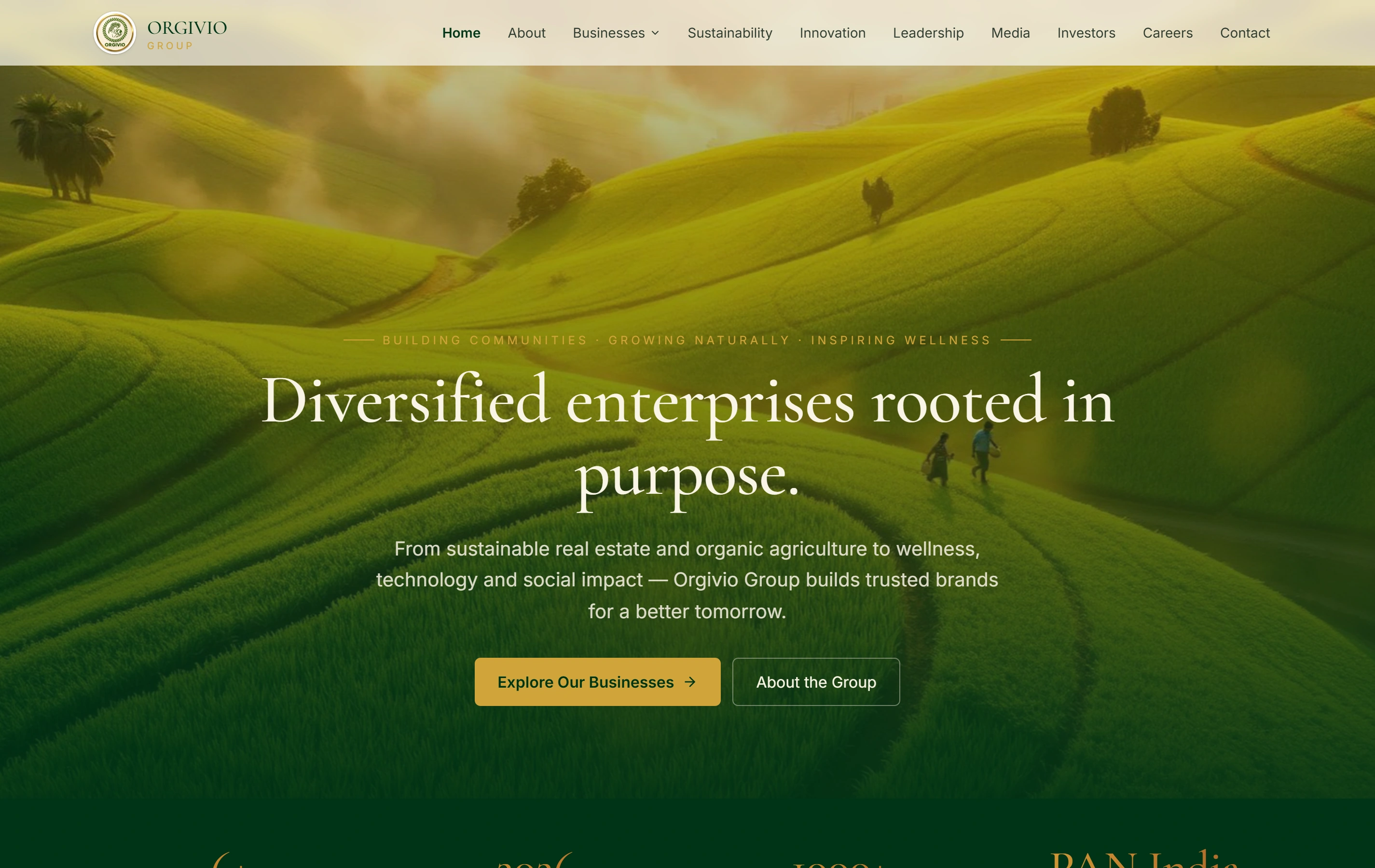
Orgivio Group is a documented Softglimmer corporate website presenting its businesses, leadership, sustainability and stakeholder information. Its public page organisation is a useful reference when discussing how a shared identity can accommodate different subjects. Explore its page organisation when considering how your own services and supporting material could fit together.

Group presentationOne recognisable company story
Business divisionsSpecific routes from the overview
Stakeholder informationSeveral audience needs
Orgivio Group websiteOrgivio Group

Questions about commissioning the Webflow website.

Can you improve a Webflow site another team built?

Yes, subject to an authorised review of the relevant site, content and dependencies. We can compare retaining useful work with a wider rebuild. The proposal explains the selected changes and can include content work, design, implementation, launch and handover; the review alone is not presented as a complete website delivery.

Do we need separate pages for every service?

Only where the visitor has a meaningful distinction to understand. Some offers can share an overview or a page; others need their own scope and supporting information. We make that decision with approved content before choosing the templates and CMS structure, so page count follows the explanation rather than becoming the objective.

Can the project include writing and moving our existing content?

Yes, with an agreed inventory and extent of work. The proposal assigns writing, editing, media preparation, entry and migration. Your business approves factual claims and usage rights. Useful old pages, merged material and important incoming links receive explicit treatment alongside the new design.

What affects the estimate and the work after launch?

The condition of the existing site, variety of services and layouts, content preparation, CMS requirements, migration and connections shape the estimate. We identify platform and external-tool costs separately from design and development. Handover covers the included editor tasks and account responsibilities, with support and later structural changes agreed explicitly. Delivery is remote from Ranchi.