
Skip to content

Build a useful app. Plan for people who return later.

Softglimmer offers mobile app design and development for Miami businesses from our Ranchi studio. We scope the recurring task, platforms, application behaviour and supporting operation together. Discovery, interface design, development, device review and release ownership form one product brief. Continuing use also matters: a customer may reopen an older supported version after the service has changed what it needs.

An app is a working product with a continuing owner
  1. 01

    Choose the product

    Compare the task with web and app options.

  2. 02

    Connect the work

    Define accounts, records and supporting services.

  3. 03

    Plan continued use

    Review supported versions and release responsibilities.

An example journey, shaped around your requirements.

Start with a repeat-use task and an operating result.

Identify who will use the product, how often they return and what they must finish. Occasional public information and enquiries may work well on a responsive website. An app may be appropriate for an agreed repeat task or justified device behaviour. The channel and implementation approach follow those requirements, available systems and the maintenance arrangement the business can support.

The project can include product discovery, interface design, application development, backend and administration work, selected integrations and release preparation. State the target platforms, necessary accounts and authoritative records. Staff need a defined way to receive and act on the result. Source access and supported interfaces must be inspected before treating an existing-system connection as a confirmed capability.

The proposal defines a complete first delivery and its important alternatives. Device coverage, unfinished input, permissions, release accounts and support need explicit boundaries. External distribution review remains separate from development. The supported-version example below is one acceptance concern inside that full commission, rather than a claim that compatibility or draft migration happens automatically.
A later release asks for information the older screen never collected.

Hypothetical example: a person starts a request on an installed version that the business still supports. A later product release adds a required service choice. When the person returns, their older screen cannot supply that new answer. Agree the supported outcome before treating the release as complete.

A release changes the product, not every installed copy at once
  1. 01

    Recognise

    Know the supported client and the request format it can send.

  2. 02

    Decide

    Apply the agreed compatibility or update rule.

  3. 03

    Continue

    Explain the supported route and the state of existing input.

Illustrative compatibility case; actual draft and service behaviour must be implemented and checked.

Define what support means across product versions.

A version policy is a product and technical agreement. The interface must describe the actual treatment of the person's work.

SituationProduct factScope decisionAcceptance evidence
Current versionCan collect the newly required information.Review the complete task with the changed rule and the authoritative receiving record.The submitted request contains the required approved context.
Older supported versionCannot display or send a field introduced later.Choose a compatible treatment that remains valid, or a clearly explained route to provide the missing answer.The older build does not receive an unexplained failure for an impossible instruction.
Update requiredThe product cannot continue that task in the installed version.Explain the required action and the documented outcome for existing input; provide a suitable alternative if included.The message does not promise an update will recover a draft unless that path was built and checked.
Request already acceptedA business record exists from an earlier successful submission.Keep that record distinct from unfinished client input and agree whether it needs any later correction.Returning or updating does not silently create another accepted request.

Name the application, supporting services and handover outputs.

A proposal identifies included platforms and operations instead of using mobile development as a promise of every device feature.

01

Product and platform brief

Agree the recurring task, users, device needs and first-release boundary. Explain why the chosen channel fits.

02

Journeys and interface design

Use realistic information to review first use, return visits, corrections and important incomplete states.

03

Application implementation

Build the selected platform behaviour and the necessary visible states, with supported device and version coverage stated.

04

Backend and operating scope

Define account responsibilities, authoritative records, permitted actions and included administration or integrations.

05

Device and compatibility review

Exercise the agreed builds and critical journeys with representative records. Record support boundaries and remaining dependencies.

06

Distribution and continuing care

Prepare the selected release route, owner-controlled accounts, support context and maintenance responsibilities.

Rehearse the return on the actual older build.

For the hypothetical changed requirement, prepare safe example input in the earlier supported build before applying the later release in a suitable test environment. Return to that build and follow the agreed continuation or update route. Inspect the receiving result and the actual state of the unfinished input. Repeat the current-version path so a compatibility treatment does not weaken the new requirement.

If the business chooses to stop supporting the earlier version, document what users can do and who handles unfinished requests. Draft retention, migration and an alternative web or staff-assisted route are individual scope choices. App-store availability and a released build do not by themselves establish that the user can resume the task.

Develop the first release with its next release in view.

Use dated America/New_York and Asia/Kolkata reviews. Bring the product owner and the people controlling connected services and release accounts.

  1. 01

    Discover

    Describe the present task, users and systems. Decide the channel, supported environments and operating owners.

  2. 02

    Design and agree

    Review a realistic flow and the important return case. Record version and draft decisions before implementation depends on them.

  3. 03

    Implement and demonstrate

    Build the agreed application and services. Verify the actual task and representative supported-version behaviour.

  4. 04

    Release and hand over

    Prepare distribution through the authorised accounts. Explain support, known limits and how a later change is assessed.

A genuine website reference for audience clarity.

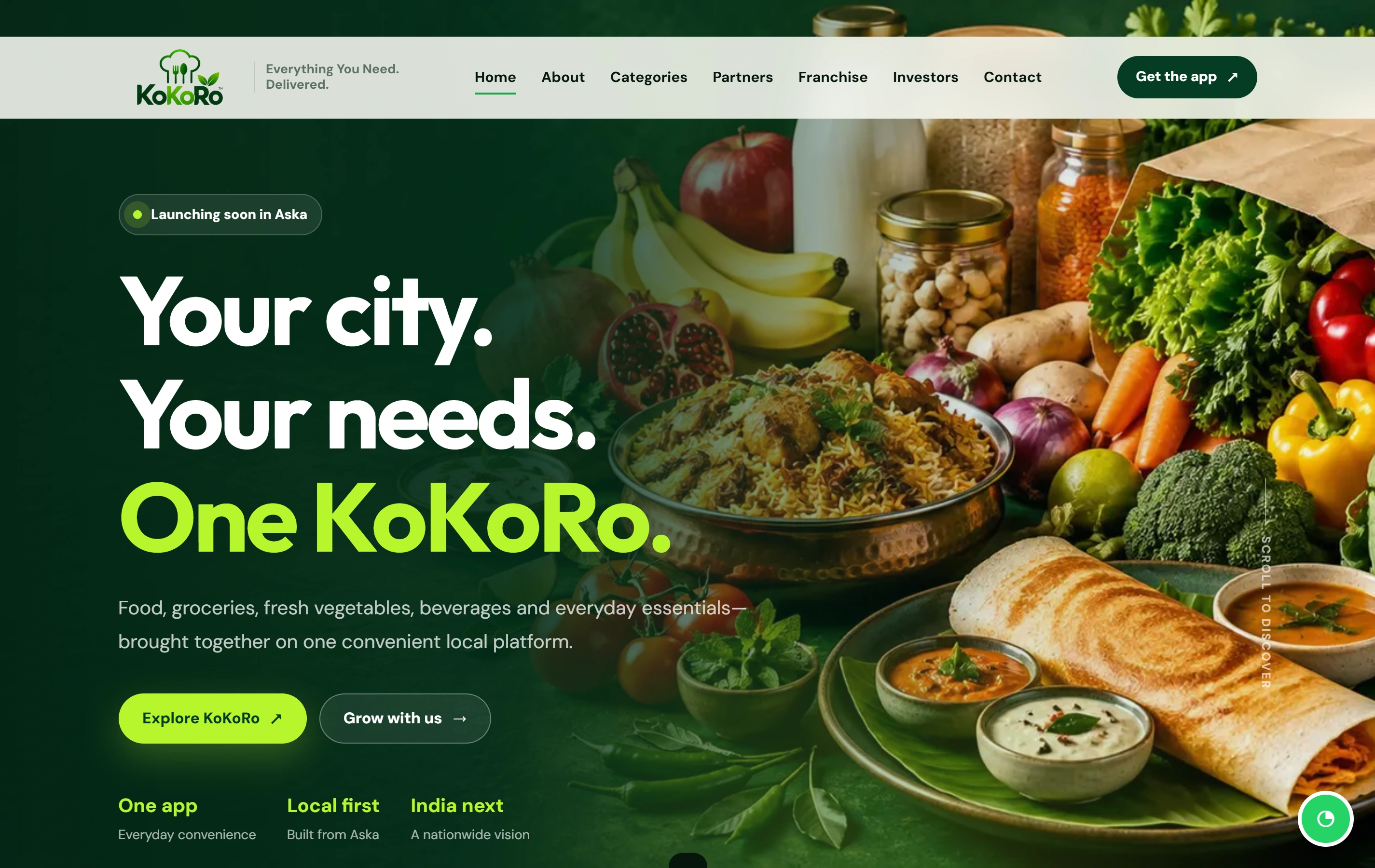
KoKoRo is a documented public website introducing a commerce and delivery platform to different audiences. Use it to discuss public explanation and navigation. Its website portfolio entry does not prove native mobile delivery, backend compatibility or the hypothetical version-handling feature.

Launch introductionClear launch context
Commerce categoriesAn approachable proposition
Partner journeysDistinct conversations in one brand
KoKoRo websiteKoKoRo

Questions before commissioning the app.

Can we improve an existing application?

An authorised inspection of source, accounts and connected services can establish a possible scope. Screenshots alone do not show the condition of the code or the obligations of another provider.

Will every old version continue working?

Only the agreed supported range and tasks belong in the release plan. We define the compatibility and update treatment, then check actual builds. Indefinite support is not implied.

Is saved input guaranteed to survive an update?

No automatic retention is assumed. Storage, migration and recovery need specific requirements and implementation checks. The user-facing message must reflect the supported outcome.

Where is the development team?

Softglimmer works remotely from Ranchi, India. Miami is a service market, with agreed product reviews and accountable operating and release owners.