Skip to content
Custom Software Development for Nagpur

Plan the next work. Keep completed facts and earlier commitments understandable.

Softglimmer plans and develops custom business software for Nagpur teams through remote delivery from Ranchi. We review the process, records, roles and current tools before choosing a useful first application. The build connects staff tasks, agreed reports and supported system exchanges. Where dates influence decisions, the brief should distinguish the current plan, an earlier commitment and the completion fact each report is intended to describe.

Explore the commission
An operating application with defined planning and reporting questions
  1. 01

    Map the complete task

    Follow inputs, decisions and the person using the outcome.

  2. 02

    Define the records

    Give planned and observed information an agreed meaning.

  3. 03

    Build and rehearse operation

    Review working tasks, reports and ownership together.

An example journey, shaped around your requirements.

Commission a working process with records people can interpret.

Start with a piece of work the team needs to finish, its current tools and the people responsible for each decision. Compare suitable configuration or a supported connection with a custom application. The selected first release should let the intended users complete meaningful work, including a defined exception route. Additional departments and later modules can follow an agreed boundary. The commission can include workflow and data modelling, role-based interface design, application development, relevant worklists and reports, migration and selected integrations. Planning information is part of that model. A changed target can help staff organise the remaining work while an earlier commitment remains relevant to a different question. Completion is an observed business fact with its own approved recording and correction rule. Those meanings should be explicit before one generic date field is used for every view.

A hypothetical job with a changed target
  1. 01

    Earlier commitment

    Keep the original agreed basis available for the question it supports.

  2. 02

    Current plan

    Show the authorised revised target for organising unfinished work.

  3. 03

    Actual completion

    Record what happened and when under the agreed operating rule.

Illustrative record model. The business approves date meanings, revision authority, reporting cut-offs and completion evidence for the application.

Define the date question alongside the work and its permissions.

01

A coherent operating release

Identify the users, job records, permitted decisions and practical result of the first application. Include ordinary entry, review, completion and the exceptions staff must resolve. Existing useful tools can remain authoritative where that fits the chosen process.

02

Commitment and current planning records

Decide which agreed date supports a commitment question and which target controls the current worklist. A revision needs an authorised owner and understandable context. Retaining earlier information lets the team explain the change rather than infer it from the newest value.

03

Reports with a declared basis

Name what each view answers, its relevant dates and its as-of point. An unfinished job, a recorded completion and a revised plan should not become interchangeable measures. Define included and excluded records and let a reviewer trace a summary back to the jobs it represents.

04

Implementation and continuing operation

Agree roles, source systems, imports, connections and administration. Sample source data and authorised access establish feasibility. Release, recovery and support duties belong beside the application scope so the next owner can operate the process and investigate a disputed result.

Hypothetical planning example

Moving the target should not silently rewrite the performance question.

Imagine a hypothetical team with an unfinished job originally agreed for 6 May. An authorised revision changes the current target to 10 May. On 8 May the team needs a worklist for the remaining job and a report assessed against the original agreed date. These views answer different questions about the same work.

The application can retain the original commitment, the revised plan and its reason, with actual completion recorded separately when established. The current worklist uses the declared planning basis. A report labelled against the original commitment still uses 6 May and its stated as-of point; changing the target alone does not turn that earlier question into an on-time completion. The business also decides how a correction to a wrongly entered date is reviewed, rather than confusing correction with a new plan.

Acceptance uses safe sample jobs: this revised unfinished job, a genuinely completed job and a case with completion still unconfirmed. Review permitted revision actions, the worklist and each scoped report, including its declared basis and underlying records. Record an actual completion and repeat the relevant views. The wider application still needs usable forms, role checks, selected connections and an operating handover; a renamed dashboard column alone is not this commission.

Agree the software, its transition and the way it will be operated.

The proposal identifies the complete first workflow and the acceptance material for it.

01

Workflow and information model

Map ordinary work, exceptions, roles, record identities and agreed date meanings. Review representative samples and open decisions with the responsible owners.

02

Interfaces and application build

Design and develop the chosen forms, worklists, details, actions and reports using realistic content and useful states. Enforce the approved role rules in the working application.

03

Selected connections and migration

Inspect supported interfaces and source records. Define mapping, authoritative owners, reconciliation and the handling of unmatched or failed exchanges within the included scope.

04

Acceptance, deployment and handover

Review complete staff tasks and report records. Agree release access, data transition, recovery, source and account responsibilities, then demonstrate ordinary administration and the selected support route.

Remote discovery and delivery from Ranchi

Bring a changed plan and the report someone uses to judge it.

Share redacted forms, current tools, a typical completed case and one unfinished job whose date changed. Include the report or worklist people use and the action they take after reading it. Ask the process owner to explain original commitments, authorised replanning and completion evidence. The technical owner can identify available source data, interfaces and access.

Nagpur and our Ranchi studio can use dated Asia/Kolkata reviews with an operational approver, an ordinary user and the relevant system owners. We compare implementation routes, model the selected work, review interfaces and examine the built task before planning transition. Roles, record rules, reporting questions, integrations, source data and acceptance effort shape the estimate. Continuing care and later functionality have explicit arrangements.

A factual reference for organising public information.

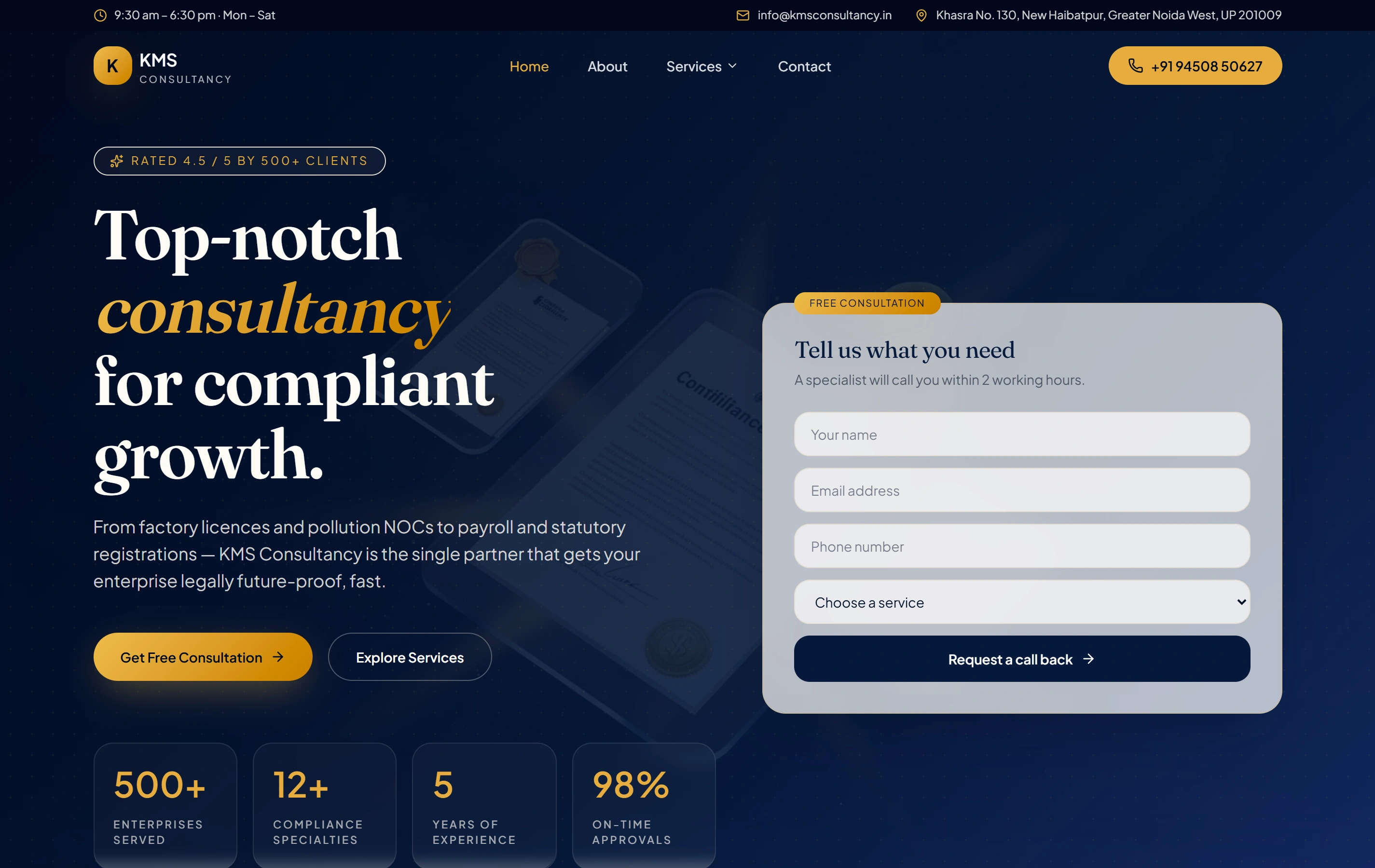
KMS Consultancy is a documented website presenting a complex compliance service catalogue through clear pages and an enquiry journey. Its public presentation can inform an information discussion. The documented case covers the website only; the operational application described here needs its own implementation and acceptance.

ContentCompliance
StructureService pages
ActionEnquire
KMS Consultancy websiteKMS Consultancy

Questions before commissioning Nagpur business software.

Should we build custom software or keep our current tools?

Discovery compares the same useful task against configuration, supported integration and a custom application. Useful existing systems can remain. The decision considers the records, role actions, available interfaces and operating responsibilities the business actually needs.

What does a complete first software release include?

Define a meaningful journey with its users, records, permitted decisions and exception route. The scope can include workflow modelling, interfaces, application logic, necessary reports or connections and migration. Acceptance and the deployment and operating handover are planned with that work.

Can the current plan and original commitment both appear?

Yes, when they serve defined business questions. Agree which record each view uses, who authorises a change and how completion is established. Reports should state their basis and relevant cut-off, with a path to the underlying records. The business approves those definitions.

How are data transition and ownership agreed?

We inspect representative source information and identify the system owners before scoping migration or connections. Reconciliation, release access, source and account arrangements, recovery and support responsibilities are recorded in the proposal and handover. An unknown interface or unclear historical data may need investigation first.