
Skip to content
Nagpur · Event Planner Website Design

An event website that makes the next conversation easier.

Softglimmer designs and develops event-planner websites for Nagpur businesses that need to present their work and receive a useful first brief. We bring service information, approved galleries, responsive design, content editing and enquiry implementation into one project. The questions follow the events and services your team actually offers, including separate functions when relevant. Our Ranchi studio works remotely with your content and business owners, from the first structure review through launch and publishing handover.

Explore the commission
Connect the service, the visual work and the event brief
  1. 01

    Explain the offer

    Help visitors understand which event services your business provides.

  2. 02

    Present relevant work

    Organise approved images and descriptions around useful choices.

  3. 03

    Begin a useful discussion

    Give the receiving team clear event context for the next conversation.

An example journey, shaped around your requirements.

Commission the whole website around the planning conversation.

A prospective customer may arrive with a detailed event plan or only an occasion and a few ideas. The website needs to make the offer understandable to both. We begin by reviewing your real services, audience, approved work and the questions staff ask after first contact. Those inputs shape the pages, gallery structure and enquiry route before visual design is repeated across the site.

The project can include information architecture, responsive layouts, reusable service and gallery pages, CMS editing and a proportionate event brief. We define the relationship between the public presentation and the conversation your team will continue. A business offering decoration, full planning or selected event services needs wording that accurately explains its own contribution. Your content owner supplies the facts and clears the material for publication.

For a replacement website, we inventory useful copy, images, page addresses and working contact paths. The proposal identifies what moves, what is revised and what needs new material. Design, content preparation, implementation and release checks are planned together. Your team receives a website it can maintain as new work becomes available, with clear responsibility for reviewing the next gallery or service update.
Choose the structure around the actual offering.

The best layout follows what a visitor needs to understand and what your team needs to assess.

01

Which services can visitors enquire about?

Name the work the business actually offers and the distinction between its services. Explain where a visitor needs advice before a final arrangement can be discussed, using language the receiving team recognises.

02

How should the work be explored?

Choose useful gallery groupings from the approved portfolio. Occasions, services or settings may help, depending on the material. Review enough representative images and descriptions to support the chosen structure.

03

What belongs in the first brief?

Identify the event details that affect the first response and allow genuine unknowns. If an enquiry can cover several functions, decide which details belong to each rather than forcing the visitor into one combined description.

04

Who maintains the published information?

Nominate the owner who approves service descriptions, images and updates. Agree the content fields, publishing controls and ordinary editing task before handover, including responsibility for rights and credits.

A hypothetical working example

One enquiry describes two functions with different arrangements.

Hypothetical example: a visitor wants to discuss a ceremony and a reception. The ceremony has a known date and venue, while the reception date is provisional and its venue is undecided. A single event-date field followed by one venue box leaves staff unsure which information describes which function. For a business that offers this kind of work, we can scope a brief that keeps the functions distinguishable. Each has a clear name and its own relevant known or unknown details, with an overall contact route for the discussion. The receiving team can read the ceremony arrangement and the open reception questions without reconstructing them from an ambiguous summary. W3C’s form guidance supports grouping related questions with a meaningful description. Acceptance follows the customer’s entry through the receiving result and checks that both sets of details remain associated with the right function. The team then assesses feasibility, availability and the final service scope in its normal conversation. This example helps define an enquiry structure; it does not turn a submitted brief into a reserved date or a confirmed event arrangement.

Keep each function’s details together in one useful enquiry
  1. 01

    Ceremony

    Known date and venue remain attached to this function.

  2. 02

    Reception

    The provisional date and undecided venue remain clear.

  3. 03

    Receiving discussion

    The team reviews both functions and confirms the next questions.

Hypothetical event brief. Multiple functions are included only where they match the business’s real service scope.

Receive a complete public website and a practical editing route.

The written scope names the included pages, galleries, content work and enquiry behaviour.

01

Service and audience brief

A shared account of the offering, visitor questions and receiving task guides the first release. It records content responsibilities and decisions that need the business owner.

02

Page and gallery structure

The agreed service pages and visual categories connect useful work to a relevant next action. Image descriptions, credits and any supporting project context have defined places.

03

Responsive visual design

Typography, imagery and reusable layouts are reviewed with real content on the agreed screen sizes. The navigation and contact route remain part of the visual review.

04

Editable implementation

Included pages, galleries and content controls are built around the intended editor’s ordinary tasks. The scope explains which changes are routine updates and which require further design or development.

05

Enquiry and receiving checks

The scoped form or contact route preserves the information the team needs. Review feedback and the receiving result with a simple request and a more involved event brief.

06

Preservation and handover

For a replacement, the agreed content and address work accompanies release checks. Receive publishing guidance, account responsibilities and the route for later care or changes.

Review a real visitor journey, then rehearse the next update.

Bring a representative selection of approved work and explain the services it illustrates. Collect usable image files, descriptions, permissions and required credits together. A few well-documented examples are more useful for the first structure review than a large unsorted folder. Show the questions staff ask when a new event enquiry arrives, including the information visitors often do not yet know.

During design review, follow a visitor from a service page into relevant work and then the enquiry route. Check reading order, image treatment and the amount of information requested on a phone-sized screen. Clear labels help people understand each question; grouping related details helps them understand how the questions fit together. We review the actual controls and copy within the agreed website scope.

Before launch, the intended editor adds or updates a representative gallery entry and the receiving owner reads a controlled event brief. Agree the account, domain and publishing responsibilities, along with any separate care arrangement. Our Ranchi studio coordinates remote reviews in Asia/Kolkata with your Nagpur team, recording the version, open questions and accepted decisions for the handover.

Build the website with concrete review points.

The same service facts and content responsibilities carry through the project.

  1. 01

    Discover the offer

    Review audiences, services, approved work and the first conversation your team needs to have.

  2. 02

    Design with representative content

    Agree the page structure, gallery treatment, mobile layout and useful event questions before extending the patterns.

  3. 03

    Build and follow the enquiry

    Implement the selected content controls and contact path, then inspect the customer experience and receiving result.

  4. 04

    Launch and prepare the editor

    Complete the agreed preservation and release checks, and rehearse publishing the next approved piece of work.

Explore a real event-decoration website.

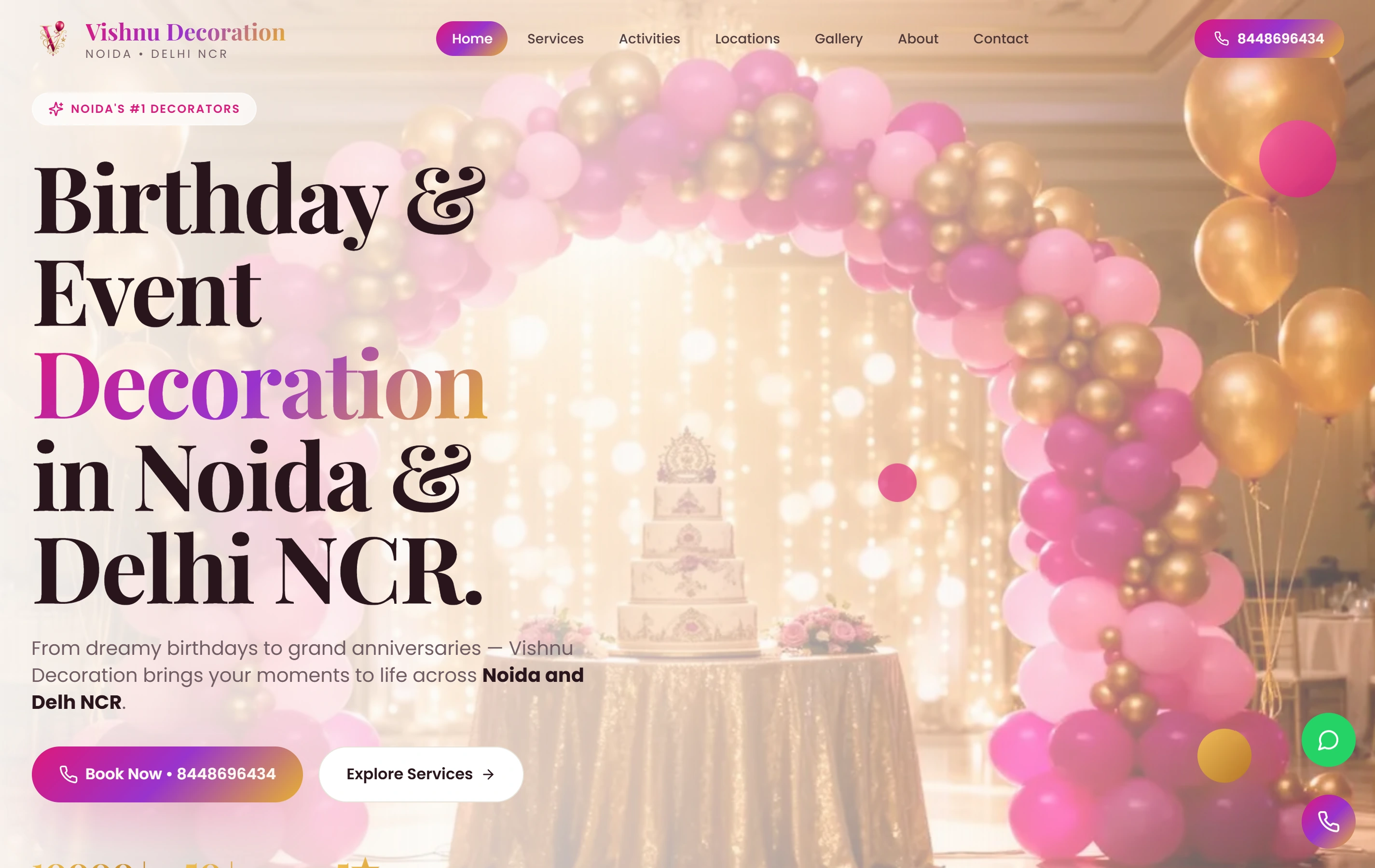
Vishnu Decoration’s published website combines themed galleries, a mobile-first presentation and a direct WhatsApp conversation path. It offers a real reference for connecting visual work with an event enquiry. Your website’s service information and enquiry structure are planned around your own offering.

ExperienceMobile-first
ContactWhatsApp
FocusService gallery
Vishnu Decoration websiteVishnu Decoration

Questions before commissioning the work.

Bring these decisions into the first project conversation.

Can the website cover planning and decoration services together?

Yes, where those are services your business actually provides. We agree how to distinguish them, which work illustrates each and what the visitor should enquire about. Shared gallery content can be used where its service context remains clear and approved.

Do visitors need every date and venue before enquiring?

Only the information your team genuinely needs at that stage should be required. We can represent provisional or undecided details clearly. Where several functions are included in one enquiry, their details remain distinguishable for the receiving discussion.

Can our team add new event work after launch?

The agreed CMS scope can include the gallery and service fields your editor needs. At handover, the intended editor rehearses an update with approved images, descriptions and credits. The proposal distinguishes routine publishing from later structural or functional changes.

How does a Nagpur business work with your studio?

Our studio is in Ranchi and delivery is coordinated remotely. Your nominated owners approve service facts, imagery and receiving requirements while we present the website for review. We agree the included outputs, client inputs, review stages and handover before the build begins.