Products and discovery
Choose useful categories, product facts and representative options. Scope the content preparation and editing controls so the business can maintain the information used by its browsing and selection functions.

Softglimmer offers retail and ecommerce website design and development for Nagpur businesses through remote delivery from Ranchi. We plan the catalogue, customer journey and operating handover together. The scope may support an enquiry catalogue or defined online ordering, with the platform and connections chosen around the business requirements rather than presumed from the page design.
Prepare useful categories and approved product information.
Define online ordering or a clearly described quotation request.
Review the customer task, product updates and operating ownership.
An example journey, shaped around your requirements.
The project begins with the product range, the questions buyers ask and the way the business currently sells. Category structure, product detail, useful browsing and the selected order or quotation route should support that same process. Approved descriptions, options, images and relevant conditions give the interface its content; layout alone cannot settle commercial rules. Price information needs an equally clear purpose. An item amount, an estimated additional charge and a final amount payable are not interchangeable labels. If a destination or another fact is needed before a charge can be established, the website should explain that boundary in the chosen journey. The business approves the amounts and rules. We identify the content and implementation work required to present them without turning an unresolved question into a confident total.
Use the item information and amount approved by the business.
Explain what still depends on the delivery destination or review.
Follow the agreed quotation or supported ordering boundary.
A hypothetical buying-journey review; it supplies no rates, tax rules, payment confirmation or delivery promise.
Choose useful categories, product facts and representative options. Scope the content preparation and editing controls so the business can maintain the information used by its browsing and selection functions.
Define which items can follow an order process and which require a quotation. An enquiry-led release can be useful when the business must confirm details before accepting work. The public action needs to describe that arrangement accurately.
Identify what each displayed amount includes and what still depends on supplied information. Use business-approved wording for a provisional charge. Do not use a zero or a confident total merely because a final value is not yet known.
Agree who receives the work and confirms the next state. Required payment, stock, delivery or other connections need inspected capabilities and account ownership. The proposal states what is implemented and what remains a manual business decision.
Imagine a catalogue with an approved item price, while the business must review the delivery destination before confirming an additional charge. A summary headed only total could lead the customer to think the shown item amount is everything payable. This is a planning example, not a Nagpur client result or a statement of any retailer’s charging rules.
The website brief establishes the actual selling process. It might request the missing context for a quotation, or show a clearly identified provisional amount within a supported ordering flow. The label and explanation should make the remaining decision visible. The site must not invent a rate, tax treatment or delivery promise to complete the design.
Review a normal destination and one needing further confirmation, using approved review material. Inspect the public summary and what reaches the operating team. Payment confirmation, where included, requires its own agreed provider and acceptance work; displaying an amount does not establish that money has been collected.
The proposal names the selected outputs, the material the business supplies and the responsibilities needed to deliver and use the work.
The launch range, product information, conditions and chosen purchase or quotation model, with preparation and approval responsibilities identified.
Reviewed category, product and relevant summary or enquiry designs using realistic content and the important unresolved states.
The agreed platform, templates, editing controls and working customer action. Any provider-dependent calculation or transfer has an explicit source and owner.
Representative customer and editor tasks, receiving checks, business-owned access and the agreed maintenance or support route after release.
Bring representative products, approved amounts and a description of how the team confirms an order or quotation today. Show a case where delivery or another condition needs discussion. Identify the person who can approve commercial wording rather than ask the website team to infer a rule.
Remote Nagpur-Ranchi reviews can then follow the same task through the content, design and receiving process. The estimate depends on the catalogue, functions and actual connections included. We can compare an initial enquiry website with a fuller store before the business commits to a platform or unsupported automation.
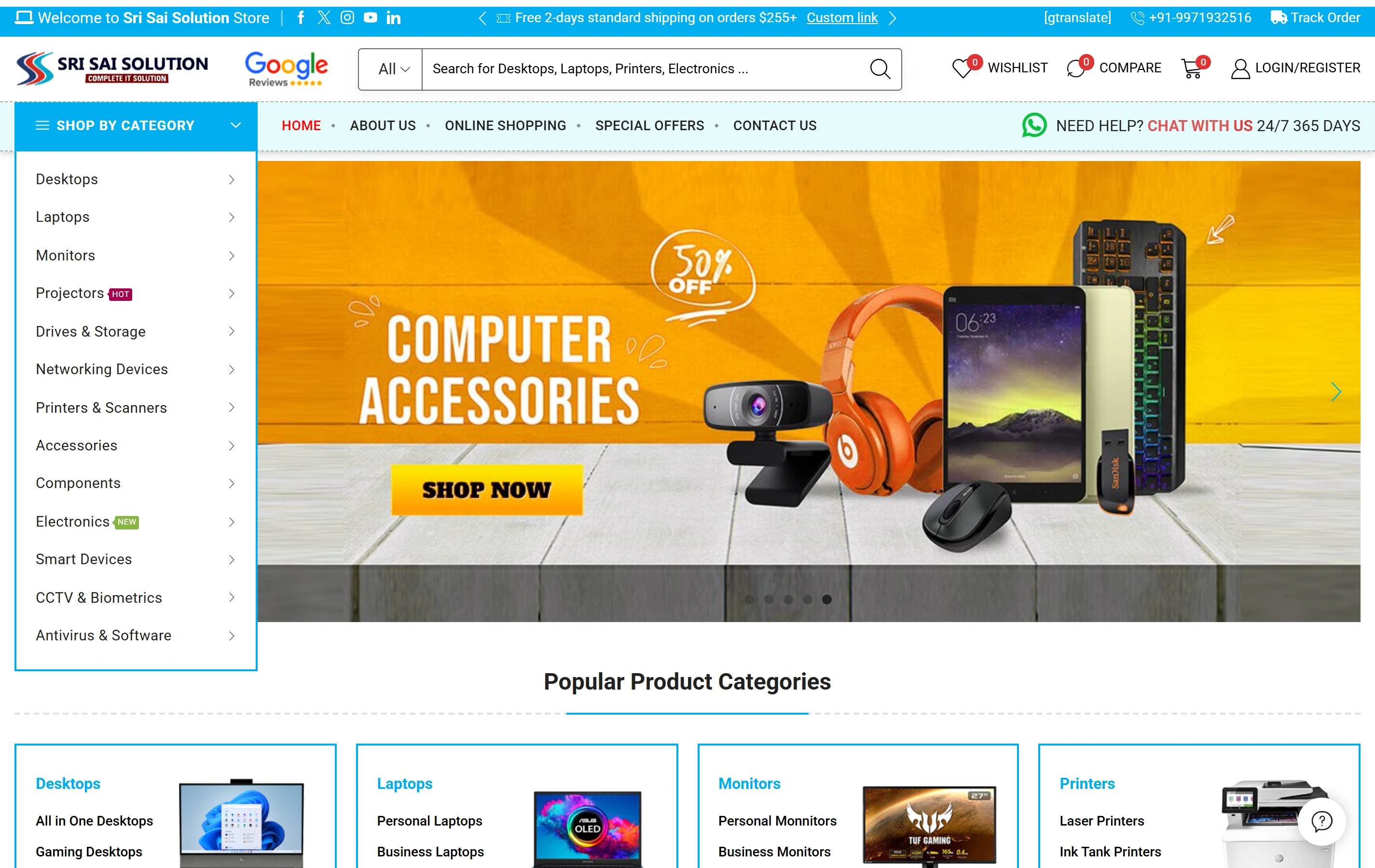
Sri Sai Solution is a documented computer and electronics ecommerce website offering product categories, catalogue search and online shopping. It is a factual public website reference. The portfolio does not prove destination-dependent pricing, payment collection, a particular platform or a Nagpur delivery engagement.
Yes. Where the business needs to review specifications, quantity or destination, a clearly labelled request can be the appropriate first action. The receiving process and acknowledgement should explain what follows without treating that request as an accepted order.
The business supplies and approves its amounts and commercial rules. We help define how the website presents and, where scoped, implements them. Any external provider or calculation requires its own feasibility and review; website design does not establish a pricing policy or tax treatment.