
Skip to content
Digital Services for Salem Businesses

Make the offer clear. Make the work manageable.

Softglimmer plans and builds digital experiences for Salem businesses through remote delivery from our Ranchi studio. We bring content, design and development into an agreed scope, whether you need a website, storefront, business application or connected workflow. The project should be understandable to the people approving it and manageable for the people who maintain it.

Explore the service choices
A coherent brief, with room for the right service choices.
  1. 01

    Approved information

    Start with the offer and material you can stand behind.

  2. 02

    Useful tasks

    Plan what customers, editors and staff need to do.

  3. 03

    Practical ownership

    Receive clear controls, guidance and responsibilities.

An example journey, shaped around your requirements.

Define the complete project

Bring the business explanation and the working requirements together.

A website can look complete while its service descriptions still need approval or its editor cannot maintain important information. A business application can have polished screens while the team has not agreed which record controls a decision. We address the information, interface and operating responsibilities as related parts of the same project.

The first discussion identifies what people need to understand or complete, what material already exists and who can confirm it. We can then plan an appropriate service: a new public presence, a considered improvement, a maintained content system or a tool supporting staff and customers. The proposal names the outputs and distinguishes design, working implementation and continuing care.
Make the choices explicit

Review three kinds of readiness before the build expands.

01

Information readiness

Identify the current service facts, genuine evidence and material that can be published. Distinguish approved information from an unresolved question. The brief can record a gap and its owner without filling it with an invented statement or an unrelated example.

02

Task readiness

Explain the visitor, editor or staff action and the result they should understand. Choose words that those people recognise and confirm their meaning with the business. A new interface should not depend on an undocumented explanation from the project team.

03

Operating readiness

Name the people who will maintain content, handle requests and manage technical dependencies. Agree access and an ordinary update during the project. The handover is more useful when the future owner participates before the final release.

Outputs you can review

Agree tangible outputs for the selected engagement.

01

Content and task inventory

An organised view of the offer, audiences, important journeys and available material. Record who supplies and approves content, together with any existing tools or records the work must respect.

02

Reviewed design system

The agreed visual direction, page or interface patterns and representative content. Define useful states and responsive behaviour, with creative assets and implementation guidance appropriate to the chosen design scope.

03

Working implementation and review

The selected templates, controls, functions and connections, followed through agreed tasks. Retain the decisions and findings that matter to acceptance, including unresolved dependencies that prevent a proposed function from being ready.

04

Editing and support handover

A walkthrough of routine changes and the approved release process, with account responsibilities and a support route. State which dependency upkeep, recovery work and future improvements are included in ongoing care.

Before the first project discussion

Prepare material the future owner can help review.

Choose one representative service, product or staff task and gather the information it actually needs. Bring the current page or working tool, approved descriptions, available media and a suitably redacted example of the next action. Explain which facts change regularly and who knows when they are wrong.

Invite the person who will make an ordinary update after handover. Their questions can reveal an unclear field, a missing source or an unnecessary copying task before the design is final. The project can then specify useful editing and review controls around real responsibilities. That discussion is also a sensible place to identify support or training that needs its own scope.

Remote delivery from Ranchi

Keep the same brief visible through design, build and handover.

  1. 01

    Discover and organise

    We work from Ranchi with your Salem reviewers remotely. Assemble the audience, material and intended tasks, then agree the decision owners and questions that need resolution.

  2. 02

    Design with real content

    Review the selected pages or interfaces using representative headings, images and records. Confirm the information structure and actions before extending the design across the agreed scope.

  3. 03

    Build and rehearse

    Implement the approved work and follow the relevant customer and staff journeys. Let the intended editor prepare an ordinary change and review its effect alongside the public experience.

  4. 04

    Release with clear ownership

    Confirm approvals, account responsibilities and the ongoing maintenance arrangement. Record the materials and guidance delivered. Use dated Asia/Kolkata review invitations and written decisions for continuity.

From the website portfolio

See a documented service-information website.

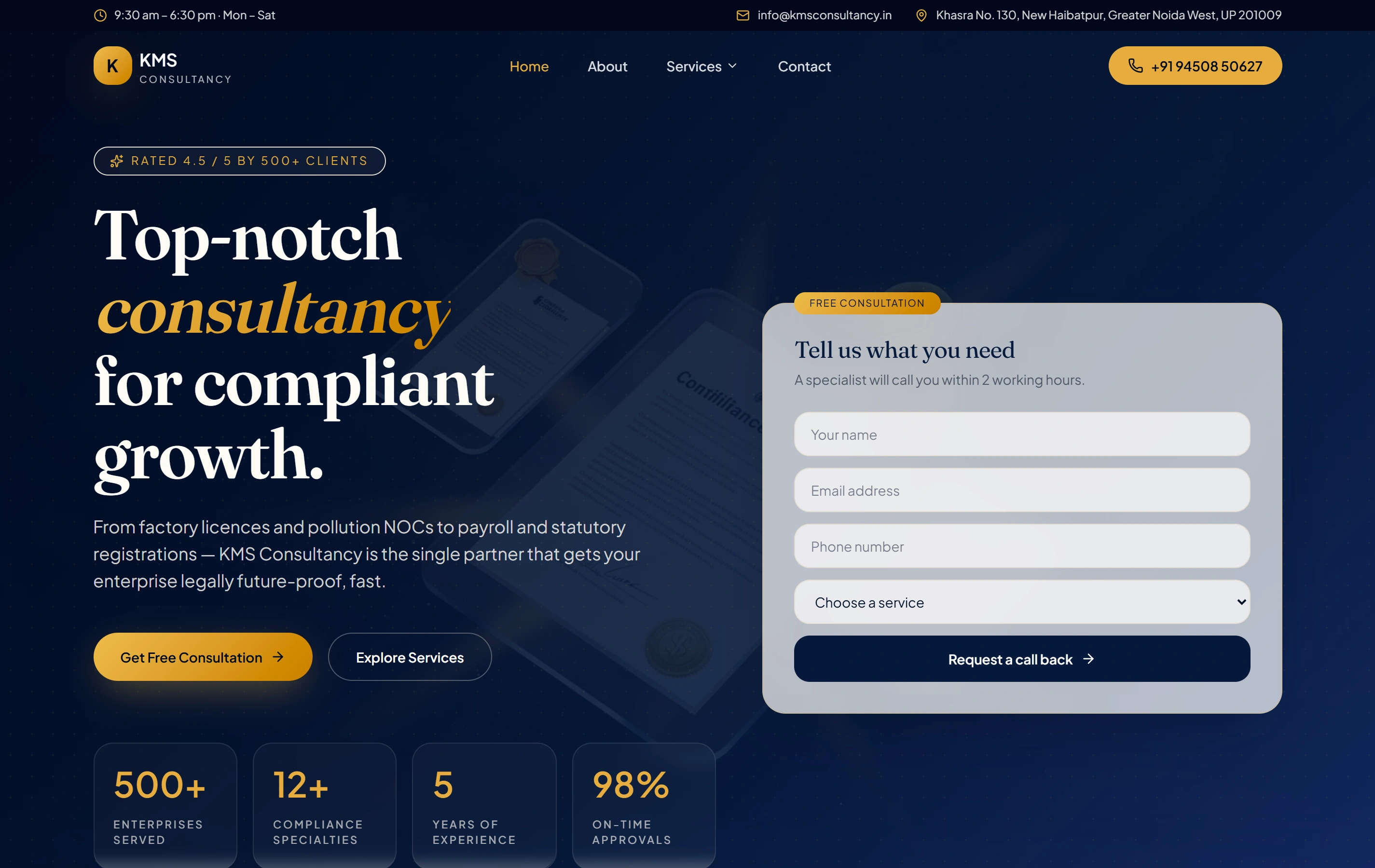
KMS Consultancy’s website presents a structured service catalogue and an enquiry journey. This portfolio example shows how public information and navigation can connect. Your business application or connected workflow would have its own requirements and review, alongside any website work included in the scope.

ContentCompliance
StructureService pages
ActionEnquire
KMS Consultancy websiteKMS Consultancy
Practical questions

Questions before preparing the brief.

Do we need every piece of content before starting?

You need enough truthful material to define the offer and assess a representative journey. We can identify gaps during discovery and agree how they are resolved. The release scope should state what is ready to publish rather than assume missing facts will appear at the end.

Can our team maintain the content afterwards?

We scope editing controls around the routine tasks and the people doing them. The intended owner should rehearse an update, preview and release within the agreed arrangement. Technical settings, new content types and wider redesigns can require separate work.

How is delivery arranged for Salem?

Our studio is in Ranchi and the project is delivered remotely through agreed reviews and written feedback. The plan names your content and operating contacts, the approvals required and responsibilities after release. Any additional activity is agreed explicitly.