A useful product structure
Identify the categories, options and facts that help someone choose. Use real items, approved images and meaningful differences. The catalogue owner needs a practical way to keep those entries current after launch.

Softglimmer designs and develops retail and ecommerce websites for Thrissur businesses through remote delivery from Ranchi. We plan the catalogue, responsive presentation and the agreed purchase or enquiry route together. The project also considers the information the receiving team needs, including a purchase where the buyer and the person receiving the product are different people.
Organise approved product facts, imagery and meaningful options.
Choose a purchase or enquiry route the merchant can operate.
Give the receiving team the agreed order or request context.
An example journey, shaped around your requirements.
A retail website may introduce a maintained product range, support quotations or provide a scoped checkout. We examine representative products and the way the business sells before choosing the platform and functions. The commission can include category structure, search or filters where useful, responsive product pages, content controls and the selected buying action. Some purchases involve more than one person. A buyer may provide payment and order-contact details while a recipient needs delivery information. Those roles should be understandable in the interface and in the work the merchant receives. We agree which details are necessary, how the merchant uses them and which messages or documents the chosen process produces. Payment, stock, account and fulfilment connections are assessed explicitly with their owners before they are included in the build.
Provides the agreed purchase and order-contact information.
Is identified for the delivery or other role the merchant actually supports.
Receives an understandable request or order with approved handling instructions.
A possible retail scenario. Actual fields, communications, policy wording and connected functions are chosen with the merchant; no live ordering behaviour is implied.
Identify the categories, options and facts that help someone choose. Use real items, approved images and meaningful differences. The catalogue owner needs a practical way to keep those entries current after launch.
State whether the visitor is asking a question, requesting a quotation or placing an order through the agreed process. The action and its response should communicate that meaning consistently. Payment and order acceptance depend on the selected operating arrangement.
Choose the contact, address and optional message information relevant to the supported purchase. Explain its purpose. Decide what the buyer and recipient need to receive without assuming they share an account, a contact address or the same communication needs.
Review product updates, received requests, customer help and the systems used behind the website. Assign factual and policy approval to the business. A new connection is scoped around available access and supported behaviour, not inferred from a store screenshot.
Imagine a hypothetical retailer allowing a customer to purchase an item for someone else. The draft form has one field labelled “Your email” and later reuses it for every order message. The design has not established whether that address belongs to the buyer or the recipient. This is a website-planning example, not a Thrissur client or a claim about a particular commerce platform.
The merchant explains the supported process. The website can then label the necessary roles and review the order summary with the buyer. Any gift message, recipient notification or price-bearing document follows the arrangement the business has approved. A recipient’s delivery details should not silently redefine the buyer’s account or the agreed order-contact route.
Acceptance follows a normal purchase and a separate-recipient example through the relevant screens and receiving view. The reviewer checks the actual details and communications included in scope. The same commission also needs useful browsing, product maintenance, responsive layouts and a clear support route; adding two contact fields alone is not the whole retail website.
The proposal identifies the selected platform, content work, functions and operating responsibilities.
Agreed categories, product fields, launch items and source material. Identify who provides and approves product facts, imagery and commercial wording.
Review product discovery, detail and the relevant request or checkout patterns with ordinary content. Include correction and incomplete-choice states for the functions being built.
Develop the scoped website and editing controls. Required payment, stock or fulfilment interfaces have named access owners, supported requirements and a review plan.
Rehearse ordinary product changes and the complete buying or enquiry route. Document account access, received information, customer-help responsibilities and the selected maintenance arrangement.
Share a small but varied set of products, approved descriptions and images, the options customers choose and the questions the team receives. Explain whether the first release needs a catalogue, quotations, checkout or a deliberate combination. Include the catalogue editor and the person receiving the resulting work.
For Thrissur-Ranchi reviews, we can use dated Asia/Kolkata sessions and written decisions. A separate-recipient example can make the fields and communication responsibilities easier to inspect without supplying real customer records. The estimate follows the chosen page patterns, content condition, buying functions and connections. Ongoing catalogue work and additional sales channels are identified separately.
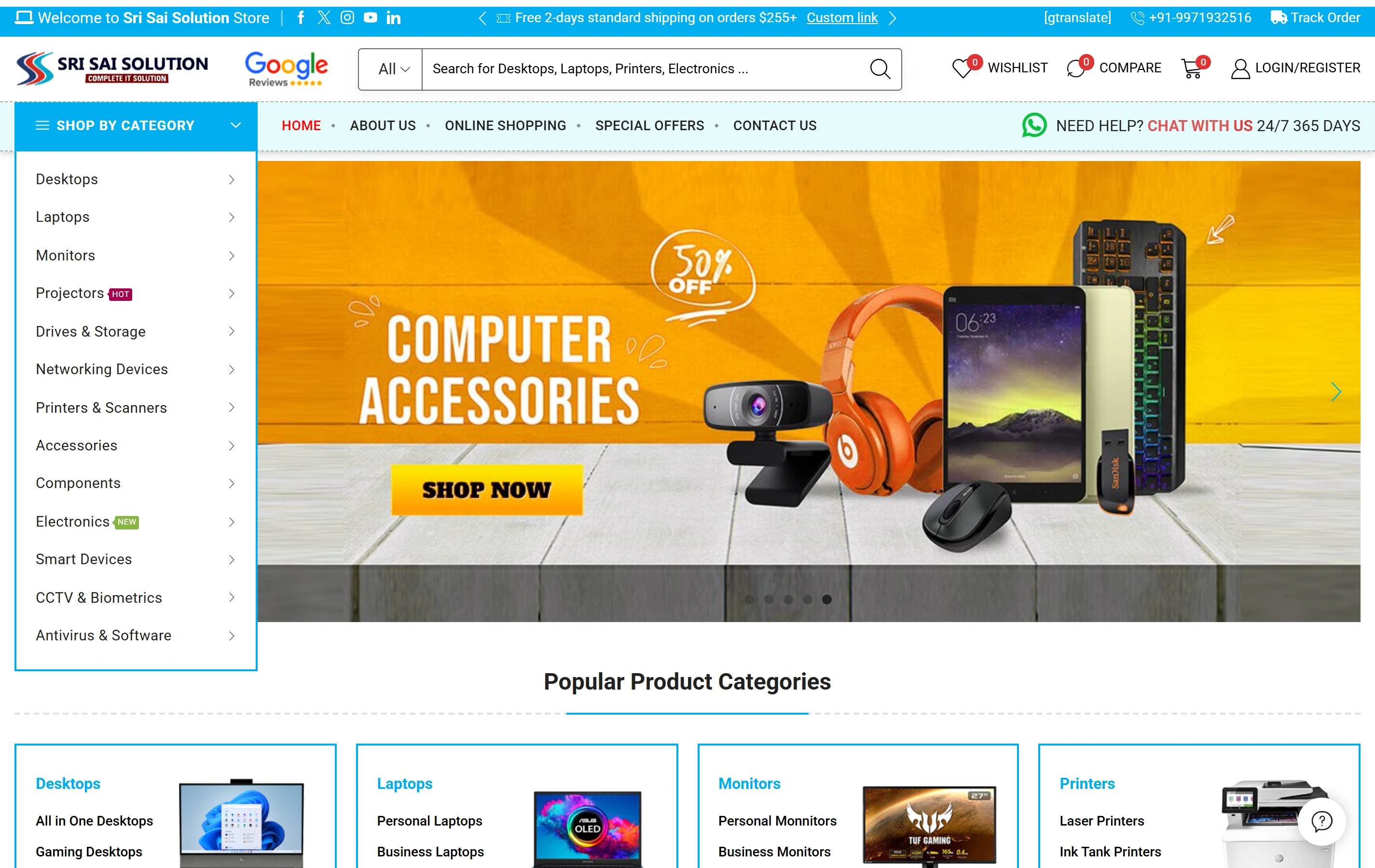
Sri Sai Solution is a documented computers and electronics ecommerce website with product categories, catalogue search and online shopping. Its public case provides a factual product-discovery reference. It does not establish a particular platform, a separate-recipient checkout, a stock integration or work for a Thrissur client.
No. This is a platform-neutral retail and ecommerce commission. We compare the catalogue, selling process, editing work and existing tools before selecting an approach. Any chosen platform and its continuing responsibilities are named in the proposal.
Yes, where it fits the way the business sells. The catalogue should provide useful information and an accurately described enquiry action. Checkout can be considered when the commercial rules, provider dependencies and operating ownership are ready.
The business approves that arrangement. We design and implement the selected fields and supported communications around it, then review the actual journey. A familiar checkout pattern does not replace the merchant’s decision about order details or customer contact.