Skip to content
Retail & Ecommerce Websites for Udaipur

Present the product clearly. Make a personalised choice understandable.

Softglimmer designs and develops retail and ecommerce websites for Udaipur businesses from our Ranchi studio. We plan product information, responsive browsing, editing and the selected buying or enquiry process together. Where customers supply wording or another personalisation choice, the project also needs to explain what they have submitted and which review establishes the actual instruction for production.

Explore the commission
An illustrative catalogue-to-merchant journey
  1. 01

    Explain the product

    Organise approved item facts, options and permitted images.

  2. 02

    Design the customer choice

    Make the submitted detail and its review state understandable.

  3. 03

    Connect the merchant work

    Agree the receiving process, editing and handover.

An example journey, shaped around your requirements.

Build the retail experience around the product and its real process.

The commission may create a first catalogue, a store or an improvement to an existing buying journey. We review the range and the way customers choose before selecting the platform and page patterns. The scope can include category structure, useful discovery controls, product templates, content preparation, editing and the agreed request or checkout action. A personalised item can need information that an ordinary catalogue entry does not. The business approves the permitted choices, input limits and review process. A customer-facing illustration may help explain the proposal while leaving a later production proof unresolved. We identify those meanings in the interface and the receiving work. Automatic preview generation, artwork preparation, manufacturing and connected payment or production tools are separate requirements to assess, rather than features inferred from a mock image.

A hypothetical wording and proof review
  1. 01

    Customer wording

    The person can review the text they supplied for the selected item.

  2. 02

    Illustrative presentation

    Any included preview explains the purpose and limits approved for it.

  3. 03

    Production decision

    The nominated owner approves the specific proof or resolves the next question.

Illustrative product review. The proposal identifies whether a preview is included, who prepares the production proof and who approves it.

Agree what the customer can choose and what the merchant must confirm.

01

A usable catalogue

Plan meaningful categories, accurate descriptions and genuine permitted imagery. Identify the standard item and the personalisation options it actually supports. Keep ordinary product discovery and editing useful as the range grows.

02

Customer-supplied information

The business decides the supported text, options and relevant limits. Labels and review screens should let the person recognise their submitted wording. A correction needs an understandable outcome rather than silently replacing an already reviewed instruction.

03

The purpose of a preview

State whether an image is a general illustration, a proposed arrangement or an approved proof. Identify who prepares and reviews any final production material. An attractive screen image should not be allowed to answer a business approval question by implication.

04

The buying and receiving boundary

Choose the enquiry or order process and what staff obtain from it. Price, payment timing, production approval and fulfilment facts come from the merchant. Required tools and accounts need a supported exchange and a responsible owner before inclusion.

Hypothetical planning example

A customer reviews their wording before a production proof exists.

Imagine a hypothetical shopper submitting wording for a personalised item. The proposed website shows an illustrative arrangement beside that wording. The merchant still prepares and approves a production proof, but the draft summary calls the illustration a final approved design. The customer and merchant need a shared explanation of what has been submitted and what still needs review.

The team separates the records and the decisions. The customer can inspect the wording they supplied and understand what the illustration represents. The merchant identifies the next proof, its reviewer and the action that establishes the accepted production instruction. If a correction is requested, the selected process should make clear which wording or proof is now under review.

Use the same example through the proposed product page, review and actual receiving process. Test an ordinary submission and a permitted correction using safe sample data. Inspect the customer wording, the included proof decision and their resulting records alongside catalogue editing, responsive layouts and the merchant handover.

Receive the website and a defined route into merchant operation.

The proposal identifies the content, customer functions and review responsibilities being delivered.

01

Product and content model

The range, approved options, image purposes, input meanings and content owners, demonstrated with representative items.

02

Responsive customer journey

Review category, detail, input and summary patterns using realistic wording, a normal choice and a correction.

03

Implemented website and selected exchanges

Build the agreed templates, content controls and buying or enquiry route. Any preview, proof tool, payment or production connection is explicitly scoped.

04

Acceptance and merchant handover

Follow the chosen journey into its supported receiving process. Demonstrate routine product updates and explain accounts, proof responsibilities and technical care.

Remote discovery and delivery from Ranchi

Show the product information and the real proof process.

Bring a varied product sample, permitted photographs, approved descriptions and an example of the personalisation information the merchant needs. Identify who supplies final artwork, who approves a production proof and what the customer sees before that decision. An invented example with comparable fields can help discovery without exposing actual customer details.

Udaipur and our Ranchi studio can review the work remotely using dated Asia/Kolkata sessions and consolidated feedback. We agree the content and platform scope, design representative journeys and develop the selected release. An estimate follows the page patterns, input and review functions, content condition and inspected connections. Ongoing artwork preparation, catalogue entry and future changes are defined separately where required.

A real website reference for a maintained product range.

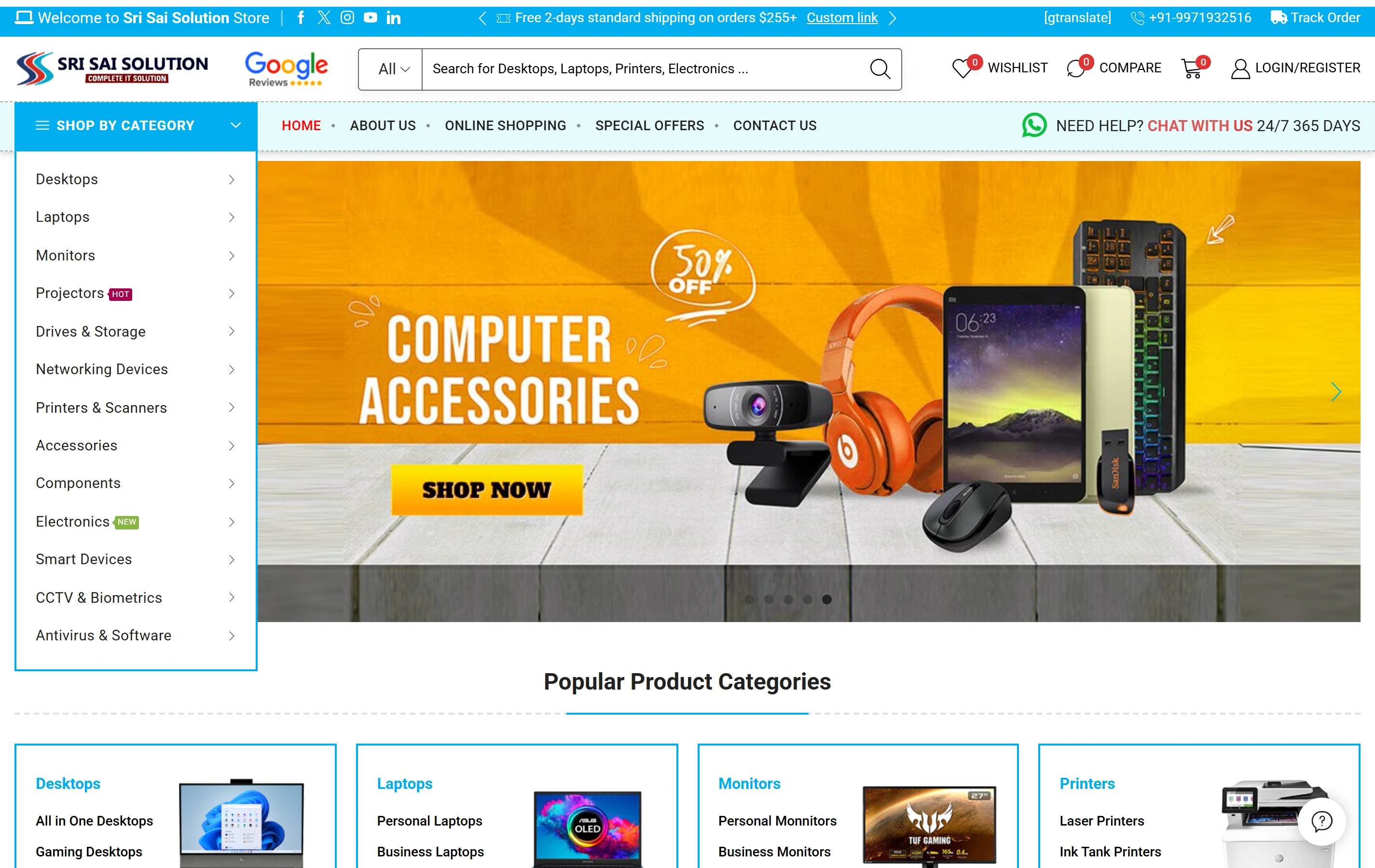
Sri Sai Solution is a documented computers and electronics ecommerce website with product categories, catalogue search and online shopping. It provides factual public catalogue context. The documented case covers the website only.

Electronics catalogueA focused retail offering
Product discoveryDifferent ways to find a product
Shopping experienceStorefront presentation
Sri Sai Solution websiteSri Sai Solution

Questions about the retail commission.

Can the first version be an enquiry catalogue?

Yes. A clear catalogue and a useful request can be a complete first scope where the merchant needs to discuss the item. Its action and response should describe an enquiry accurately rather than imply a confirmed production order.

Is a live personalisation preview always required?

No. We review the actual product and buying need. Clear fields and an appropriate review step may be sufficient. A dynamic preview has its own design, implementation and feasibility work when it is commissioned.

Who decides when a design is ready for production?

The merchant defines the actual approval arrangement and the roles responsible for it. We design and implement the selected states around that decision. A website image, submitted wording or payment is not automatically treated as an approved production proof.

How should we prepare a useful retail website brief?

Bring representative products, approved descriptions and images, the way customers buy or enquire today and the people who maintain the range. Identify content gaps and any current tools. We can then compare the platform, page patterns and operating functions needed before proposing the development scope and estimate.