The task needs a place
Explain what the location is used for and whether it represents the person’s current position or somewhere else they wish to choose. Those are different questions, even when both can be shown on a map.

Softglimmer offers mobile app planning, design and development for Warangal businesses, delivered remotely from Ranchi. We begin with the reason someone would use the product and compare the suitable channel and platform choices. The agreed scope includes the work behind the screens: relevant accounts, backend responsibilities, device review, release preparation and continuing ownership.
An example journey, shaped around your requirements.
A product may need a person to identify a location, capture information or complete another recurring task. Establish why that action is useful before deciding that it needs an app. A responsive website or existing tool may be sufficient for some requirements, while a clearly defined mobile task can justify a product of its own. For a new app, we scope the supported environments, account journey, interface behaviour and supporting services together. An authorised review of an existing application can also identify the selected improvements before implementation is proposed. Any device permission is considered with the task’s purpose, the information the business needs and the route available when permission is declined or a suggestion is wrong.
Explain what the location is used for and whether it represents the person’s current position or somewhere else they wish to choose. Those are different questions, even when both can be shown on a map.
Decide what the person sees before a suggested location becomes part of the request or record. Clear wording and a reviewable selection can prevent the interface from treating an approximate device suggestion as a confirmed business fact.
Where the agreed task permits it, define how someone types, selects or corrects the place without granting location access. A declined permission should lead to an understandable task decision rather than an unexplained dead end.
Name the service supplying the suggestion, the record receiving the reviewed choice and the business owner of any provider account. Scope the behaviour for unavailable information and the practical support route.
Imagine a hypothetical product in which a person needs to identify the location for a request. The device suggests where they are currently standing, but they want the request to concern another place. This is an illustrative product decision, not a Warangal user claim or a delivered native-app case.
The interface explains what the location represents and lets the person review the suggestion. Where agreed, they can choose or enter the intended place manually. Only the reviewed choice continues into the request. If location access is unavailable, the product presents the scoped alternative or a clear explanation of the remaining requirement.
Acceptance uses the intended device conditions and several cases: a useful suggestion, an incorrect one and no location permission. Reviewers follow the selected place into the relevant confirmation or receiving view. The business can then assess whether the proposed device capability is necessary and whether the complete journey, including backend and operating responsibilities, has been defined.
The proposal names the selected outputs, the material the business supplies and the responsibilities needed to deliver and use the work.
An agreed audience, repeat-use task and useful first-release boundary, with the selected platform approach. Identify supported devices and the reason any essential capability is included.
Reviewed layouts and important states using realistic information. Include account access, permission choices, correction routes and the task’s meaning when an external suggestion is absent or unsuitable.
The agreed mobile implementation and supporting records, services and administrative functions. Provider accounts, existing interfaces and responsibility for business information are stated rather than assumed.
A practical acceptance plan using agreed environments and representative conditions. Follow the task from the person’s action to its intended destination, with findings and limitations made understandable.
The agreed distribution preparation, business-owned accounts, materials and instructions. Define technical upkeep, support and later product changes without treating the first release as a promise of every future feature.
Share who will use the product, the task they return to and any current tool or authorised existing app. If a device capability seems necessary, explain the business purpose and an ordinary situation where it is unavailable or produces an unsuitable result. Include the people who own the resulting information and any supporting accounts.
Our Ranchi studio can use that material in remote discovery and design reviews to define the selected work for a Warangal business. A proposal should make the app, backend, content, provider dependencies and release responsibilities clear. It should also explain the useful alternative if the task does not need a separate mobile product.
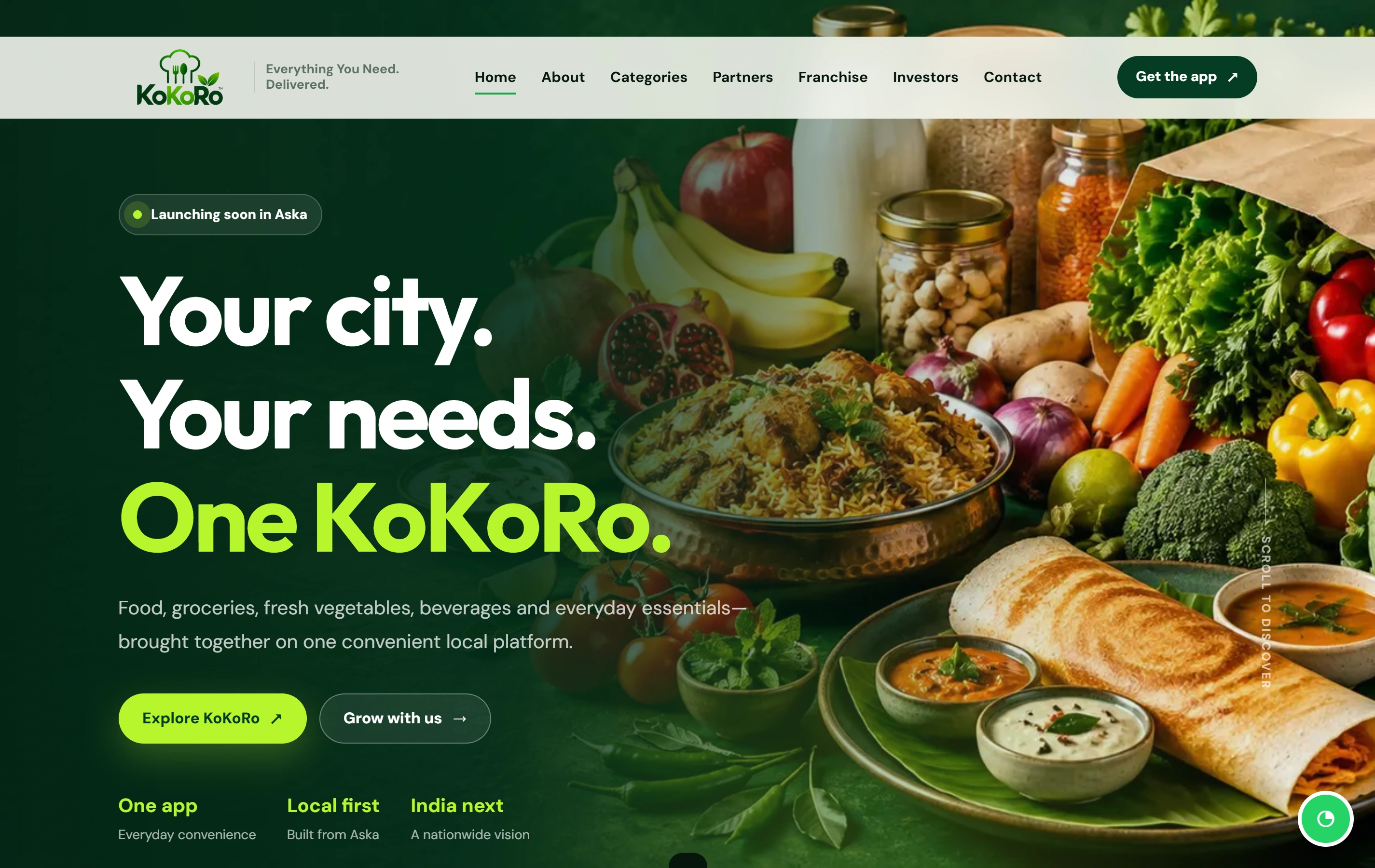
KoKoRo is a documented public website introducing a local commerce and delivery platform through customer, vendor, delivery-partner and franchise information. It is a website presentation reference. The portfolio does not establish native-app delivery, a location service, a backend implementation or the manual-location behaviour proposed in this hypothetical brief.
No. The business should explain why a location is needed and what it means. Some tasks can use an explicit manual choice or another channel. If device location is selected, the product still needs clear permission, review and unavailable-information behaviour within the agreed scope.
We can discuss an authorised inspection of the existing application, its code and supporting setup where access is available. That review helps identify what is usable and what work is required. A screenshot or public app listing alone does not establish the condition of the code, accounts or backend.