The sample item
Include its reference, public or staff-facing title, short description and relevant evidence. Use approved or deliberately fictional review material. The sample should resemble the information the finished system needs to handle.

Softglimmer helps Warangal businesses create websites, stores, applications and better connected working processes. We combine content planning, design and development around the result people need to use. Delivery is remote from our Ranchi studio, with agreed reviews, business inputs and practical handover for the services you select.
Let a real user question guide the service selection.
Make the proposed result understandable to its approvers.
Include the controls and guidance needed after release.
An example journey, shaped around your requirements.
The useful starting point is an action: finding the right service, buying an item, checking a record or continuing a piece of work. The project must explain that action to the person attempting it and support the responsibilities around it. We can design and implement the appropriate pages, interfaces and working functions, with the information and ownership needed to keep them useful. A new website, a clearer content system and a business application solve different problems. We compare them against your current arrangement rather than treating every request as a software build. The scope can combine several services, but each selected part should make a meaningful contribution. Discovery establishes the audience, content, connected tools and acceptance tasks before the project grows into a longer feature list.
Choose one representative service, product or working record. Fill these six fields together and use the same fixture in design and implementation reviews.
Include its reference, public or staff-facing title, short description and relevant evidence. Use approved or deliberately fictional review material. The sample should resemble the information the finished system needs to handle.
Name roles separately: the person entering information and the person confirming its meaning. Record which fields each can change and what needs approval before it becomes public or affects an operating decision.
Select a meaningful absent value, such as an image or destination. Agree whether the item is held, shown with an honest alternative or returned for completion. The reviewer should know the expected result.
Supply a realistic long title or description, rather than testing only tidy short examples. Check its presentation and whether the information remains understandable at the agreed widths, with its relevant action still usable.
State what someone should do from this item and where that action leads. If the scope includes a receiving record or message, include the owner who can check that outcome.
Write what the reviewer must be able to see or find, who checks it and how a finding is recorded. This turns a general request to test the page into an identifiable task with an expected result.
The detail is selected for your project; the list is a basis for an explicit proposal.
A short account of the intended users, existing setup and task worth improving. Record practical alternatives and why the selected approach fits. Include the information still needed from the business so the implementation starts with understood assumptions.
An organised page plan or record model with the material needed to populate it. Identify approved descriptions, visual assets and field meanings. Where old content or records are involved, document what can be transferred and what needs attention before it is used.
Review the chosen screens and layouts using material of the kind people will actually encounter. Include relevant navigation, empty or incomplete states and mobile presentation. The design record should make the intended behaviour clear to the person implementing it and the person approving it.
Receive the pages, application, configured controls and supported connections named in the agreement. Clarify content entry and account responsibilities alongside development. Progress is reviewed against the selected tasks, with additional requirements considered for their effect on scope and delivery.
A documented set of checks for the intended use, including an important exception and any connected outcome. Record the environment, findings and decisions that affect release. This allows the business to distinguish accepted work, an agreed limitation and an unresolved requirement.
A practical walkthrough supported by the agreed files, access and instructions. Let the responsible person perform a routine action and ask questions. Record support responsibilities, dependency upkeep and the process for requesting changes after the initial project.
Use this invented sample as a starting format: reference “service-01”; title “Planning and implementation support for a business service”; summary “Explain the requirement and discuss the appropriate next step”; image “not supplied”; action “Discuss the requirement”. The content editor prepares the entry, while the service owner approves the description and destination.
The owner decides that the sample can be reviewed without a photograph using the agreed text presentation. Test the long title on the selected phone width: the words should remain readable and the action should remain reachable. Then remove the action destination in the review copy. The agreed result is to hold that incomplete action for correction, rather than publish a button with an undefined outcome.
Restore the approved destination and follow it. If enquiry delivery is included, check the received service reference and question with the nominated recipient. Record the expected and observed results beside the fixture. This is a general planning sample for a remote project, with no claim about a delivered Warangal system.
Bring a real item with private information removed, or create an explicitly fictional substitute that has comparable fields. Identify its editor, factual approver and receiving colleague. Add one missing value and one realistic long value that are worth reviewing.
Tell us where the information is maintained now and what should happen after the next action. These inputs help define the content controls, design, implementation and review work. The fixture can be refined during discovery and retained as a useful handover example.
Our Ranchi studio delivers Warangal projects remotely. Review invitations can use the proposed Asia/Kolkata zone, with dates and participation agreed for the project.
Discuss the user task and examine representative material. Record the improvement sought, the useful existing tools and the business decisions needed to select a scope.
Plan the information and agreed interfaces. Review realistic examples with the relevant approvers, making the next changes specific enough to implement.
Develop or configure the selected functions and follow the agreed tasks. Check relevant exceptions with the people who understand the operating process.
Coordinate release after approval, confirm access and demonstrate ordinary use. Leave the owner with the agreed materials, support route and recorded limitations.
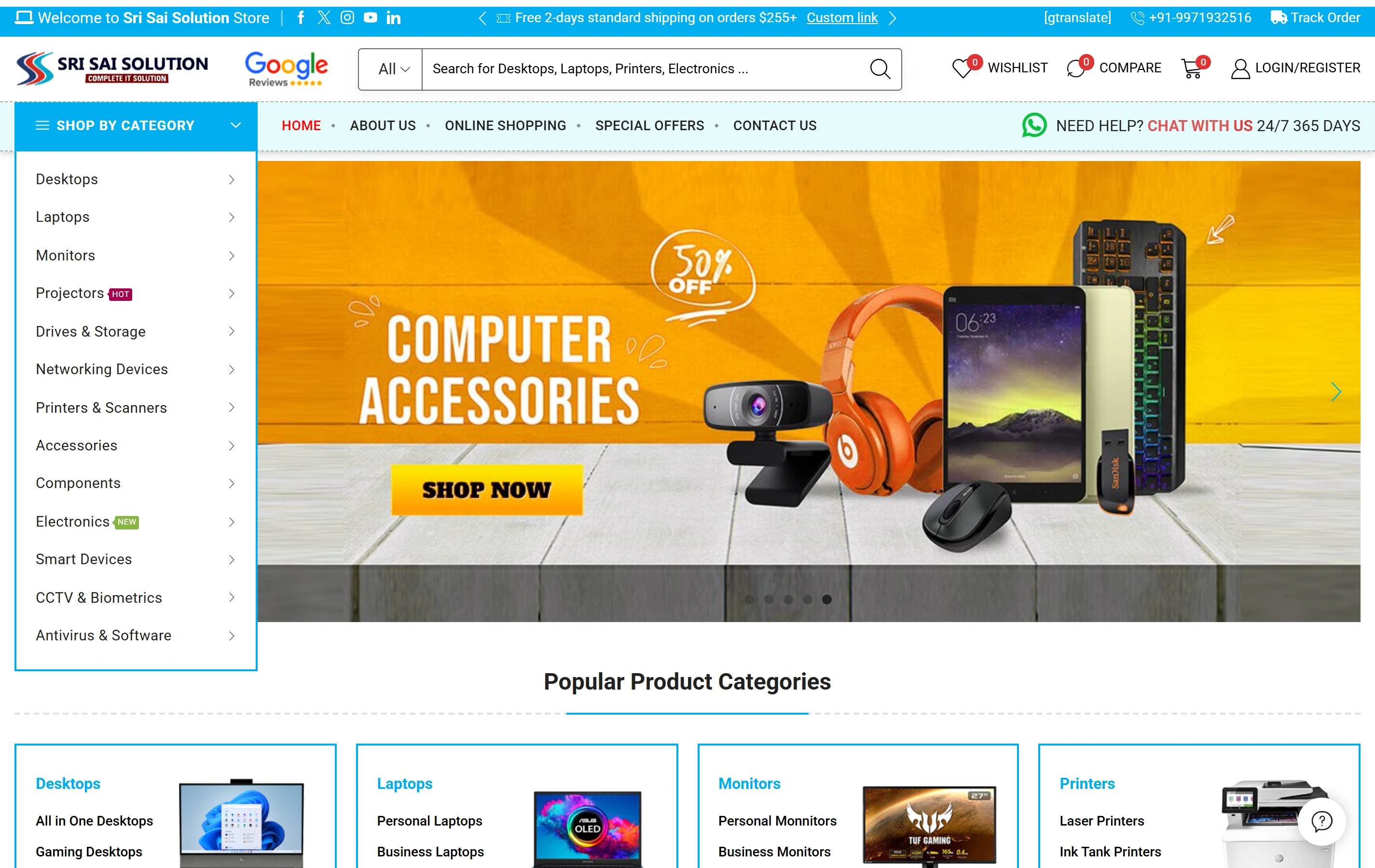
Sri Sai Solution is a documented computers and electronics ecommerce website, with product categories, catalogue search and online shopping. The published website case offers a useful reference for discussing product information and browsing in a storefront project.
Discuss these points before the scope and estimate are approved.
That depends on the task and audience. A responsive website may already provide the information and action people need. An app deserves its own reason, supported platforms and operating plan. We can compare the options during discovery and identify what an app would add to the chosen experience.
Content work should be discussed explicitly. We identify what the business supplies, what needs organising or preparing and who approves the facts. The proposal can then describe the agreed content, design and entry work, with enough representative material available to review the layouts and functions sensibly.
The agreement explains the operating handover and any support or maintenance included. Your team should understand ordinary edits, account ownership and how to report a technical issue. New features and wider changes can be assessed separately using the delivered work and its documented responsibilities as the starting point.