
Skip to content
Bhopal · Lead Capture & Follow-up Automation

Connect a useful enquiry to the work your team does next.

Softglimmer offers lead capture and follow-up automation for Bhopal businesses that need website enquiries to reach an understandable receiving workflow. We review the forms, sources, existing tools and people involved before choosing what to connect or automate. The engagement can include capture design, field mapping, supported CRM connections, routing, follow-up tasks, failure handling and operating guidance. Our Ranchi studio works remotely with your team to connect the enquiry, the receiving record and the next useful action.

Explore the commission
A customer request, a usable receiving record and a clear next action
  1. 01

    Capture the useful request

    Ask for the information needed to begin a real conversation.

  2. 02

    Connect the receiving work

    Map the record, destination and responsibility for the next action.

  3. 03

    Keep exceptions visible

    Make incomplete exchanges and manual recovery understandable.

An example journey, shaped around your requirements.

Commission the path from first contact to a responsible next step.

Start by following a recent enquiry through the tools your team actually uses. Where did it arrive, which details were useful, who responded and what had to be copied elsewhere? We review the public form and the receiving work together. The aim is a manageable route from a genuine request to the next business action, with responsibilities that staff can explain.

Discovery separates the customer’s requirement from supporting information about how the enquiry reached you. We agree the fields required to begin a conversation, the optional context worth retaining and the later information staff may need. We then inspect the available website, CRM or other tool connections. An existing supported integration may be sufficient; custom work belongs in the proposal only where the actual process requires it.

The build can include form behaviour, record mapping, duplicate-review rules, assignment, follow-up tasks and an exception view for unsuccessful exchanges. Any outbound message has its own purpose, account requirements, permission and approval. The proposal identifies the selected destinations and actions, so an internal reminder, a customer acknowledgement and a completed sales conversation are treated as different steps.
Choose what the workflow should know and do.

Agree these decisions with the person receiving the enquiry and the owner of the connected tools.

01

What is required at first contact?

Use the service and response task to decide the essential questions. Keep supporting attribution separate from the details needed to understand and contact the person. Later qualification can have a defined place in the process.

02

Where is the working record?

Choose the existing tool or scoped application that staff will use. Define the important fields and which system owns them, so a copied note does not quietly become another competing customer record.

03

Which next action is appropriate?

Agree when to create a staff task, ask for clarification or prepare an acknowledgement. Timing and ownership follow the business process. A form submission alone does not decide every later action.

04

What needs a person’s review?

Identify incomplete connections, possible duplicates and information that does not fit a rule. Give staff enough context to decide what to do, with a visible recovery route for an unresolved exchange.

A hypothetical working example

A useful service enquiry arrives without a source label.

Hypothetical example: a visitor supplies a name, a valid contact route and a clear service requirement. The campaign or source field is empty. The enquiry is still useful to the receiving team, while its attribution is unknown. The workflow should preserve that distinction instead of inventing a campaign or silently losing the request. We agree how the receiving record represents the unknown source and which ordinary next action remains appropriate. Staff can see the customer’s requirement and contact details, with the missing supporting value marked clearly. If someone later establishes the source, the process for adding that information is defined without rewriting the original customer message. Acceptance compares this request with one that has a known source and one that lacks an essential contact detail. Each case exercises a different rule. A missing optional label should not be confused with a request that cannot yet be followed up. The example tests capture and receiving decisions within the wider automation engagement; it does not presume why a particular source value is absent.

Keep the customer request useful while attribution remains unknown
  1. 01

    Receive the requirement

    The service and usable contact details arrive with the enquiry.

  2. 02

    Represent the missing source

    Store an explicit unknown value according to the agreed record rules.

  3. 03

    Continue the receiving task

    The responsible team sees the request and takes the agreed next action.

Hypothetical receiving sequence. Known source, unknown source and missing essential contact information are checked separately.

Receive a connected workflow your team can operate.

The final scope names the tools, actions, accounts and acceptance cases included.

01

Current-process and source map

A review follows representative enquiries through their present forms, inboxes and tools. It identifies the useful information, repeated handling and decisions the proposed work should address.

02

Capture and field specification

Included forms and source fields have clear meanings, validation and required-versus-optional rules. Customer-facing feedback explains the submitted request and any correction needed.

03

Receiving record and connections

The selected destination, field mapping and supported exchanges are implemented within the agreed scope. Tool owners confirm access and any provider or subscription dependencies.

04

Routing and follow-up rules

The defined staff tasks, assignment and approved follow-up steps are connected to meaningful events. The review identifies who can change or stop the included rules.

05

Exception and recovery guidance

Unsuccessful exchanges and unresolved records have a visible operating route. Staff receive the information needed to investigate and complete the appropriate manual action.

06

Acceptance and handover notes

Representative cases, configuration ownership and operating instructions are supplied with the agreed release. Later campaign changes and further development have a named review route.

Review the result with the people who will receive the next enquiry.

Prepare a small redacted sample of real enquiries, including an ordinary request and one staff found difficult to handle. Show the current form and receiving tool, and identify their owners. If a connection is requested, provide supported documentation and safe test access. The first review can then compare retaining the present arrangement, configuring an available tool and building a defined addition.

During implementation, use controlled test records to follow the included path from capture to the receiving view. Check essential-field correction, optional missing information, a known source and an unsuccessful connection. W3C’s form guidance supports clear feedback about the result of a submission and errors requiring attention. The wording should help a visitor continue while the internal review checks what the receiving system actually accepted.

At handover, the intended operator rehearses the ordinary task and an exception. Confirm who maintains service choices, mapping rules, account access and approved messages. Remote reviews from Ranchi can be arranged in Asia/Kolkata with your Bhopal team. A concise operating guide should make a later change easier to assess without requiring staff to rediscover the original process.

Build the receiving process in reviewable stages.

Business decisions and connected-tool responsibilities stay visible throughout.

  1. 01

    Observe the current path

    Follow representative requests and agree the useful first-release boundary with the receiving team.

  2. 02

    Specify the rules

    Define capture fields, record meanings, destinations, follow-up actions and unresolved cases before connecting tools.

  3. 03

    Implement and rehearse

    Build the agreed path and review controlled requests through the actual included destinations and exception states.

  4. 04

    Transfer operating ownership

    Hand over configuration, account responsibilities, change guidance and the agreed ongoing support route.

A real website reference for a clear service enquiry.

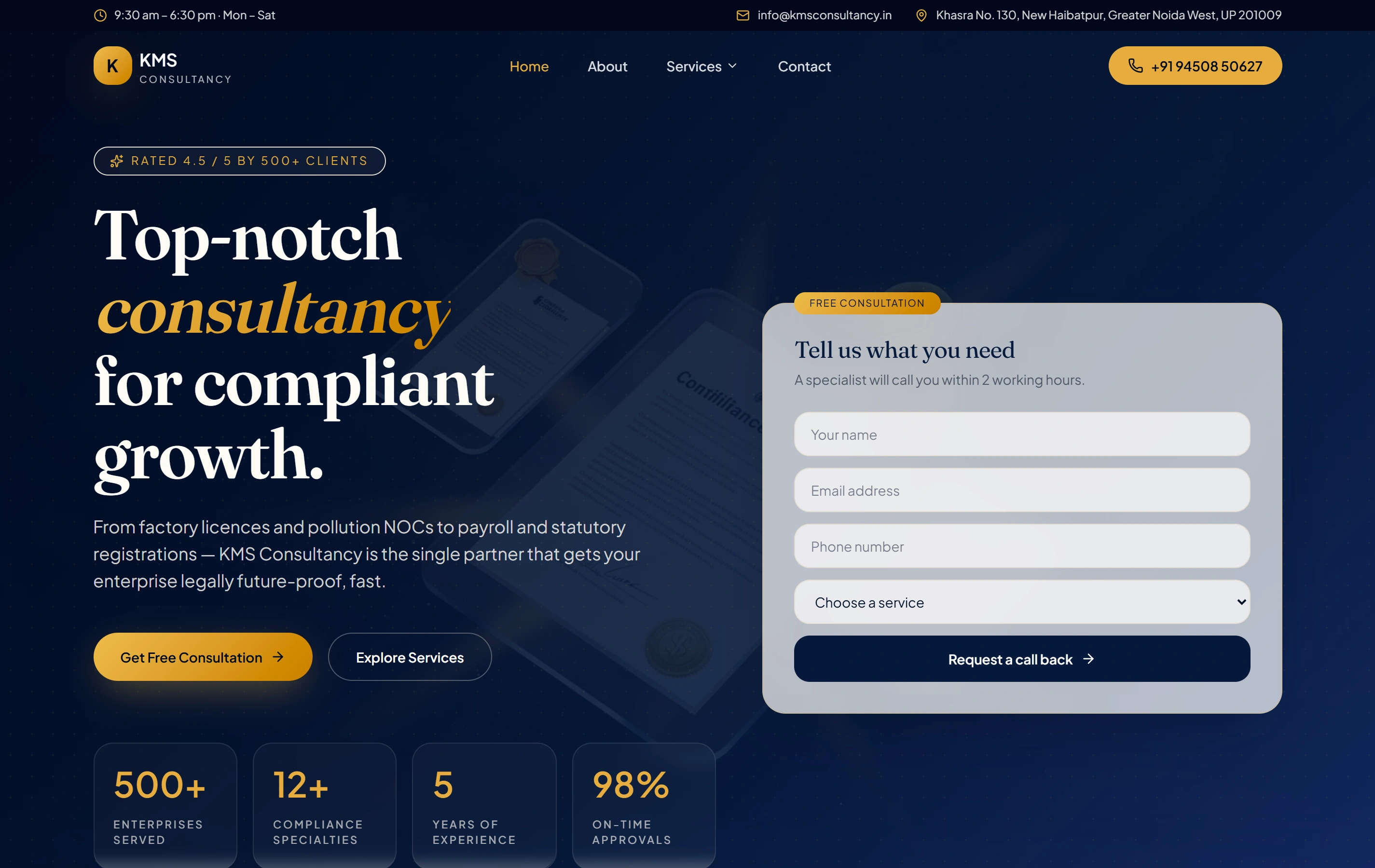
KMS Consultancy’s published website organises a complex compliance service catalogue into clear pages and an enquiry journey. It is useful context for making the initial requirement understandable. The receiving automation for your business is a separate commission, defined around your tools and operating process.

ContentCompliance
StructureService pages
ActionEnquire
KMS Consultancy websiteKMS Consultancy

Questions before commissioning the work.

Bring these decisions into the first project conversation.

Can we keep our existing CRM or receiving tool?

Yes, where it supports the required process and an appropriate connection or configuration. We inspect the available interfaces, account access and working records first. The proposal explains what remains, what changes and any separate tool or subscription requirement.

Will every enquiry trigger an automatic message?

Only the agreed actions belong in the workflow. We distinguish internal tasks, customer acknowledgements and later follow-up, with their permissions, account setup and approval requirements. Your team confirms the purpose and wording before any outbound step is activated.

How do you handle an enquiry without campaign information?

We agree the meaning of that field and retain an explicit unknown when appropriate. The customer’s useful requirement can continue through the defined receiving process. Essential missing details and optional attribution are reviewed as separate cases, using representative records.

What do we need to review before launch?

Nominate the form, tool and receiving-process owners. Together we follow controlled requests, inspect the receiving result and rehearse an exception. Our Ranchi studio records the accepted scope, operating guidance and responsibilities with your team through remote reviews.