
Skip to content
Websites & Digital Services for Chandigarh

Make your services easier to understand and act on.

For a Chandigarh business, a useful digital project starts with the customer question and the person who answers it. Softglimmer connects website content, enquiry journeys and the operating tools needed for the agreed scope. We deliver remotely from our Ranchi studio and coordinate reviews with your team in IST.

Explore all India services
Clarity before the next step
  1. 01

    Explain the service

    Tell the visitor who it helps and what to expect.

  2. 02

    Capture the context

    Ask for the information that makes a response useful.

  3. 03

    Support the team

    Give responsibility and follow-up a clear home.

An example journey, shaped around your requirements.

Start with the real task

A clearer offer helps the whole journey.

A website may bring a question to your team, but it does not answer every operating problem. Before expanding a project into CRM, automation or a portal, identify how the enquiry is handled today. The illustrative workflow below helps distinguish information the visitor needs from actions the team needs to complete.

The visitor needs useful context

Describe distinct services and show relevant, approved work. If your audience spans Chandigarh, Mohali and Panchkula, explain accurate coverage and practical delivery arrangements. Keep offices, service areas and remote delivery clearly described so a visitor does not infer a visit location that does not exist.
The team needs a responsible next step

An enquiry should reach an agreed recipient with enough context to assess it. If several people handle requests, record the ownership and follow-up rule before adding automation. A new notification is not the same as a response, and a pipeline entry is not evidence of revenue.

An illustrative enquiry handover
  1. 01

    Visitor

    Chooses a service and shares relevant context.

  2. 02

    Recipient

    Receives the request and identifies responsibility.

  3. 03

    Next action

    Records the response or the required follow-up.

Illustrative workflow. The final scope follows your business requirements.

Decisions before design

Choose the next digital step.

We agree what the customer can do and what the team must support, then choose a manageable first release.

01

A service website your team can edit

Use this when the public offer, work examples or enquiry journey need attention. Our focused Chandigarh website guide covers a page map and ownership for service facts, content approval and enquiries.

02

A more consistent enquiry process

Use this when requests are arriving through several channels and responsibility is unclear. Define the records, routing and follow-up states before choosing CRM or automation work. Preserve useful tools and information that already support the process.

03

An appropriate customer or staff tool

Use this when authenticated users need specific records or repeat actions beyond the public site. Scope access, data ownership and exception handling separately so application work remains reviewable.

A reviewable scope

What a useful discovery stage produces.

Your team should be able to review the project’s purpose, boundaries and responsibilities before committing to implementation.

01

A page or workflow map

A picture of the user’s decisions, relevant content and the next action. Every page or screen needs an identifiable job, with genuine evidence and an owner for its information.

02

An enquiry responsibility plan

The agreed receiving destination, response owner and way to identify a missed or failed delivery. Define what the visitor sees and how the team records progress after receiving the request.

03

An integration boundary

A list of the existing tools and records involved in the scope. Confirm identifiers, direction, access and failure ownership before calling a process automated or connected.

04

A release and handover plan

Milestones, review inputs, account owners and an appropriate support scope. We agree these with your Chandigarh team through remote reviews from Ranchi in the same time zone.

Prepare the brief

Bring the information that makes a scope concrete.

A useful brief combines the business goal with representative material and the people who can approve it.

Choose the primary audience

Identify whether the first project serves prospective customers, existing customers or staff. Explain the question or task they need to complete and what a useful result looks like.

Gather approved evidence

Bring service facts, brand assets, work examples and existing pages that need preserving. Keep customer permission and usage rights with the assets; do not present a sample or invented testimonial as client feedback.

Agree coverage and contacts

State the places you actually serve, verified addresses and the right contact route. A coverage section can support a wider audience without creating repeated pages that differ only by city name.

From brief to handover

Keep reviews connected to real work.

We use the approved scope to guide design, implementation and the handover. Additional requirements become explicit decisions rather than hidden additions.

  1. 01

    Clarify

    Understand the customer question and the team’s current process.

  2. 02

    Plan

    Agree useful content, data ownership and the first release.

  3. 03

    Try

    Review the important journeys with representative material on mobile and desktop.

  4. 04

    Hand over

    Verify the release and record editing, response and support responsibilities.

Questions before you commission the work.

Useful answers about scope, ownership and remote delivery.

Do you have an office in Chandigarh?

No. Our studio is in Ranchi and we serve Chandigarh remotely. We agree review times in IST and describe the delivery arrangement accurately.

Can you support a business serving the wider Tricity area?

Yes, we can assess that audience and describe your actual coverage. We need accurate service and address information from your business. Separate city pages should have a useful, distinct purpose rather than repeat the same offer.

Should we start with a website or CRM?

Follow the problem. If visitors cannot understand the offer, begin with the public journey. If the team receives enquiries but loses ownership or follow-up context, examine the operating process. We can plan the relevant connections once responsibilities are clear.

From our actual portfolio

See how a service website introduces its offer.

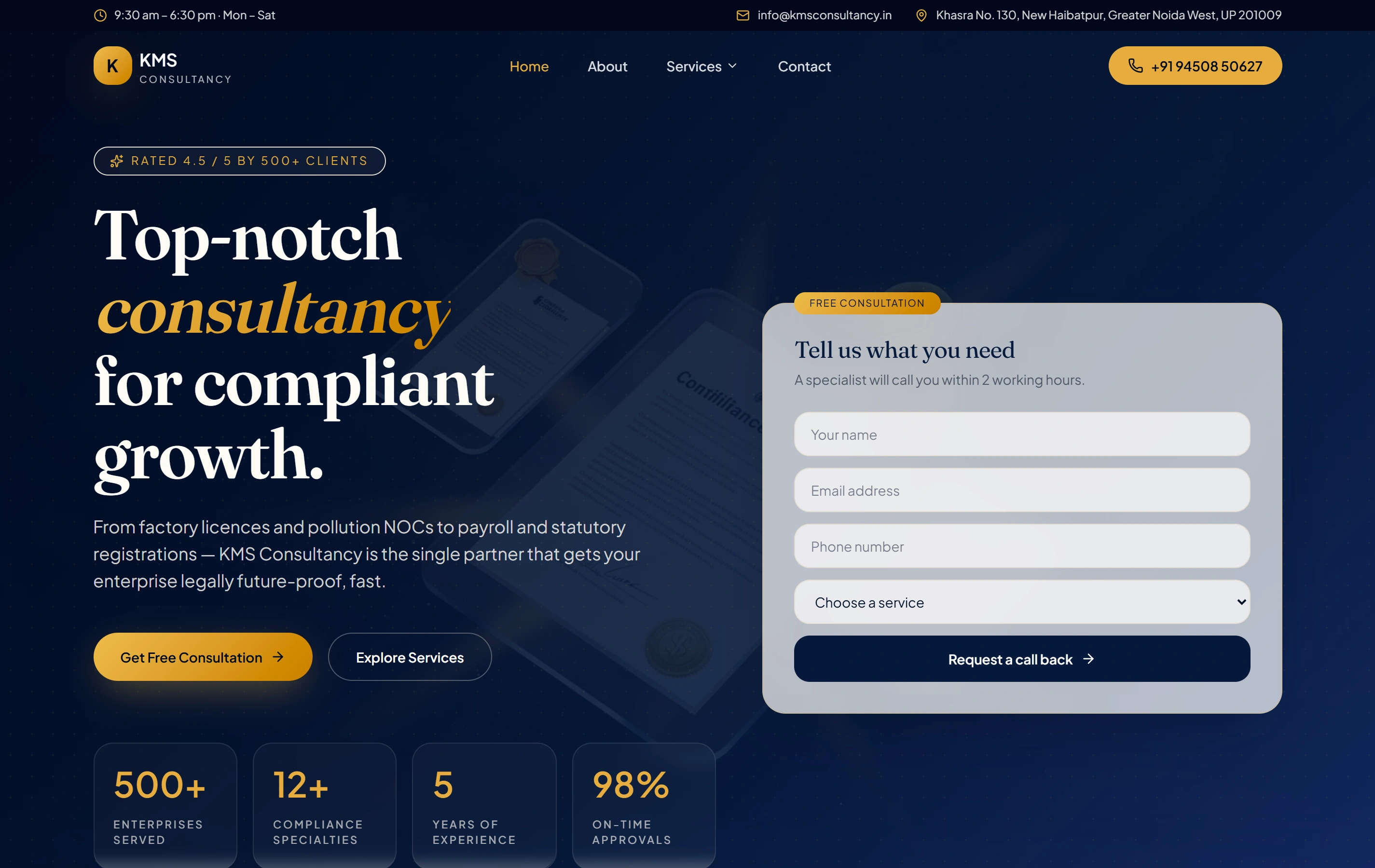
Explore our KMS Consultancy website project, including its service presentation and enquiry journey.

ContentCompliance
StructureService pages
ActionEnquire
KMS Consultancy websiteKMS Consultancy