
Skip to content
Website Maintenance & Support for Chandigarh

Keep the website useful after the launch.

Softglimmer provides website maintenance and support for Chandigarh teams through a defined ongoing scope. We begin with the website, its accounts and important journeys, then agree the content and technical work to maintain. Our studio is in Ranchi and support is delivered remotely, with clear request, approval and escalation responsibilities.

Explore the scope
Know what is maintained, how changes are approved and who handles the next issue.
  1. 01

    Understand the website

    Review its platform and dependencies.

  2. 02

    Maintain agreed work

    Handle changes with clear approvals.

  3. 03

    Review the result

    Check affected journeys and report what remains.

An example journey, shaped around your requirements.

Define ongoing care around the website the business operates.

A website continues to depend on current information, supported software and people who can resolve a problem. Maintenance brings those responsibilities into an understandable arrangement. We review the existing platform, hosting, accounts and known issues before defining the work, including sites originally built by another team.

The scope can include content-update support, appropriate dependency maintenance, backup and recovery review, important journey checks and a record of completed and outstanding work. Access, platform condition and external services affect what can be supported. Any initial repair or improvement needed before routine care should be identified.

A maintenance plan is distinct from a major redesign, a new application feature or an open-ended emergency commitment. Agree included work, request capacity, review responsibilities and urgency arrangements in writing. The business should know where to raise an ordinary change and how a consequential issue is handled without relying on an undefined promise of support.

Select an arrangement that fits the website.

01

Ongoing content and technical care

Define the ordinary copy, media and page requests alongside the supported technical upkeep. Identify the nominated contact, approver and practical way to prioritise work.

02

A bounded improvement task

A recurring issue may need a focused investigation or change before routine maintenance makes sense. Describe the observed problem and agree the intended review instead of assuming every improvement is included.

03

A separately scoped recovery response

A failed critical function or suspected compromise needs appropriate investigation and authorised access. The recovery scope, affected services and business decisions are assessed from the actual situation.

Agree the maintenance responsibilities and outputs.

The plan identifies which work is included and which requests need a separate decision.

01

Website onboarding

Review the platform, hosting, domain and connected accounts. Record known issues, authorised access and the owner of dependencies before ongoing work begins.

02

Approved content updates

Handle the selected text, images and page changes through a clear request and review routine. Identify who supplies factual wording and approves publication.

03

Dependency maintenance

Plan supported software and plugin updates with suitable checks and a recovery route. External licences and provider decisions remain visible dependencies.

04

Backup and recovery review

Define the content, files, data and configuration that need recovery. Agree backup ownership, retention and how restoration is checked within the supported scope.

05

Important journey checks

Select useful information, contact or purchase journeys to inspect after relevant changes. A successful administration message alone should not close a task affecting the public website.

06

Reporting and prioritisation

Record completed requests, known issues, unresolved access and recommended work. Give the business enough context to decide what should happen next.

Give ordinary requests a clear approval route.

A short, usable request should identify the affected page, intended change and person who can approve it. The maintenance team can implement an agreed correction, but it should not have to choose between conflicting business instructions. Decide who consolidates feedback and how a revised request supersedes an earlier one.

Before closing the work, inspect the affected page and any relevant journey, then tell the nominated contact what changed. A new layout, feature or integration may need an estimate rather than becoming an unnoticed extension of a content request. Clear boundaries help both sides plan the continuing work.

Start with onboarding, then maintain a practical routine.

Chandigarh–Ranchi reviews can use dated Asia/Kolkata invitations. Coverage, urgency and communication arrangements are agreed for the website.

  1. 01

    Review the baseline

    Identify the site, accounts, important functions and known problems. Confirm authorised access and what must be resolved before ongoing care.

  2. 02

    Agree the support scope

    Define included requests, approval contacts, dependency work and recovery responsibilities. Make separately estimated work recognisable.

  3. 03

    Apply and review changes

    Use an appropriate review and recovery approach for the task. Inspect the affected public information or function before reporting completion.

  4. 04

    Report and reprioritise

    Keep completed work and unresolved issues visible. Review the arrangement when the website, providers or business needs change.

An optional example: two contacts request different versions of the same paragraph.

Imagine one colleague requesting a service-description correction while another sends different wording before the first request is published. The latest email alone may not tell the maintenance team which wording the business has approved.

A nominated approver can settle the current instruction, identify the version it replaces and review the page after the change. The support record can then explain what was published and whether another request remains open.

This is a hypothetical maintenance example, not a Chandigarh client incident or a description of how local teams work. It illustrates an ordinary approval decision within a wider support scope.

Website project references.

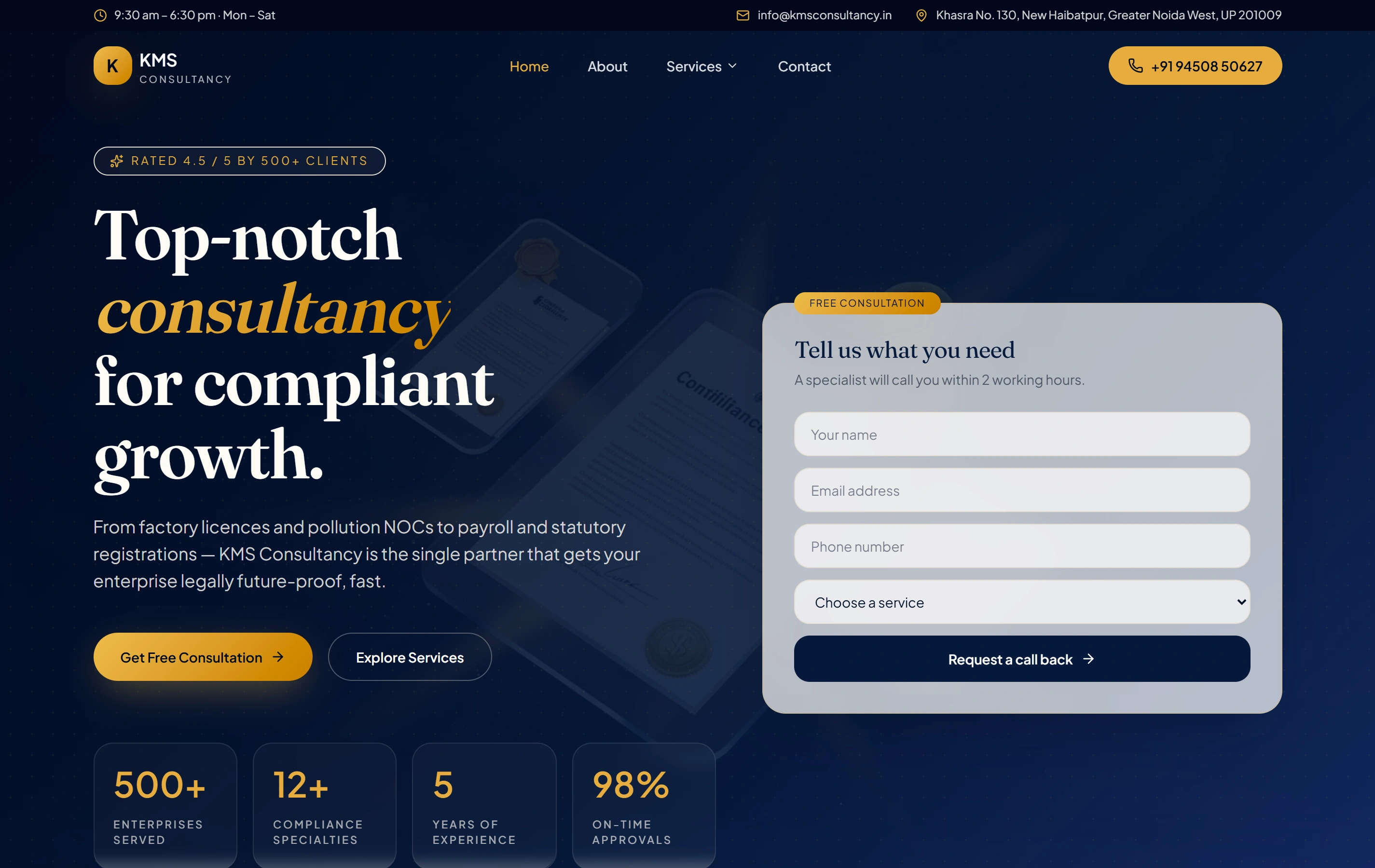
KMS Consultancy presents a structured service catalogue and consultation enquiry path. Kiran Traders presents B2B service information and procurement enquiries. Their documented public journeys are useful references when deciding which parts of your own website need ongoing attention.

Questions before agreeing website support.

Where will the support team work from?

Our studio is in Ranchi, India. We can support a Chandigarh website remotely with authorised access and agreed communication. This page does not describe a local office or an on-site arrangement.

Can you maintain a site built by another supplier?

It can be considered after onboarding. The platform, code, documentation, accounts and current condition affect the scope. We identify access limits and any initial work needed rather than assuming the site is ready for routine care.

Are unlimited requests or fixed response hours included?

They should not be assumed. Included work, capacity, coverage and urgency arrangements are specified in the plan. A major redesign or new function normally needs its own scope.

Does having a backup guarantee recovery?

No. The required components, available recovery point and restoration process need review. The plan should identify what can be restored, who is responsible and how the result is checked.