Skip to content
Digital project planning for Haldwani

Plan the complete task. Be clear when one edition is not ready.

Softglimmer offers digital project planning, design and development for Haldwani businesses through remote delivery from Ranchi. We help choose useful website, store, application or connected-workflow work from the real customer and staff tasks. If a business chooses more than one language edition, the scope should also explain what people can do when an edition is missing, awaiting approval or being corrected.

Explore the project choices
The task and its available editions
  1. 01

    Describe the real task

    Identify the information and action the customer or team needs.

  2. 02

    Choose a workable scope

    Connect the public experience with its operating responsibilities.

  3. 03

    Review incomplete states

    Decide how people continue when an approved edition is unavailable.

An example journey, shaped around your requirements.

Choose the useful project and the information it can stand behind.

Begin with the offer and an ordinary task: someone needs to understand a service, compare products, make a request or complete work with the business. We review the current material and operating process before proposing design and development. A clear public website may be sufficient; a portal, app or automation needs a justified task, account responsibilities and a maintainable source of information. Language editions are an optional requirement within that complete brief, not an assumption about every Haldwani audience. The business chooses the editions and supplies appropriate content reviewers. If one is not ready, the design needs an approved response. A language choice should not quietly lead from an understandable introduction into an unexplained form, missing instruction or unavailable action.

A hypothetical uneven-edition decision
  1. 01

    Approved edition

    Identify the information and actions the business is ready to publish.

  2. 02

    Edition awaiting review

    Make the actual unavailable part understandable without inventing a translation.

  3. 03

    Authorised onward route

    Offer a known alternative or contact route only where the business can support it.

An owner-chosen language requirement, separate from claims about local languages, automatic translation quality or guaranteed support.

Decide what remains usable when editions differ.

01

The complete customer and staff task

Describe the useful public information, the action that follows and the person receiving the work. Keep business decisions explicit before choosing a website, store or private application. A translated introduction does not establish that the subsequent task is supported.

02

What is approved in each edition

List the pages, instructions, important labels and responses the business can approve. Record any uneven coverage and who confirms corrections. Any different-language fallback needs an explicit business decision and a clear message to the visitor. An unreviewed translation should not be treated as approved content.

03

An unavailable or withdrawn edition

Choose an accurate explanation and an authorised onward route. The business may provide a known alternative or ask the visitor to contact a suitable team. A language switch should not conceal that the selected task cannot currently be completed in that edition.

04

The continuing publishing routine

Identify how a material correction is checked across the chosen editions and related actions. The selected controls and human review need to fit the team. Do not promise automatic synchronisation, translation or language-specific operating responses unless those functions are actually scoped and demonstrated.

Hypothetical planning example

One edition is ready; another needs a correction.

Imagine a hypothetical business choosing two customer-language editions for a new digital service. A service explanation is approved in one edition. The second contains a material error and is held for review, while the request form and response process also need checking. This is an owner-selected planning example, not a statement about Haldwani languages or a local client engagement.

The team decides what can be published and what the visitor sees when choosing the unavailable edition. It does not fill the gap with an unapproved automatic translation or silently imply a fully supported alternative. If a known edition or a language-capable contact route is appropriate, its availability is explained and the business accepts that operating responsibility.

During review, the customer task is followed through the actual page, action and response. The receiving colleague checks what was requested and what the visitor was told. When the corrected edition is approved, the release review follows the same journey again. The useful outcome is a truthful, maintainable service boundary rather than a count of translated screens.

Review the ordinary task and the unavailable route.

Haldwani project reviews can be arranged remotely with our Ranchi studio. The business decides the audience and language needs; the proposal specifies the actual work and how it will be accepted.

  1. 01

    Prepare representative material

    Bring the current website or tools, the offer and a real task. If several editions are required, supply the approved material, missing pieces and people who can review them.

  2. 02

    Agree outputs and boundaries

    Choose the useful design and implementation work. Name the selected page or product scope, supplied content, dependencies and any edition that will be deferred or temporarily unavailable.

  3. 03

    Rehearse the chosen journeys

    Review a supported task and the agreed unavailable-edition response with the intended users or operators. Check the actual action and what the receiving team can do, rather than approving only the language selector.

  4. 04

    Hand over an operating routine

    Record business-owned access, content approval, corrections and technical support. A later language edition or new workflow can then be assessed from an understood scope instead of an implied promise of automatic coverage.

Use a real website reference with its actual context.

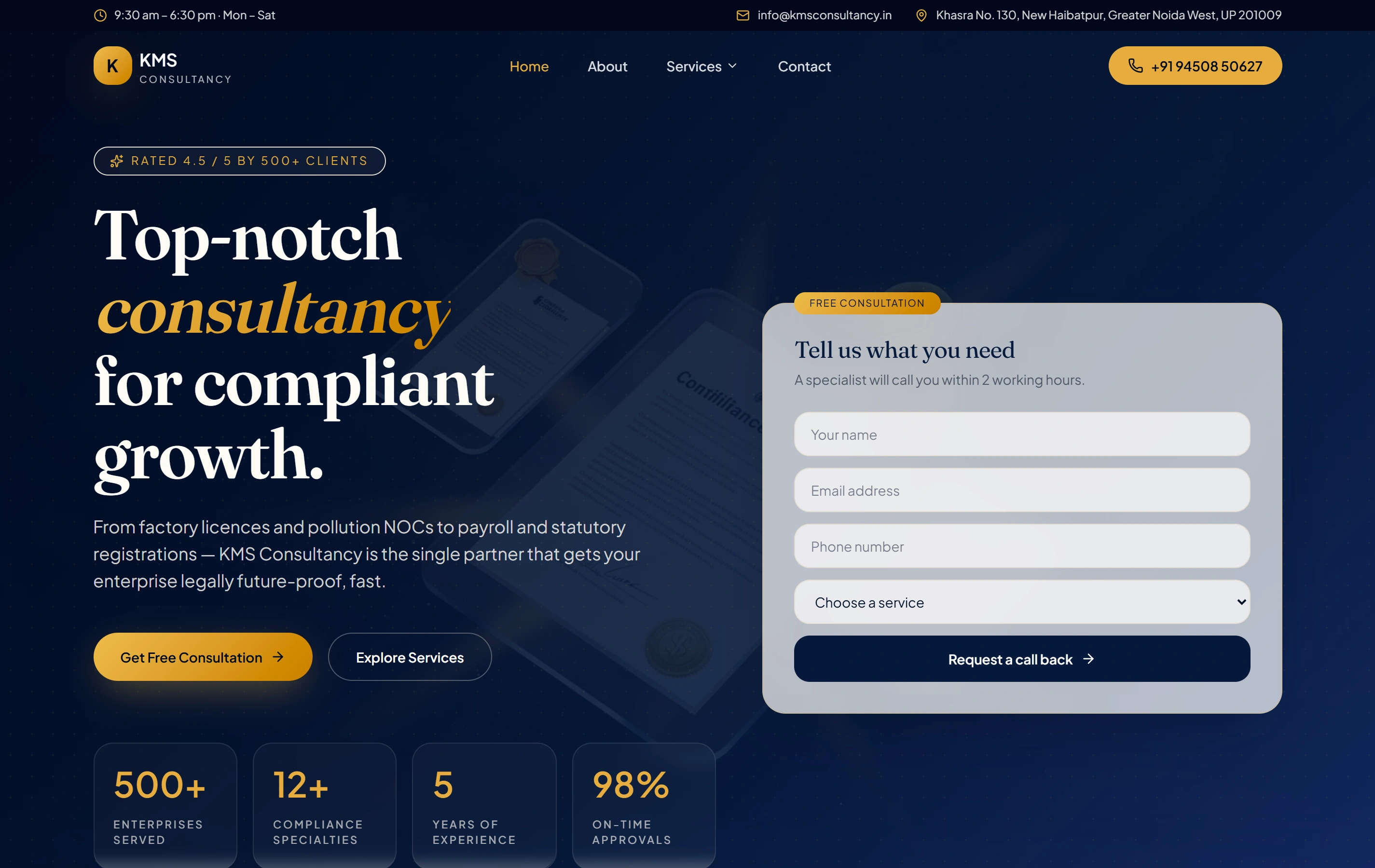
KMS Consultancy is a documented Softglimmer website presenting professional services and an enquiry journey. It offers a factual public-content reference. The case does not establish a multilingual implementation, a Haldwani client or the uneven-edition process in this planning example.

ContentCompliance
StructureService pages
ActionEnquire
KMS Consultancy websiteKMS Consultancy

Questions about the project scope.

Does every Haldwani project need several language editions?

No. The audience and business requirements determine that choice. A useful single-edition website or application can be the complete agreed project. This example should not be read as a claim about which languages Haldwani customers use.

Can an automatic translation fill a missing edition?

The business needs an appropriate approval process for the information it publishes. We do not treat an automatically produced text as approved or infer that connected forms and operating responses support it. Any translation tooling and human review duties belong in the actual scope.

Can we launch only the edition that is ready?

That can be appropriate if it supports the agreed useful task and the unavailable edition is represented accurately. The proposal and release review should identify what is published, what the visitor can do and what remains to be approved or commissioned.