Skip to content
Website Design for Haldwani Businesses

Make each service page a useful place to begin.

Softglimmer designs and develops business websites for Haldwani teams through remote delivery from Ranchi. We connect the page plan, approved content, responsive design, CMS and enquiry journey. A useful inner page should help a first-time visitor understand the business and its offer even when their first link leads past the homepage.

Explore the commission
A complete first visit through a service page
  1. 01

    Establish the context

    Show whose offer the visitor is reading.

  2. 02

    Explain the service

    Give enough scope and real evidence to assess fit.

  3. 03

    Offer a meaningful action

    Connect the page to an appropriate next conversation.

An example journey, shaped around your requirements.

Commission the website around complete information journeys.

A homepage can introduce the business, but it cannot be assumed to be every visitor's starting point. A customer may open a service link shared by a colleague and know very little about the company. The website project should give that person the relevant identity, offer and next action within a coherent public experience. This is a content and design decision across the page set, not simply a repeated button. The complete commission can include discovery, service and project structure, custom responsive design, development, content controls and agreed contact functions. Existing sites also need deliberate preservation and migration decisions. Private portals, checkout or staff workflows receive their own scope where needed; adding them should follow an actual business task rather than an assumption that a website requires every possible feature.

A hypothetical first visit through a service link
  1. 01

    Recognise the company

    Business identity and relevant context are available on the entry page.

  2. 02

    Judge the offer

    Scope, meaningful boundaries and genuine evidence help the reader assess it.

  3. 03

    Continue the conversation

    The next action fits what the visitor has understood.

A content-journey planning example, not a measured Haldwani conversion result or a delivered local client story.

Answer the questions the homepage cannot answer for this visitor.

01

Whose service am I reading?

Give the unfamiliar reader enough company context to understand the offer. The business identity, relevant experience and delivery arrangement should be understandable without forcing a detour through Home. An attractive logo on its own does not explain all of those facts.

02

Does this work fit my need?

Explain suitable situations, the actual commission and useful limits. Avoid a vague list of capabilities that leaves every reader with the same unanswered question. Separate the service description from optional systems or continuing support that need additional agreement.

03

What can I reasonably rely on?

Use genuine project material with its actual scope and context. A website case can demonstrate public information and design; it should not be relabelled as evidence of a private system, local office or unmeasured commercial outcome.

04

What happens if I make contact?

Provide a relevant enquiry route and explain the useful information to share. Agree receiving ownership and accurate acknowledgment wording. The page should help a visitor begin an appropriate discussion, rather than imply an accepted project, price or result from a simple request.

Hypothetical planning example

A colleague shares an unfamiliar service page.

Imagine a hypothetical buyer receiving a direct link to a service page from a colleague. They have not seen the homepage or the earlier conversation. The draft page has a large service heading, a decorative image and a contact button, but does not explain who provides the work, what it includes or why its example is relevant. This illustrates an information gap, not a Haldwani client incident.

The project team reviews that page as a complete first visit. It introduces the business in the relevant context, explains the commissioned work and its boundaries, and presents a genuine project reference without overstating what it proves. The next contact action follows the service information, with enough guidance for the person to send a useful initial brief.

For acceptance, ask someone unfamiliar with the planned page to start at that direct URL on a phone. Can they explain whose offer it is, whether it fits their need and what making contact will do? Record the unclear content and review it before extending the pattern.

Define the complete website, from content to launch.

The proposal identifies the pages and working functions, the material your team approves and the checks that establish readiness for the selected scope.

01

A useful page and content plan

An inventory of services, company information, genuine work and contact needs gives each page a clear purpose. Identify existing material to retain and missing facts to obtain from an authorised reviewer.

02

Responsive visual patterns

Review the homepage and representative inner pages with actual copy and media. Typography, navigation and supporting sections should work together for an unfamiliar visitor on phones and wider screens.

03

Implemented pages and CMS tasks

Build the selected templates, public interactions and editing controls. Rehearse a service update, image change and preview through the proposed owner workflow rather than treating editability as an undefined promise.

04

Release, enquiry and ownership review

Check rendered content, important links, metadata and agreed contact destinations. A redesign also compares the preservation inventory. Handover states access ownership, correction steps and continuing maintenance boundaries.

Remote delivery from Ranchi

Bring a service someone could discover without an introduction.

Share the current site or first page list, approved brand assets and one service with enough detail to discuss. Include the questions a new prospect asks and genuine work the business is authorised to show. Choose a person who can approve the claims and a colleague who will receive the enquiries.

Our Ranchi studio can review the project remotely with your Haldwani team. Agreed India-time sessions and consolidated written feedback support the content, design and implementation decisions. Estimates follow the useful page set, supplied material, editing needs and selected connections; a larger number of pages alone is not a promise of better discovery or more enquiries.

A documented professional-service website reference.

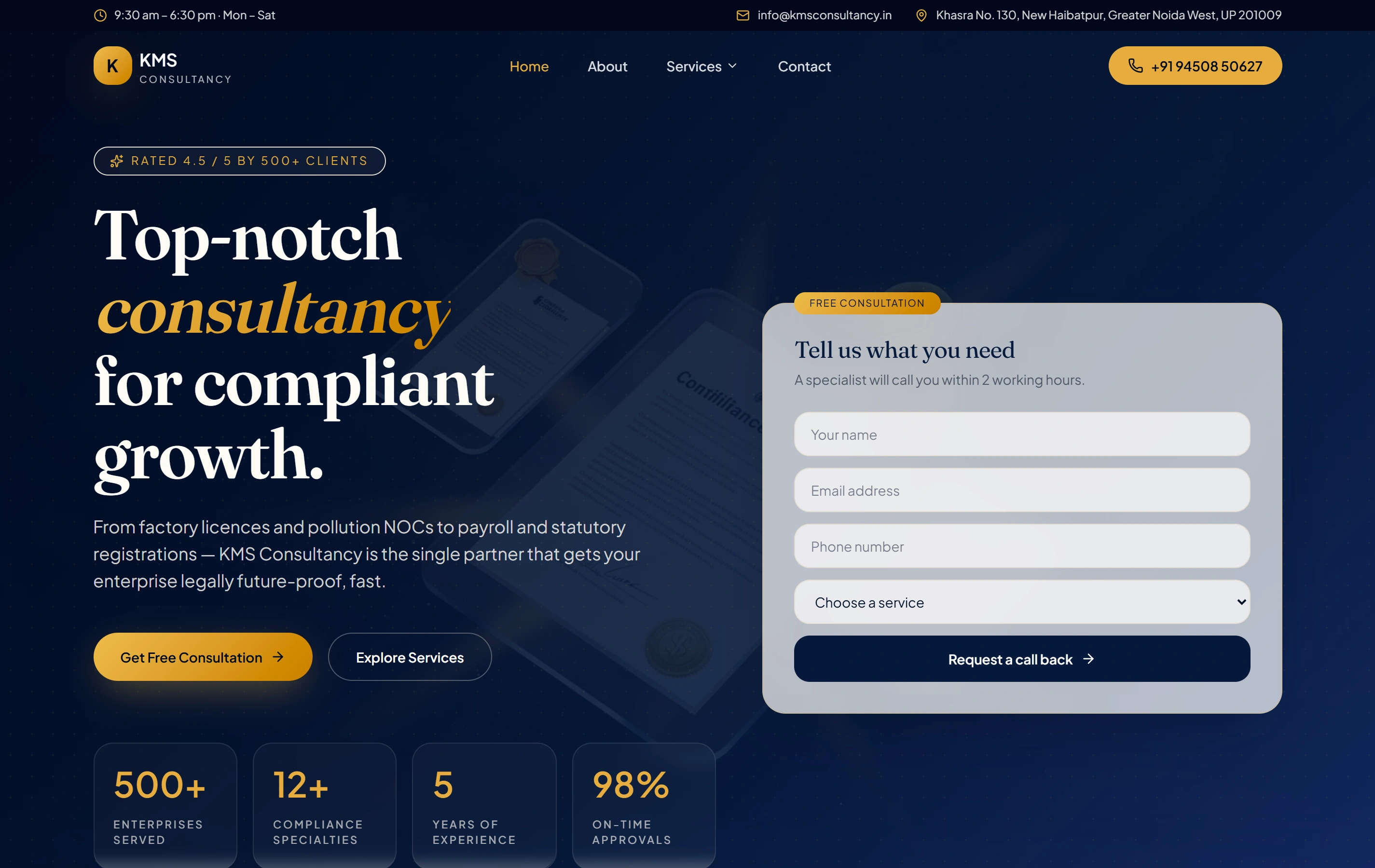
KMS Consultancy is a documented Softglimmer website presenting professional services and a structured enquiry journey. It gives a real reference for explaining a complex offer. It does not establish a Haldwani project, a delivered private system or a measured outcome from the direct-entry exercise on this page.

ContentCompliance
StructureService pages
ActionEnquire
KMS Consultancy websiteKMS Consultancy

Questions before commissioning the website.

Does every service need its own page?

Only when the offer needs a distinct, useful explanation. Some related information can share a page. We plan around meaningful customer questions and the actual scope, rather than creating another page for every wording variant.

Can a focused improvement be enough?

Yes, when it addresses the real problem. Existing content, links and working actions can be retained after review. The proposal should explain what changes, why it changes and how the selected journey will be assessed.

Will the website guarantee Google rankings?

No specific search position or enquiry count is promised. Useful content, internal links, metadata and the agreed technical foundations can form part of the website scope. Google indexing and rankings require separate observation after release.