
Skip to content
Kochi · Consultancy Website Design

Give your expertise a useful home online.

Softglimmer creates consultancy and professional-services websites for Kochi businesses, connecting a clear service offer with the knowledge your team publishes. We plan the content, design responsive pages and build the editing and enquiry journeys together. A reader should understand both the resource in front of them and the service available beyond it. Our Ranchi studio delivers remotely, with your team supplying the business knowledge and direction.

Explore the scope
A complete website that connects useful reading with the right conversation
  1. 01

    Explain the expertise

    Give the firm and its actual services a clear presentation.

  2. 02

    Publish useful material

    Organise resources around the people who read them.

  3. 03

    Offer a relevant next step

    Help an interested reader reach the right discussion.

An example journey, shaped around your requirements.

Commission the service website and its publishing work together.

An expertise-led business may attract visitors through a service page, an introduction from a colleague or a guide its team has shared. Those arrivals need a coherent website. We plan the firm’s presentation, service explanations, genuine supporting material and contact paths so a reader can find their bearings without starting again at the homepage.

The work can include information architecture, responsive visual design, website development and CMS templates for the agreed services and resources. We identify the writing, illustrations, initial entry and migration work required. Existing brand assets, useful URLs and accurate material are part of the starting point. The proposal states which content your team provides and where you want our help organising or preparing it.

For a business that publishes regularly, editing is a central part of the commission. Resources need a purpose, a suitable presentation and a clear relationship with the service offering. We build the agreed content patterns and demonstrate the ordinary publishing task. Your team owns the professional substance; the website gives it an understandable public form and a manageable path to future updates.
Choose what the website should help people understand.

Bring these choices into discovery before deciding how many pages or templates to build.

01

What is the firm offering?

Describe the actual services, intended audiences and usual starting point. Separate meaningful differences in the work from internal department names. The website should make your offering approachable while keeping its substance accurate and supplied by the people responsible.

02

Why does a resource belong on the site?

Choose the reader question a guide or insight helps address. Some material may introduce a subject; another item may explain a process. Decide what context a reader needs and which related service, if any, is genuinely relevant.

03

What is the appropriate next conversation?

Agree what the first enquiry should contain and who receives it. A person with a broad question may need a different prompt from someone asking about an identified service. Keep the form useful without asking for a confidential case history upfront.

04

Who will keep the publishing pattern useful?

Name the people preparing and approving new material, and the editor who will publish it. Show us a realistic update task so the CMS and guidance fit the team’s working day. New content types can be considered separately as the site grows.

Receive a working site and a repeatable way to publish.

The agreement makes the extent of content, design, development and handover clear.

01

Audience and page architecture

An organised map of the firm, services, useful resources and contact routes. Representative visitor questions help establish the purpose of each page and the information it needs.

02

A responsive visual system

A coherent design using approved identity assets, genuine material and readable page patterns. Service detail and longer resources receive attention alongside the opening page.

03

Service and resource templates

The included page types have a structure editors can understand. Titles, introductions, body content, relevant service links and useful actions are considered with real examples.

04

Website implementation and content work

The agreed templates, navigation, CMS fields and functions are built. Content preparation, initial entry and transfer from an existing site have named responsibilities and a stated extent.

05

A considered first-contact journey

The enquiry asks for proportionate context, explains the next step and reaches the chosen team. Any booking service or connected tool is included only after its role and ownership are agreed.

06

Launch and editorial handover

Important links, page information and ordinary publishing tasks are checked before release. The handover covers account access, content updating, technical care and the route for later assistance.

Let real material guide the project.

Your service owner and future editor have useful roles throughout the work.

  1. 01

    Understand the firm

    Review the existing site, service information and publishing habits. Identify the audience questions and the material available for a complete first release.

  2. 02

    Design the reading journey

    Work through a service page and a representative resource. Discuss what each reader needs to understand and how the next conversation fits the page.

  3. 03

    Build and populate

    Implement the selected patterns and controls, then add the agreed material. Your team settles factual questions while there is still time to improve the presentation.

  4. 04

    Publish and equip

    Follow the important visitor routes and let the editor publish a prepared item. Agree the release and leave practical guidance for content and technical ownership.

A hypothetical working example

A reader arrives with a question beyond the guide.

Hypothetical example: a consultancy publishes an introductory guide explaining a common business topic. Someone opens a shared link, finds it useful and wants help with a situation the guide does not discuss. The resource can explain its general purpose, connect to the relevant service and offer a suitable first conversation. The enquiry gives the team enough context to respond. Reading the guide or sending that enquiry does not itself begin an engagement or complete an assessment of the reader’s circumstances. We use this journey to decide how resources sit within the whole website: the explanation at the top, the service context, the contact action and the information reaching the team. The business supplies the subject matter and the distinction between public guidance and work undertaken for a client.

Help the reader move from useful information to a relevant conversation
  1. 01

    Understand the resource

    The page explains its purpose and intended reader.

  2. 02

    Find the service context

    A relevant offer explains how the firm can help.

  3. 03

    Share the next question

    The reader starts the appropriate conversation.

Hypothetical reader journey. The firm decides the content, professional boundaries and engagement process.

Build the next publishing task into the handover.

Bring approved service descriptions, a firm introduction, genuine credentials you want to show and two or three representative resources. Include a shorter insight and a more substantial guide if both belong in your plans. Identify the original material, useful existing links and any content that needs preparation before publication. Client names and sensitive examples stay out unless the firm has an appropriate basis to publish them.

During design, follow a resource directly from its shared address. Can a new reader identify the firm, understand the material and find a relevant next step? Then ask the future editor to prepare another item using the agreed fields. These tasks help settle the layout, content model and instructions before a large library is entered.

Kochi and Ranchi can work through agreed IST sessions, with one contact bringing together business feedback. We demonstrate publishing and an ordinary correction, then explain the accounts, technical support and continuing content responsibilities. The aim is a website that your team can use with confidence when the next service detail or useful article is ready.

See a real consultancy website.

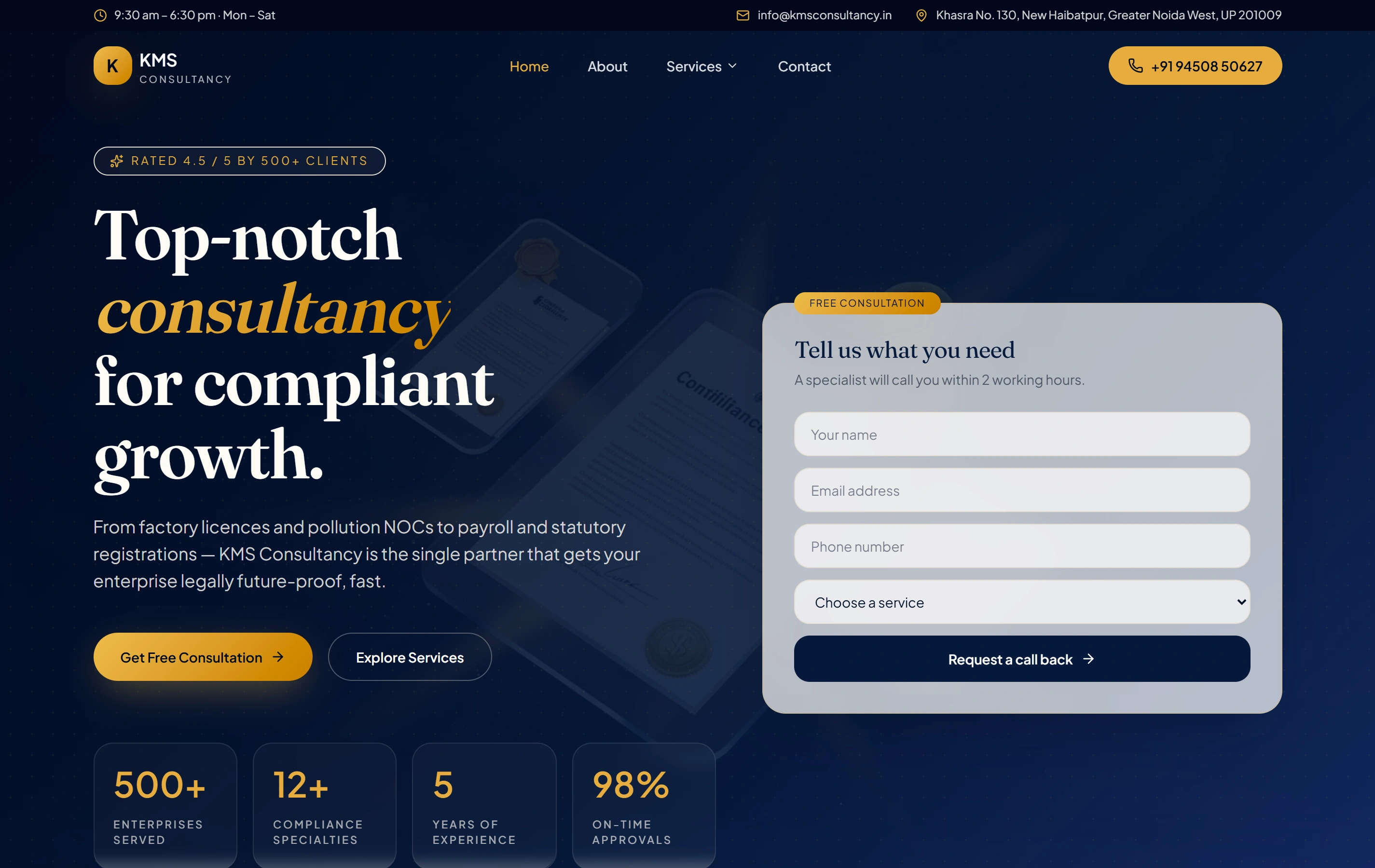
KMS Consultancy is a documented Softglimmer website that organises a compliance consultancy’s service catalogue into clear pages and an enquiry journey. It offers a real reference for presenting expertise online. Your firm’s resources, professional content and publishing arrangement are defined as part of its own website commission.

ContentCompliance
StructureService pages
ActionEnquire
KMS Consultancy websiteKMS Consultancy

Questions before we begin.

Use these points to prepare your first conversation.

Can we publish useful insights as well as service pages?

Yes. We plan the resource types, page structure and editing work around what your team intends to maintain. The scope can include a manageable collection rather than a large library at launch. Content preparation and continuing publication duties are agreed explicitly.

Do we need to rewrite all our existing material?

No. We first review what is accurate, useful and suitable for the new structure. Some content can stay; other material may need a clearer introduction or an agreed update. The proposal identifies writing, initial entry and migration work before the build expands.

How much should the first enquiry ask for?

Enough to begin the relevant conversation, as decided with the receiving team. We can distinguish the service of interest and broad purpose without requesting a complete private case file. The acknowledgement explains what happens next and who continues the discussion.

How is a remote Kochi project organised?

Our studio is in Ranchi. We agree participants, review windows and a coordinator with your Kochi team. The service owner supplies the professional facts, the editor tries the publishing task and we develop the agreed website, with account and support responsibilities explained at handover.