Make the people behind your services easier to keep current.
A website can explain a service clearly and still give the wrong answer about who delivers it. Team profiles, credentials supplied by the business and contact routes need an owner after launch. For Leeds content teams, Softglimmer connects those publishing responsibilities with the website structure and remote delivery plan. We work from Ranchi, agreeing review windows and recording decisions between calls. The starting point is the information your visitors need, followed by the content model and tools your editors can maintain.
Approved profiles, service content and a practical remote publishing handover.
01
Agree the public information
Identify the approved service, profile and next-action content.
02
Review a realistic change
Follow one profile update through the pages that use it.
03
Hand over the publishing route
Name the editor, reviewer and person controlling release access.
An example journey, shaped around your requirements.
A hypothetical working example
An introduction changes, but its copies stay behind.
Consider a hypothetical professional team whose website introduces several specialists. A colleague changes responsibilities, yet an old biography remains beside a service page. This example does not describe a Leeds client or a particular local industry. It illustrates a useful commissioning question: where should the approved information live, and who checks the places that depend on it? A new design alone will not answer that question.
Find the information owner
Assign someone to confirm the role, biography and approved image before publication. A developer can organise that content, but should not invent credentials or decide what a person is authorised to represent. Keep the review small enough that an ordinary correction can receive a clear answer.
Trace the visitor’s next action
A profile may lead to a service page, a general enquiry or a specific contact route. Confirm the appropriate destination when responsibilities change. The website should help a visitor continue with the right context rather than offering a polished introduction followed by an outdated contact instruction.
Profile review and publication
01
Agree the public information
Identify the approved service, profile and next-action content.
02
Review a realistic change
Follow one profile update through the pages that use it.
03
Hand over the publishing route
Name the editor, reviewer and person controlling release access.
Illustrative workflow. Your team approves the final rules and responsibilities.
Before implementation
Choose the delivery shape around the ongoing work.
Use these decisions to set a reviewable project boundary.
01
Start with a content inventory
List the profiles, service pages and shared introductions that the team wants to maintain. Mark who owns each answer and which materials are approved. This inventory helps distinguish a content correction from a design problem or a system change, so the project starts with a reviewable scope.
02
Compare the editing needs
A CMS may be useful when the team regularly changes structured content. A simpler page arrangement may suit a smaller, stable site. We compare actual publishing tasks and access ownership before choosing a platform, rather than assuming that one tool is appropriate for every Leeds organisation.
03
Plan the remote review cycle
Agree who gathers feedback and how the final decision is recorded. A single combined response is easier to act on than conflicting instructions from separate messages. Meeting windows should fit your operating hours, with written examples allowing the Ranchi delivery team to continue between reviews.
What you receive
A project boundary that survives the handover.
The agreed scope determines the working release and its handover.
01
An agreed information structure
The scope identifies useful public pages, shared content and the next actions they support. It distinguishes factual material supplied by your team from interface decisions we will propose. Reviewers can see which parts need approval before the implementation is treated as complete.
02
A working priority journey
The agreed release connects the chosen service information with its relevant profile and enquiry route. Empty content, long names and a changed responsibility are checked alongside the expected page. Acceptance follows those examples instead of relying only on an attractive homepage presentation.
03
A maintainable ownership record
The handover lists editing access, release ownership and the procedure for a routine correction. It also records technical dependencies and the support boundary. New sections and ongoing editorial work can then be assessed without confusing future requests with the original accepted scope.
Project preparation
Prepare one change your editors will make again.
Prepare the examples with the person who owns the information and working process.
Gather approved profile material
Bring a current biography, image and public contact instruction, with the person who can approve them. Identify content that should remain internal. The project can then test a realistic update without turning a draft profile into an unsupported professional claim.
List where that profile appears
Include the main profile, service introductions and any homepage feature. A useful list reveals the difference between one authoritative record and several independent copies. It also gives the reviewer a practical checklist when responsibilities change after launch.
Try the review on a phone
Ask a colleague unfamiliar with the proposed page to identify the service, relevant person and next step. Note unclear wording and missing context. This is a focused review of usability, not evidence of a conversion increase or a guarantee about future enquiries.
Name the correction route
Agree where editors report a problem, who approves the corrected content and how the public result is checked. Include recovery of account access. An ordinary publishing procedure should remain understandable after the original project conversations are no longer fresh.
See documented service-information work.
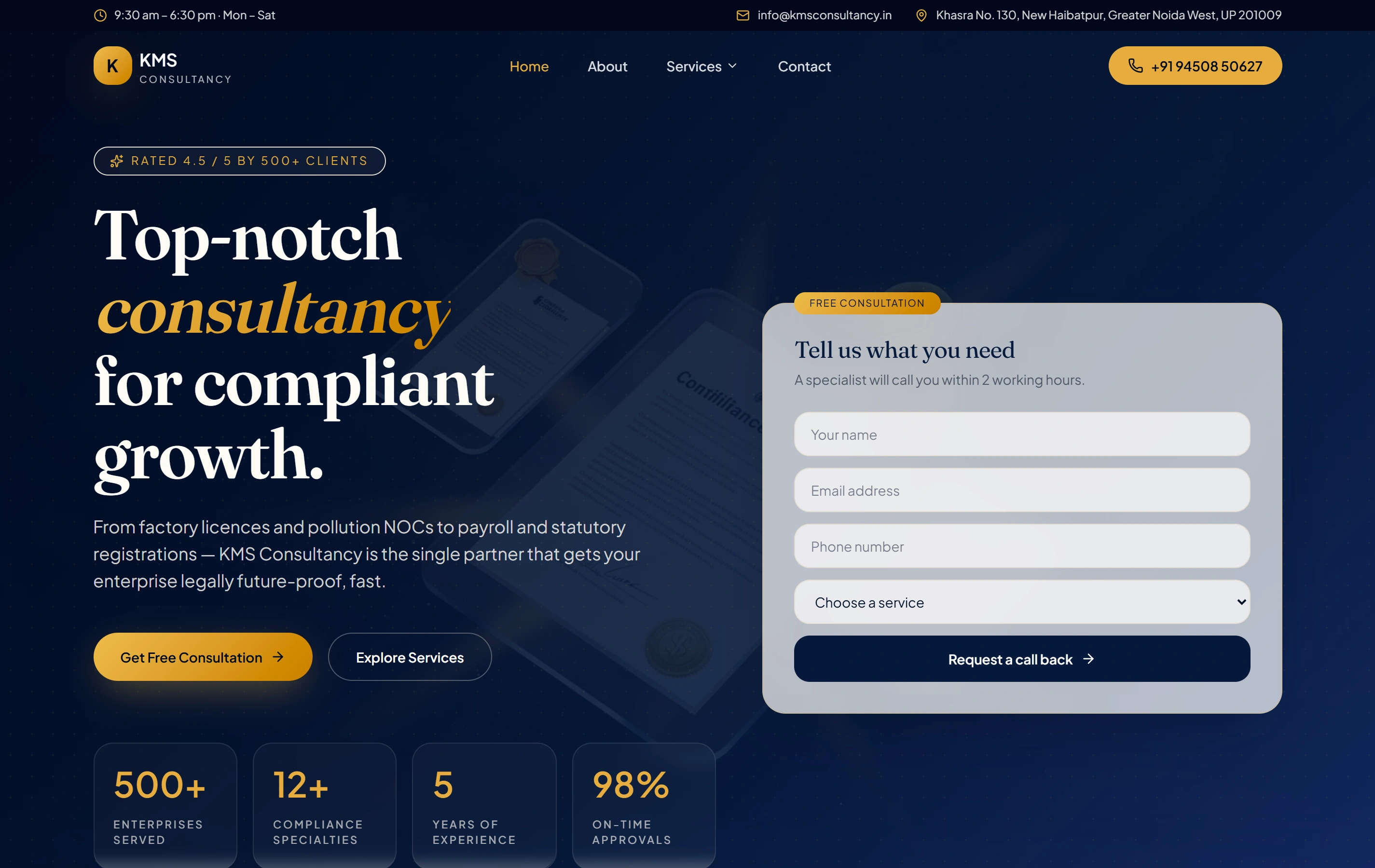
KMS Consultancy is a genuine Softglimmer website project presenting a structured service catalogue and enquiry journey. Its screenshot illustrates that documented website work. The proposed profile and CMS workflow is a separate scope, with its own platform decisions and acceptance checks.
Practical answers about scope, ownership and remote review.
Do we need a CMS for a small team?
Not automatically. The useful question is what staff need to change, how often, and who reviews the result. We compare those tasks with a simpler maintained website and document the choice. A small content model can be more useful than a large system whose controls nobody owns.
Can we retain our existing service pages?
We first inventory their content, addresses and integrations. Useful material can remain part of the project while the team improves shared information and enquiry routes. Any changed addresses or platform connections receive an explicit migration decision rather than disappearing as a side effect of redesign.
How is Leeds delivery coordinated?
A named Leeds owner supplies approved content and combines feedback. Our Ranchi team shares reviewable work, records decisions and agrees meeting windows. This is remote service availability; it does not imply a Leeds office or a local client behind the example.