Skip to content
Retail & Ecommerce Websites for Lucknow

Design a useful store. Explain how the purchase continues.

Softglimmer offers retail and ecommerce website design and development for Lucknow businesses from our Ranchi studio. We connect product information, browsing, responsive design and the selected buying or enquiry process. Where a merchant offers collection and delivery, the journey should make those choices understandable and carry the reviewed method into the information the team receives.

Explore the commission
An illustrative catalogue-to-fulfilment journey
  1. 01

    Present the products

    Give the range a useful structure and maintained information.

  2. 02

    Choose the supported route

    Explain the merchant-approved purchase and fulfilment options.

  3. 03

    Connect the operation

    Review the summary, receiving work and continuing content routine.

An example journey, shaped around your requirements.

Choose the website around how the merchant actually sells.

A good retail brief starts with the range, the information people need and the action the merchant can support. We can plan a product catalogue, a store or an improvement to an existing buying journey. Category and product templates, meaningful options, selected search or filtering, editing controls and the purchase or quotation path are reviewed together. Fulfilment is part of that task when it affects the website. Collection and delivery may require different information, charges and instructions. The merchant confirms what is offered and what each selection means. We assess any account, payment, availability or fulfilment connection against the actual tools and access. Choosing a method in the interface is distinct from a later operating decision such as confirming that an item is ready to collect.

A hypothetical choice of collection or delivery
  1. 01

    Selected method

    The shopper can see which merchant-supported route is being considered.

  2. 02

    Relevant details

    Fields and summaries ask for the information needed for that route.

  3. 03

    Understood next step

    The customer and receiving team know what the choice establishes and what follows.

An illustrative review model. Actual locations, charges, timing, availability and readiness rules must be supplied or approved by the merchant.

Make the shopping information fit the chosen route.

01

The product and category model

Bring genuinely different products and the options that affect selection. Agree approved descriptions, images and the information the editor maintains. Catalogue structure should help customers choose rather than reproduce an unexplained internal spreadsheet.

02

Catalogue, quote or checkout

Decide which products can be ordered through the selected process and which need discussion. Use clear action wording and useful feedback. A quotation request and an accepted purchase have different operating responsibilities.

03

Collection and delivery information

For each supported method, identify the necessary fields, instructions and approved charges. Review a change of method before the customer commits. An irrelevant address request or an outdated summary can make an otherwise attractive store hard to use.

04

Availability and readiness ownership

Name the person or system supplying the relevant product and order facts. State how an unresolved result reaches a person. The website should not invent stock, collection slots or readiness merely because a selector has been added.

Hypothetical planning example

The shopper changes the fulfilment method.

Imagine a hypothetical merchant offering collection as well as delivery. A shopper first chooses delivery, then switches to collection before completing the agreed purchase process. The screen still requests a delivery address and its summary still includes the delivery instruction. This is an illustrative retail brief, not a Lucknow client incident.

The team reviews what the collection choice actually requires. The relevant location or instructions, applicable information and approved charges are shown consistently with the selected method. Unneeded delivery input is treated according to the agreed design rather than silently carried into the receiving work. The merchant decides what constitutes an order and what separate notice, if any, confirms readiness.

Review both methods and a switch between them on the agreed phone and desktop layouts. Inspect the customer summary and the information the merchant receives. This is one acceptance example within a complete retail build, alongside product discovery, catalogue updates, content preparation and the selected customer-help route.

Receive a website and a practical merchant handover.

The written scope identifies the material, development and review needed for the chosen selling model.

01

Range and operating brief

Approved product fields, category relationships, representative launch content and the purchase or enquiry process. Record which fulfilment methods the business actually supports.

02

Responsive store patterns

Category, product, summary and relevant checkout or request layouts use realistic content. Review corrections and method changes where they form part of the agreed task.

03

Website and editing controls

Implement the selected platform, templates and working actions. Connections to outside services have their own requirements, access responsibilities and receiving checks.

04

Release and ongoing ownership

Rehearse product editing and the complete customer route with the responsible team. Provide the agreed access and guidance, with technical care and later additions explicitly assigned.

Remote discovery and delivery from Ranchi

Show the buying decision and the work after it.

Bring a varied product sample, approved material and an example of how the team handles an enquiry or order today. If collection is proposed, explain the actual arrangement rather than choose a location field from a generic store template. Include the people approving commercial facts and the colleague who will maintain the catalogue.

Lucknow and Ranchi can coordinate remote reviews through dated Asia/Kolkata invitations and consolidated written feedback. We compare the page plan and platform choices with those business inputs, then develop and review the commissioned journey. Content preparation, migration, connected functions and continuing support are included in the estimate according to their actual scope.

A real public shopping journey from the portfolio.

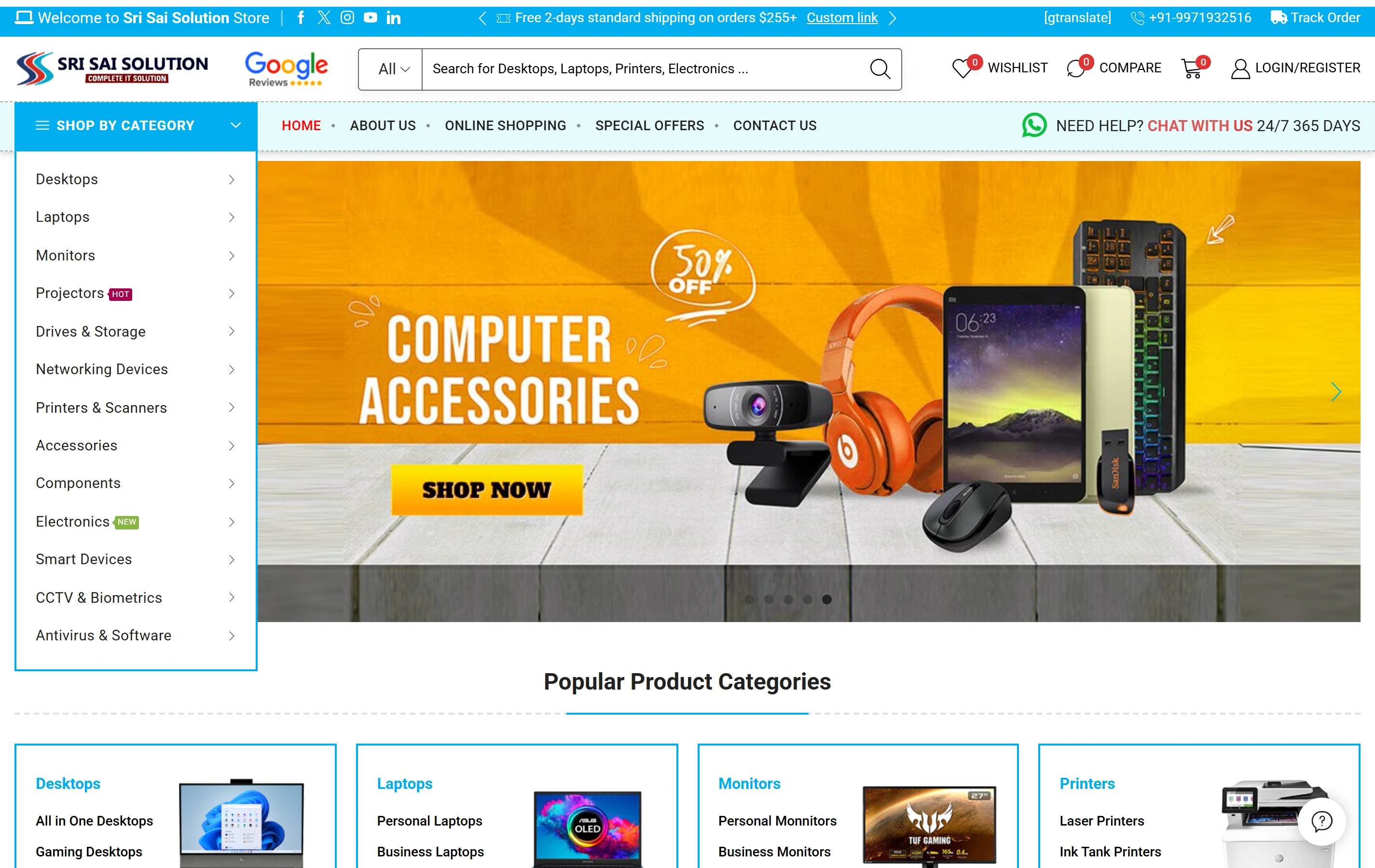
Sri Sai Solution is a documented ecommerce website for computers and electronics, with product categories, catalogue search and online shopping. It is a factual reference for product discovery and a public buying journey. Its case does not establish collection-method switching, a particular checkout platform, live availability or a Lucknow engagement.

Electronics catalogueA focused retail offering
Product discoveryDifferent ways to find a product
Shopping experienceStorefront presentation
Sri Sai Solution websiteSri Sai Solution

Questions before choosing the retail build.

Can we keep the existing catalogue or ordering tools?

We can inspect their capabilities, access and place in the intended journey. Retaining or connecting useful tools may be appropriate. A replacement should have a clear reason, with the included data and working routes reviewed before the switch.

Does selecting collection mean the item is ready?

That depends on the actual operating arrangement the merchant approves. The website should state what the selection establishes and how any later readiness confirmation is handled. No stock or preparation result is inferred from the choice alone.

Can a first release offer only one fulfilment method?

Yes, if it supports a useful complete purchase or enquiry route. The proposal can leave additional methods for later work. The public interface should describe the method the business is prepared to operate now.