Skip to content
Lucknow · Business Website Design & Development

A well-planned website. A clear account of the work included.

Softglimmer designs and develops websites that help Lucknow businesses explain their services, present genuine work and receive useful enquiries. We bring page planning, responsive design, development and content management into an agreed project. A first website, a focused improvement and a rebuild can each be sensible starting points. Our studio is in Ranchi, and we work remotely with your content and business reviewers.

Lucknow service-area guide
An understandable proposal, developed pages and a practical handover.
  1. 01

    Plan the public offer

    Choose the pages and actions your customers need.

  2. 02

    Agree the website work

    Separate layouts, content preparation and working functions.

  3. 03

    Build for continued use

    Review the visitor journey and the editor’s ordinary tasks.

An example journey, shaped around your requirements.

Plan the content and the developed website together.

A business website should give a visitor a useful explanation of the offer and an appropriate way to continue. That can mean comparing services, reading relevant work, finding a contact or sharing a requirement. We organise the page structure around those tasks, then develop the visual presentation and functions needed to support them. The project may include a company introduction, service pages, selected projects, articles, contact routes and reusable CMS sections. We agree the page types and initial content rather than treating every requested URL as the same amount of work. A shared service layout, a differently structured project story and a contact journey have different design and development needs. Your business approves the service facts, claims and use of supplied assets. We can include content organisation, writing or editing support and initial population in the scope. Naming that work early makes the proposal more useful: the team can see what it needs to supply and what Softglimmer will prepare before the website is ready for publication.

Choose an engagement around the present website.

The first discussion establishes what needs creating, what is worth retaining and which improvement would be useful now.

01

Create the first business site

Bring the approved offer, available brand material and the questions customers need answered. We can establish a manageable page plan, a visual direction and the first enquiry journey. Missing content becomes a preparation task with a named owner.

02

Improve a defined part

An unclear service explanation, difficult navigation or awkward editing task may justify focused work. We inspect the current arrangement and specify the affected pages or functions, including any testing and preservation needed around the change.

03

Rebuild with useful continuity

A redesign can retain valuable copy, media, URLs and working connections. We review these before agreeing their new presentation and any migration work. The proposal identifies the material being moved and the checks required before switching the public site.

Agree the outputs behind the website.

The proposal selects the extent of these six groups and the business material needed to deliver them.

01

Information and page-type plan

An arrangement of the services, company context and relevant work, with a purpose for each included page type. Record the audience, intended next action, source material and preparation responsibilities.

A reviewed structure and content brief.
02

Responsive visual design

Layouts for the selected page types, using representative headings, copy and approved imagery. Review typography, navigation, image crops and contact actions at the agreed phone and desktop widths.

A consistent design that accommodates the real material.
03

Website development and initial population

Implemented layouts and agreed interactions, plus the defined amount of content entry. State which pages use shared structures, what needs a separate layout and how supplied material will be prepared for those pages.

A developed website with specified initial content.
04

Practical CMS controls

The chosen fields, reusable sections and editing roles for the information your team maintains. Demonstrate an ordinary draft, preview and publication task with the future editor.

Editing controls tied to actual update needs.
05

Enquiry and contact journeys

Agreed forms, calls or visitor-controlled messaging links, including required context, validation and confirmation. Name the recipient and inspect the receiving result through an authorised review process.

A useful route from the public page to the responsible team.
06

Launch and operating handover

Checks for content, links, assets and the agreed search foundations, together with any preserved routes or migration decisions. Explain access, recovery responsibilities, technical care and future change requests.

A release record and understandable continuing responsibilities.

Read a website proposal in useful units.

Use these distinctions when describing the requirement. They explain the work to agree; they are not a fixed package or a claim that one unit has a standard price.

A shared layout, populated pages and a working function are different parts of a website scope.
Scope unitWhat to describeWork and responsibility to agreeHow to review it
Page types and layoutsList the different structures needed, such as a service detail, a project story and a contact page.Identify which layouts can be reused and which need separate design or behaviour.Review one representative page of each agreed type before extending it.
Pages and content entriesCount the initial service descriptions, project records or other entries to prepare and publish.State who supplies the facts and who writes, edits, formats and enters the agreed material.Compare the populated pages with the approved content list, including their images and destinations.
Editing controlsDescribe the updates staff expect to make after launch.Specify fields, reusable sections and roles for those tasks; structural development remains a separately described change.Have the intended editor complete a normal update and inspect the resulting preview.
Functions and connectionsName each contact, search or external-system action the project needs.Agree its inputs, destination, account dependencies and what happens when it cannot finish.Follow the included journey through its visible response and agreed receiving outcome.

Bring representative material before collecting every final page.

A useful first pack contains the current website if there is one, the main service descriptions, available brand files and a genuine work example the business may show. Mark whether each item is ready to use, needs adapting or still needs an informed business answer. That lets us plan the content effort alongside the design.

Choose a service with enough detail to expose the layout needs: an understandable introduction, the work included, relevant evidence and a next step. A longer service title or an image with an important subject helps reviewers assess the real presentation. The design can then be reviewed with material the finished site is expected to hold.

Nominate someone who can settle factual questions and consolidate comments. If several colleagues approve different services, identify those responsibilities at the start. We can help prepare the public explanation, while the people delivering the service confirm the offer that customers will read.

Move from the brief to a website your team can use.

Lucknow and Ranchi reviews can use dated Asia/Kolkata invitations, with comments and decisions kept against the version being reviewed.

  1. 01

    Review the brief and material

    Inspect the current site, intended customers and important journeys. Agree page types, content work, CMS needs and the extent of any migration. Record open questions before confirming the implementation scope.

    A practical proposal and preparation list.
  2. 02

    Design representative pages

    Develop the information structure and visual direction using approved material. Review the main page types and phone presentation together so content and design decisions support each other.

    Concrete layouts and content decisions.
  3. 03

    Build and examine the journeys

    Implement the selected templates, controls and contact functions. Follow the visitor route from a direct page link, then practise included editing tasks. Resolve findings against the agreed website scope.

    A working site and recorded review outcomes.
  4. 04

    Publish and hand over

    Confirm content approval, release readiness and account responsibilities. Explain routine editing, technical maintenance and how a later request is assessed. Any continuing support arrangement is agreed for the project.

    Access, guidance and a clear next operating step.

Explore a documented service-information website.

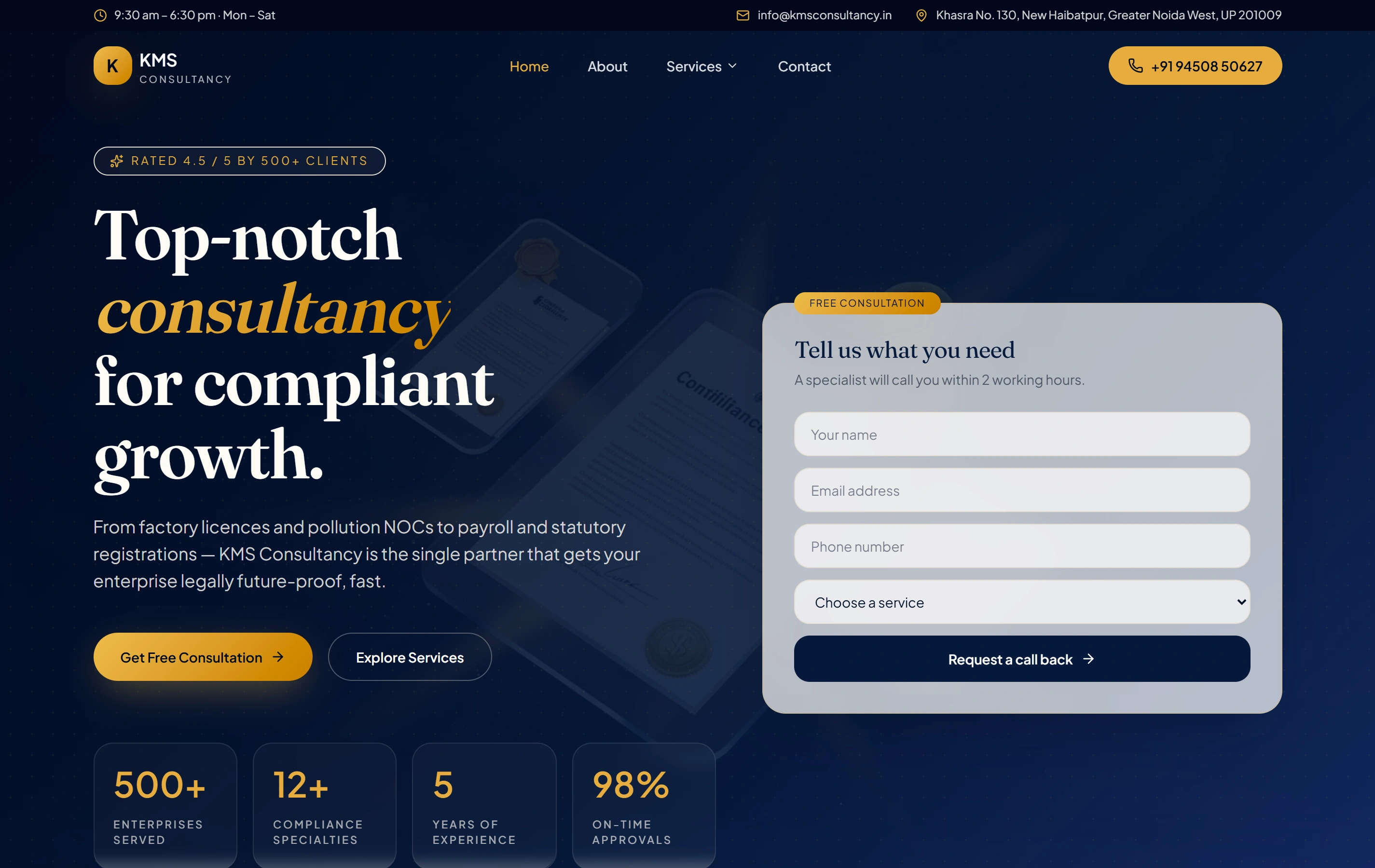
KMS Consultancy’s website organises a complex consultancy service catalogue into clear pages and an enquiry journey. It is a real example of website structure and public presentation. Your own service content, editing controls and delivery scope are agreed from the brief.

ContentCompliance
StructureService pages
ActionEnquire
KMS Consultancy websiteKMS Consultancy

Questions before starting the website.

Do we need complete copy before the first conversation?

No. Bring the material available and explain what is unfinished. We can identify the required pages and agree content planning, writing, editing or entry work in the proposal. The business still approves its facts and public claims before publication.

Can several service pages share one layout?

Yes, where the structure serves their information well. The scope should still identify the separate content entries and any genuinely different sections or functions. A reusable template makes presentation manageable; the included amount of content preparation and population remains explicit.

Will our team be able to edit the result?

We can provide the agreed CMS controls and demonstrate the selected tasks with the nominated editor. The handover explains the fields and sections they can maintain, together with the route for structural or technical changes.

How do you work with a Lucknow business?

Our studio is in Ranchi and delivery is remote. We agree reviewers, dated review sessions and written approvals. The estimate follows the pages, content, functions and preservation work selected for your project.