Skip to content
Custom Software Development for Ludhiana

Build around the working process. Keep customer context understandable.

Softglimmer offers custom business software discovery, design and development for Ludhiana teams through remote work from Ranchi. We examine the tasks, shared information and people responsible for the result before choosing the application scope. Where customer records need consolidation, the project also needs a deliberate decision about their identity and attached work, rather than treating deletion as data cleanup.

Explore the commission
An illustrative application commissioning path
  1. 01

    Understand the process

    Compare the actual task and useful existing tools.

  2. 02

    Design the working application

    Agree records, roles, interfaces and supported exchanges.

  3. 03

    Review and hand over

    Inspect real outcomes and prepare continuing ownership.

An example journey, shaped around your requirements.

Commission the process, application and operating handover together.

A business application may organise customer work, shared requests, review decisions or another repeated task. We compare configuring an existing product, connecting suitable tools and developing an application against the same operating need. The first release should complete useful work, with its users, records and responsibilities understood. A custom build is an option to justify, not a compulsory replacement for everything the team already uses. The scope can cover process discovery, record and role modelling, interface design, implementation, selected exchanges, data preparation and release. Existing information deserves review before migration or correction. Two customer profiles may genuinely identify the same organisation while carrying different jobs, documents and earlier decisions. The business must approve what may be consolidated and what remains distinct. Similar names or a shared contact address alone do not establish a duplicate, and a visually tidier customer list does not establish a reconciled working history.

A hypothetical review of two confirmed customer profiles
  1. 01

    Compare the profiles

    Identify both records and the work attached to each.

  2. 02

    Approve a bounded outcome

    Choose consolidation, a link or continued separation with the authorised owner.

  3. 03

    Inspect the resulting context

    Review the agreed relationships, references and unresolved questions.

An illustrative review model. The business approves the identity decision and preservation requirements; the selected application is checked against those agreed records.

Decide what the application must let people complete.

01

A coherent first workflow

Follow the task from its initial information through the decisions and useful result. Choose ordinary working views and meaningful exceptions. Later modules can remain a separate roadmap while the first release has an assessable completion boundary.

02

Record meanings and relationships

Define customers, contacts, jobs and the links between them. Different roles or organisations must not collapse because a value happens to match. For a confirmed duplicate, identify the facts each source owns and the work that must remain recognisable.

03

An authorised consolidation decision

Determine who can propose and approve the change, what they compare and what happens to conflicting facts. Keep uncertain cases unresolved for review. Linking two profiles, combining selected information and removing an obsolete entry are different choices with different consequences.

04

Implementation and continued operation

Agree the application, migration boundary, required interfaces and operating environment. Define role checks, recovery responsibilities and the support route. Data changes need acceptance against the actual records, not only the appearance of a success message.

Hypothetical planning example

Two confirmed customer profiles each have useful job history.

Imagine a hypothetical team discovering that two existing customer profiles represent the same organisation. One has a completed job and its earlier approval; the other has current work and a different contact detail. The authorised business owner confirms the duplicate identity before a consolidation is considered.

Before changing the records, the reviewer examines both profiles and their attached work. The owner decides which facts should become current, how the original references remain understandable and whether the appropriate outcome is a consolidation or an explicit link. Separate customer roles, disputed facts and unresolved jobs retain their agreed meaning. Renaming one profile or deleting the other does not settle those relationships.

Acceptance compares the identified profiles and their included job context before and after the commissioned action. The reviewer checks the resulting references, earlier decisions, current work and a conflicting fact, using safe example data. Any affected exchange or export included in scope is reviewed too, alongside ordinary task screens, role checks and the operating handover.

Agree useful application outputs and how their results are checked.

The proposal describes the selected behaviour, business inputs and responsibilities for operation.

01

Process and option brief

Map the users, task, exceptions and existing tools. State the reason for configuration, integration or a custom application and the first-release boundary.

02

Record, role and interface design

Agree information meanings, relationships and permitted actions. Review ordinary work and significant correction states with realistic material.

03

Application and data implementation

Develop the chosen functionality and supported exchanges. Included migration or consolidation has a bounded source set, approved rules and reconciliation work.

04

Acceptance and operating ownership

Inspect complete tasks and the resulting records. Provide the agreed access, source and administration guidance, with deployment, recovery, care and future changes assigned.

Remote discovery and delivery from Ranchi

Bring both sides of the identity question and the work behind them.

Share a sanitised ordinary workflow and a small example of a difficult correction. If duplicate customers matter, include two fictional profiles with comparable related jobs and explain why the business considers them the same entity. Identify the owner who can settle conflicting facts and any existing tool or exchange affected. Avoid sending a full private customer database for an initial discussion.

Ludhiana and Ranchi can arrange dated Asia/Kolkata reviews with written decisions and working demonstrations. We use the examples to settle a coherent application scope and review its implementation. The estimate reflects behaviour, design, data preparation, inspected connections and acceptance effort. A migration, deployment or continuing support arrangement is stated explicitly rather than assumed from the presence of a new dashboard.

A genuine website reference for structured service information.

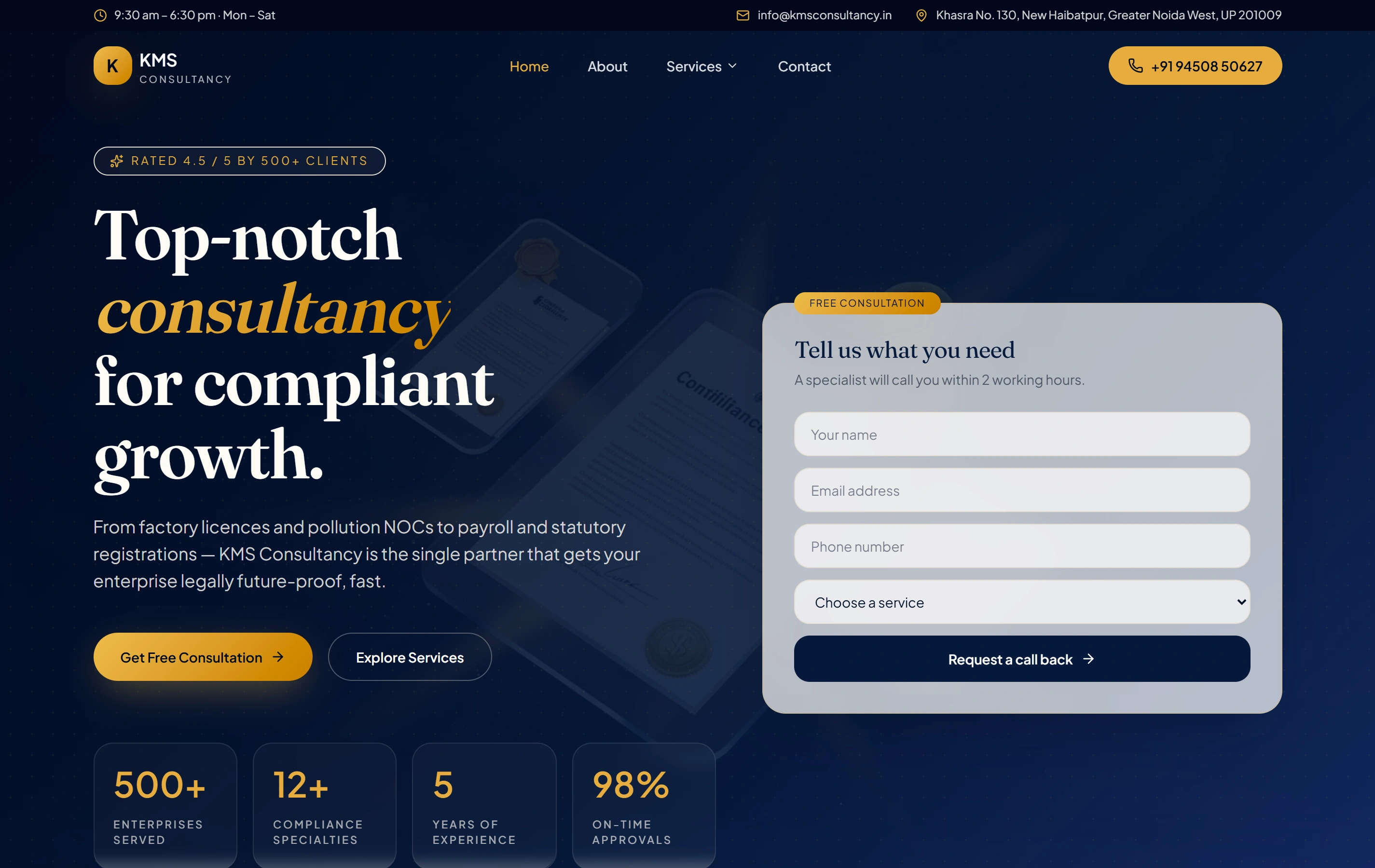
KMS Consultancy is a documented website for a compliance consultancy, presenting a complex service catalogue through clear pages and an enquiry journey. It provides a useful reference for organising public information. The documented case covers the website only.

ContentCompliance
StructureService pages
ActionEnquire
KMS Consultancy websiteKMS Consultancy

Questions about commissioning business software.

Must a duplicate customer record always be merged?

No. The business may need to retain the records separately or link them with an understandable relationship. Discovery establishes what they represent, who may decide and which outcome the actual operating process requires.

Can the same contact appear in two different organisations?

That is a business relationship to define, not automatic evidence of duplication. The data model and review should preserve distinctions the team needs. A matching email or similar name does not authorise consolidation by itself.

Can we keep an existing application?

Yes, where it remains suitable. We assess available configuration and supported interfaces before proposing custom work. A focused extension or connection may meet the need; any wider replacement and data transition require an explicit scope.

What do you need before proposing the application scope?

Bring the current process, intended users, representative records and the useful result they need to complete. Identify existing tools, available interfaces, information to transfer and the people approving business rules. These inputs help us compare configuration, connection and development work, then define a coherent first release and its operating responsibilities.