
Skip to content
Digital Services for Ludhiana Teams

Build the next release around the people using it.

Softglimmer plans websites, business applications and automation for Ludhiana teams, delivered remotely from our Ranchi studio. We connect the public journey with the staff task and agree how the business will use the result. Discovery, design, development and handover can form one scope, with a practical first release rather than an unexplained feature list.

Explore the service choices
Make the working change as clear as the new interface.
  1. 01

    Try a real task

    Let the intended staff review the journey.

  2. 02

    Resolve the handover

    Know which record the team should use.

  3. 03

    Operate the release

    Agree support and the next improvement.

An example journey, shaped around your requirements.

Choose the service around the working change you need.

A clearer website may help customers recognise an appropriate offer. A staff application can organise a repeated task. Automation can reduce a defined handover between approved tools. These services can be combined, but a larger system is not automatically a better first step. The brief should explain who benefits and what they need to do differently.

We can scope public pages, editable content, interface design, business records and selected connections. Existing working material matters: a notebook, spreadsheet or message may contain an exception the preferred new screen does not yet handle. Discovery should expose that information before it disappears into an assumed process.

The release also needs a practical route into ordinary use. Agree who reviews the work, which staff try it and how questions are collected. Training material and an available support contact are useful only when they relate to the tasks people will actually perform. A successful developer demonstration is a starting point for acceptance, not proof that the whole organisation has adopted the change.
Hypothetical planning example, not a client case study

An optional example: the new board and the old notebook disagree.

Imagine a hypothetical order desk introducing a shared request board. During the first week, some staff use the board while others continue writing instructions in a notebook. A request is amended in one place, and the next colleague sees a different instruction in the other. The new interface may work correctly while the operating change remains incomplete.

The project could begin with a named pilot group and a defined set of requests. Agree which record controls those requests, how a correction reaches the next person and who checks any parallel notes. A pilot needs an end decision: adopt the reviewed process, revise it or stop before expanding it.

This is an illustrative planning exercise, not a Ludhiana client implementation or a claim about how local businesses operate. It does not prescribe a particular order system. It helps the team assess adoption, record ownership and support alongside website or software features.

Treat adoption as part of the first-release scope.

01

Choose a bounded pilot

Select the people and tasks included in the first operating review. Make it clear which work stays outside the pilot and what staff should do there. An informal trial becomes confusing when colleagues do not know which process applies.

Discuss before build: Who uses the new process for which requests?

02

Resolve parallel information deliberately

If old and new records must coexist temporarily, name the responsible record and the reconciliation task. Do not ask staff to infer which version matters from the appearance of a screen or the time a message arrived.

Discuss before build: Where is the current instruction confirmed?

03

Give staff a usable question route

Record questions against the task and state that produced them. Distinguish a missing business rule, a training need and an implementation defect so the response improves the right part of the release.

Discuss before build: Who can answer or authorise the correction?

Specify what people need to start using the work.

01

Current-task discovery

Review a normal request and one that needs explanation, including the working notes staff rely on. Identify assumptions before choosing what should become a page, field, rule or connection.

A brief grounded in the actual task.
02

Designed and implemented journeys

Build the selected public or staff interfaces with representative content. Include the relevant incomplete and changed states, with roles and connected-account responsibilities recorded.

A release users can review concretely.
03

Pilot and acceptance plan

Name the participants, request boundary, demonstrations and decision owner. Define how observations are recorded and which requirements must be resolved before broader use.

An inspectable adoption decision.
04

Editing and operating guidance

Demonstrate the recurring staff or content task, explain the support route and identify technical maintenance responsibilities. Keep account access and handover material with the authorised business owner.

A useful guide after the project meeting.

Let the next colleague complete the task without the demonstration script.

Use suitable test records and ask the intended user to carry out the ordinary task, an amendment and a handover. Observe where they need an explanation; do not quietly complete the difficult step for them. Check the result in the record the team has agreed to use. Then review what happens to old notes and unresolved requests when the pilot ends. These observations support the selected release decision; they are not a claim of universal staff readiness or guaranteed productivity.

Make remote delivery understandable to the operating team.

  1. 01

    Include the people doing the work

    Share representative material and invite a person who can explain the daily exception. A manager’s summary and the operator’s task can reveal different needs.

    A useful discovery discussion.
  2. 02

    Review the first version together

    Our Ranchi team presents the proposed journey remotely and records decisions with the nominated Ludhiana owner. Keep the pilot boundary explicit.

    A shared implementation scope.
  3. 03

    Demonstrate and collect observations

    Review the agreed cases with intended users, distinguish defects from new requests and settle the release requirements before extending the rollout.

    Evidence for the adoption decision.
  4. 04

    Hand over the continuing work

    Explain editing, account ownership and support. Agree when the pilot closes and how later improvements are proposed rather than silently expanding the first release.

    A clear operating responsibility.

A real website reference with a defined scope.

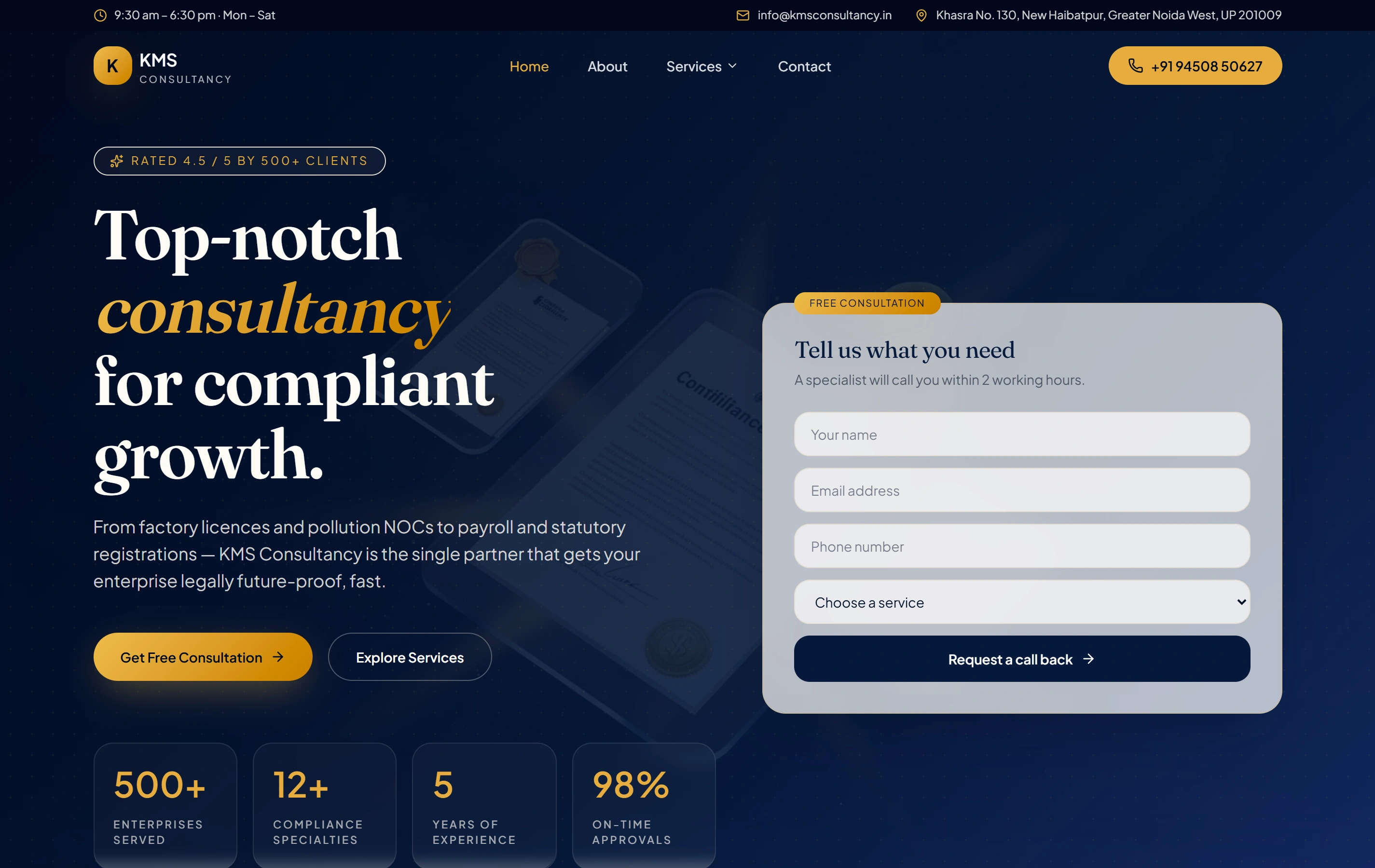
KMS Consultancy is a real portfolio website that organises a complex service catalogue and enquiry journey. It provides a reference for readable public information. It is not evidence of the hypothetical request-board rollout, a Ludhiana software engagement or a measured productivity improvement.

ContentCompliance
StructureService pages
ActionEnquire
KMS Consultancy websiteKMS Consultancy

Questions before starting.

Must every project include a custom system?

No. A clearer website, adjusted CMS or better use of an existing tool may address the need. We compare those options with the operating problem. Custom development should have a reason, a manageable first scope and someone responsible for using and maintaining the result.

Can reviews work with a small nontechnical team?

Yes. Bring the person who owns the business decision and someone who carries out the task. We can use representative records and visible demonstrations instead of requiring everyone to interpret technical plans. Existing-system or provider contacts may still be needed to establish a connection’s feasibility.

Will staff training guarantee that the old process can stop?

No. The business decides when the pilot provides enough evidence to change its operating process. We can supply the agreed walkthroughs, task guidance and implementation corrections. The handover should record any unresolved work and the person who authorises broader adoption.