
Skip to content
Digital Services for Madurai Businesses

Turn a broad digital brief into useful work.

Softglimmer helps Madurai businesses commission websites, software, design and connected services around an understandable purpose. We clarify what customers need to know, what staff need to manage and which parts can sensibly be supported by technology. Our studio is in Ranchi and delivery is remote. The agreed project includes concrete outputs, review decisions and handover responsibilities, with optional features assessed against the information and people needed to support them.

Compare the service choices
Useful public information and supported operating choices.
  1. 01

    Clarify the purpose

    Describe the person and task the work should help.

  2. 02

    Choose the right scope

    Connect useful services without assuming a large system.

  3. 03

    Prepare the people

    Name content, approval and operating owners.

An example journey, shaped around your requirements.

Start with the business need

Start with the service people need to receive.

A website may need clearer explanations and an enquiry route. A recurring internal task may need structured records or an application. An established process may benefit from a focused connection between tools. Brand and experience design can be commissioned separately or included in the implementation. We compare these routes before treating a feature list as a finished brief.

The work can cover discovery, design, agreed development, content controls, supported integrations and release preparation. The proposal distinguishes studio deliverables from the business information, decisions and accounts you supply. An effective scope also records what remains a human responsibility, especially when an answer or action depends on judgement rather than a repeatable rule.
An optional working example

A help widget is proposed before its answers have an owner.

Consider a hypothetical Madurai business whose staff receive repeated questions about its services. The team suggests an AI assistant, but the website, old notes and current service document do not say the same thing. This example is a planning discussion, not a delivered local assistant or a claim about a provider’s capabilities.

Agree the information first

Ask the business owner which statements are current and who approves corrections. Some questions may be answered more usefully by clearer public pages or an ordinary FAQ. Unsettled information should remain an editorial question rather than become an automated assertion.

Compare a proportionate next step

If assistance still has a useful role, define the allowed sources, questions needing human review and a way to assess answers before release. The proposal can distinguish content improvement, a bounded evaluation and a later integration instead of bundling them into one assumed feature.

Before choosing the implementation

Keep the business decisions visible in the brief.

The optional example illustrates a wider commissioning habit: settle responsibility before adding a new interface.

01

Who can approve the facts?

Name the owner of service descriptions, product information and other public statements. Record missing content and who resolves it. A designer or developer should not invent a business promise simply to complete a page.

02

What action follows the interface?

Explain where an enquiry, request or approved record should go. Identify the receiving person and the system involved. A form, account screen or assistant needs an operating route that the business is ready to support.

03

What deserves human review?

Describe exceptional decisions and uncertain information. The selected tools should help people recognise those limits. Automation or AI should be scoped around the permitted task, not treated as authority for every question that arrives.

An agreed project scope

Agree useful outputs, from discovery through delivery.

Your proposal identifies which of these are included for the selected service.

01

Audience and information brief

A clear record of the users, useful task and approved material. Identify gaps, source owners and practical examples, with private information removed from discovery material where possible.

02

Design and implementation package

The agreed page structure, visual direction, interfaces and development scope. Separate creative review from working functionality and list the accounts or external services needed to complete any connection.

03

Acceptance and editorial decisions

Review representative content and complete tasks with the relevant owner. Include an incomplete or uncertain case and record what should remain pending rather than filling the gap with an unsupported answer.

04

Operating and maintenance handover

Explain ordinary editing, account responsibilities and the route for corrections or issues. Identify the ongoing support, dependency maintenance and future review work agreed for the released scope.

Remote delivery from Ranchi

Use a review process that keeps information current.

Asia/Kolkata is the proposed named zone for dated Madurai–Ranchi review invitations. The actual schedule and approval windows are agreed with your team.

  1. 01

    Discover

    Compare the current experience with the useful outcome. Involve the people supplying information and the people responsible for the work after launch.

  2. 02

    Define and design

    Agree outputs, content responsibilities and review cases. Assess the proposed pages or interfaces using realistic material before the scope expands.

  3. 03

    Implement and review

    Build the selected work and check complete tasks. Record findings with their owner, including dependencies that need approval before release.

  4. 04

    Release and explain

    Approve the working scope and walk through everyday updates. Leave a practical route for corrections, maintenance and separately agreed improvements.

A documented website reference

Review a documented information-led website.

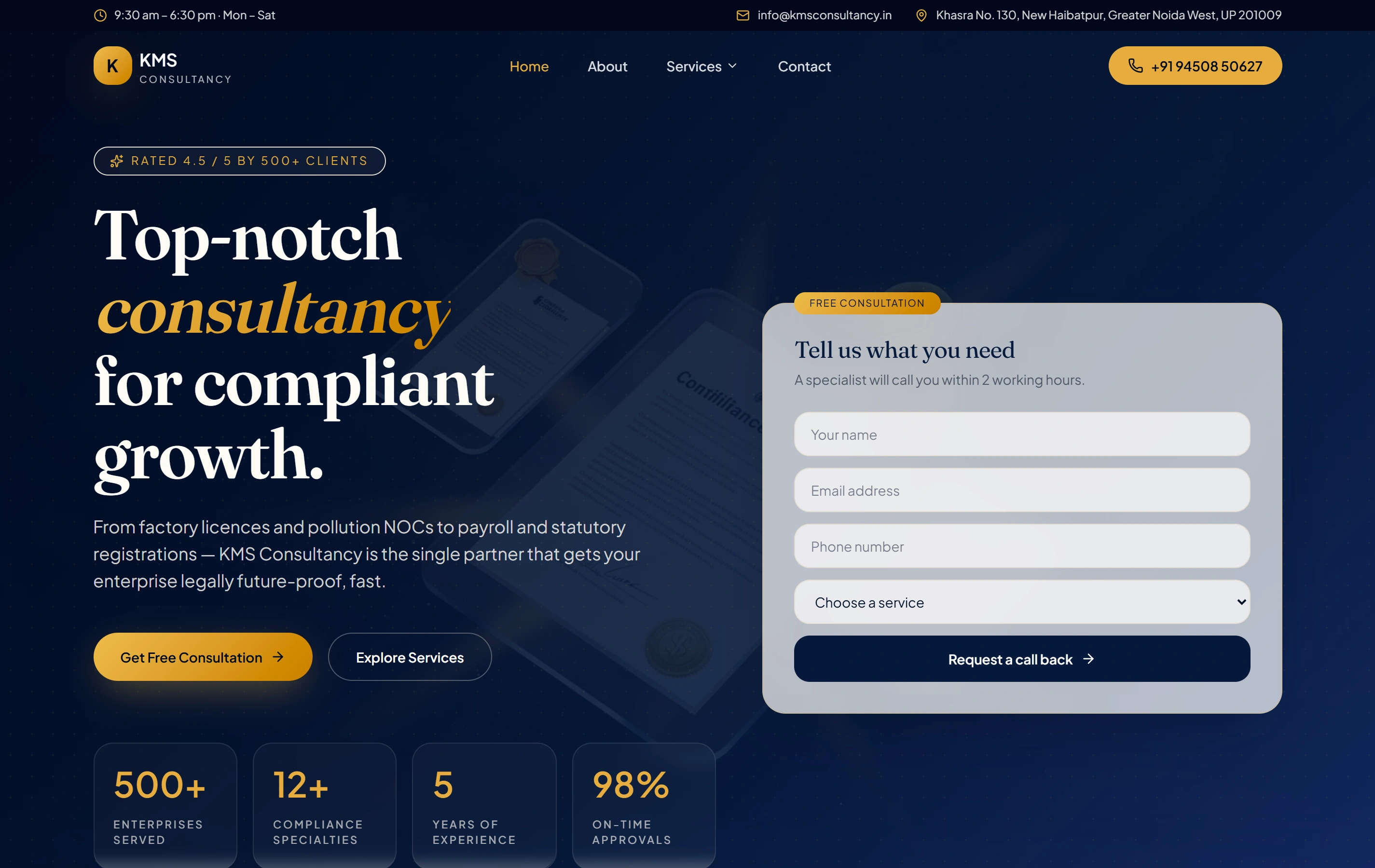
KMS Consultancy’s portfolio entry describes a structured consultancy website with service information and an enquiry journey. It illustrates public explanation and navigation. The screenshot is not evidence of an AI assistant, an automated advice system or a Madurai client; those are separate claims and are not made here.

ContentCompliance
StructureService pages
ActionEnquire
KMS Consultancy websiteKMS Consultancy
Practical questions

Questions before starting.

Useful boundaries for a first conversation.

Does a digital project have to include AI?

No. Clearer content, an improved website or a better staff process may address the need. AI is considered for a bounded task with suitable sources, evaluation and review responsibilities; it is not a prerequisite for other services.

Can we start with discovery or design?

Yes. We can define a discovery or design commission with concrete outputs and acceptance. Any later implementation has its own agreed scope. A prototype or recommendation is not represented as a working production system.

How will remote delivery work for Madurai?

The studio is in Ranchi. We agree dated meetings, a nominated approval route and written decisions. Your content and operating owners participate at relevant stages; this guide does not imply a Madurai office or past local engagement.

Can you maintain the website afterwards?

Website support can be scoped around its dependencies, content tasks and ownership. Updates, backups and issue handling need a defined arrangement. The initial build does not silently include unlimited future changes or a guaranteed commercial result.